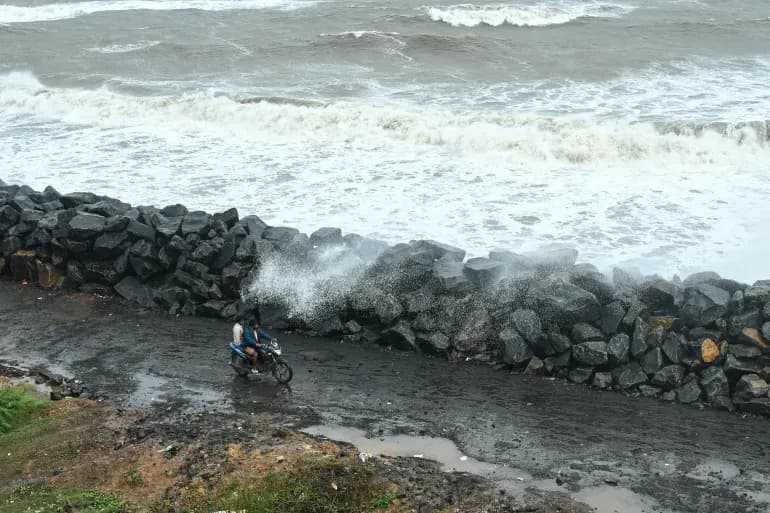
The key facts
- Cyclone Amphan will make landfall on the morning of Wednesday, October 28; winds of 115–125 km/h with gusts up to 140 km/h
- More than 12 million people live in the cyclone's zone; about 50,000 out of nearly 400,000 have been evacuated
- At least 12 train services cancelled, services suspended on 53 routes; Nepal advised tourists not to go to high-altitude areas
Cyclone Amphan, rated 'very severe', approaches India's east coast
Cyclone Amphan, rated as 'very severe', is approaching India's east coast. According to Zamon.uz, the cyclone is expected to make landfall on the morning of Wednesday, October 28. The India Meteorological Department has issued warnings for the states of Andhra Pradesh and Odisha; as of the time of publication, the cyclone was located 260 kilometers southeast of the port city of Visakhapatnam in Andhra Pradesh. According to forecasts, at landfall sustained wind speeds may reach 115–125 kilometers per hour, with gusts of up to 140 kilometers per hour.
Evacuations and transport restrictions
According to the Andhra Pradesh State Disaster Management Authority, more than 12 million people live in the cyclone's path. By Monday evening, about 50,000 people had been moved from dangerous areas of the state to shelters, while nearly 400,000 in total require evacuation. Authorities in Odisha plan to move 48,000 people to safe locations. Transport is already restricted: at least 12 train services have been cancelled in eastern India, and services on 53 routes along the southern coast have been suspended for Tuesday and Wednesday.
Nepal warns of risks in the Himalayas
Neighboring Nepal is also taking precautions: authorities expect the cyclone to bring heavy rain, snowstorms and avalanches to the Himalayas from Thursday to Saturday, so tourists have been advised not to visit high-altitude areas. The publication recalls that in August, about 1,500 people died in Nepal as a result of flash flooding in a Himalayan region. No casualties or damage from Cyclone Amphan itself had been reported at the time of publication — it had not yet made landfall.