The key facts
- A delegation from Saudi Arabia, Pakistan and Turkey led by Prince Khalid bin Salman held talks in Tehran on 27 October; the outcome was an agreement to continue dialogue, without de-escalation
- A delegation from Saudi Arabia, Pakistan and Turkey led by Prince Khalid bin Salman held talks in Tehran on 27 October; the outcome was an agreement to continue dialogue, with no de-escalation
- Iran said it has no leverage over the Houthis and proposed a two-week pause in the region in exchange for the gradual opening of the Strait of Hormuz
- Hours after the talks, the Saudi-led coalition intercepted three ballistic missiles and four drones, then two more missiles aimed at Riyadh
- Hours after the talks, the Saudi-led coalition intercepted three ballistic missiles and four drones, followed by two more missiles aimed at Riyadh
What happened in Tehran
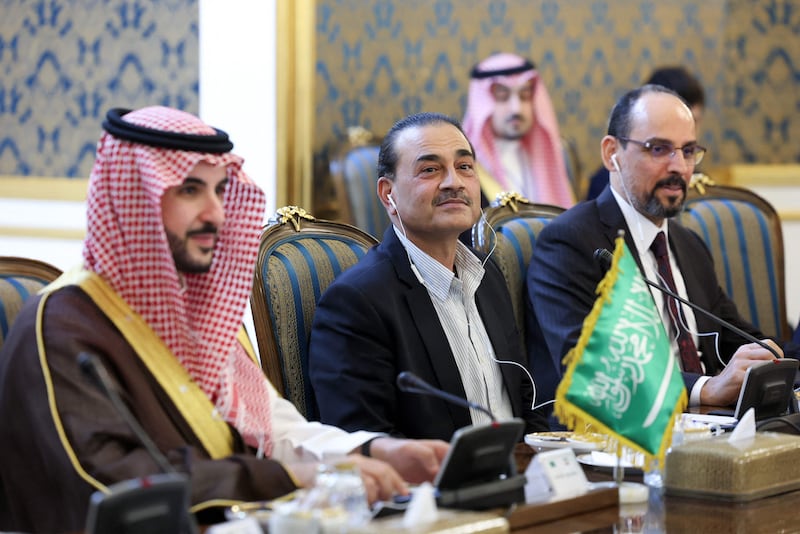
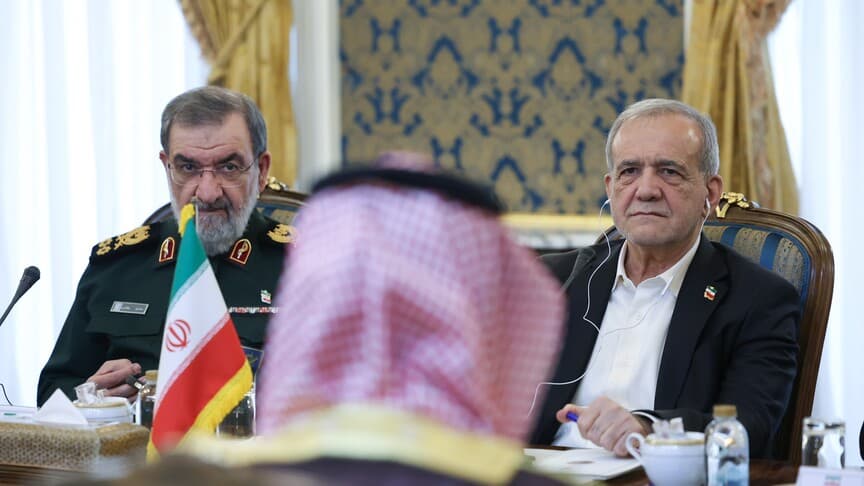
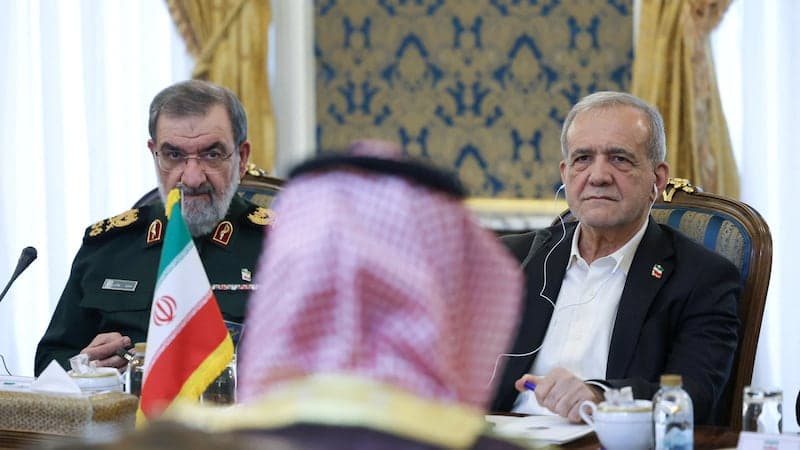
On Monday, representatives of three members of the Mecca defence pact — Saudi Arabia, Pakistan and Turkey — met with the Iranian side in Tehran. The delegation was led by Saudi Arabia's defence minister, Prince Khalid bin Salman; also taking part were Pakistan's army chief of staff, Field Marshal Asim Munir, and the head of Turkish intelligence, Ibrahim Kalin. According to The National, citing sources, the clearest outcome was an agreement to continue talks, rather than a de-escalation agreement on any front, including the Houthis' attacks on Saudi cities. Iranian state media reported that the sides agreed to continue discussions; sources familiar with the negotiations said there was no noticeable progress.
Mutual conditions: the Houthis and the Strait of Hormuz
Representatives of the three countries asked Iran to persuade the Houthis it backs to stop their attacks on the kingdom. According to the sources, Iran replied that it does not have sufficient influence over its Yemeni allies. Instead, Tehran proposed that its guests use their close ties with the United States to persuade Washington to accept Iran's proposal for a two-week pause in hostilities across the region: the pause would allow talks to resume in exchange for the gradual opening of the Strait of Hormuz. A source in Tehran said Iran was 'ready to help', but stressed that the Houthis' condition — Saudi Arabia lifting its air blockade of Yemen before a ceasefire — remains unchanged. According to a Yemeni source, the Iranians also said that final talks on a lasting agreement with the Houthis should be held in Sanaa. One source close to Tehran did not rule out a second round, possibly in Turkey, noting that 'the problems are too big and complex to be resolved in a single round'.
The escalation context
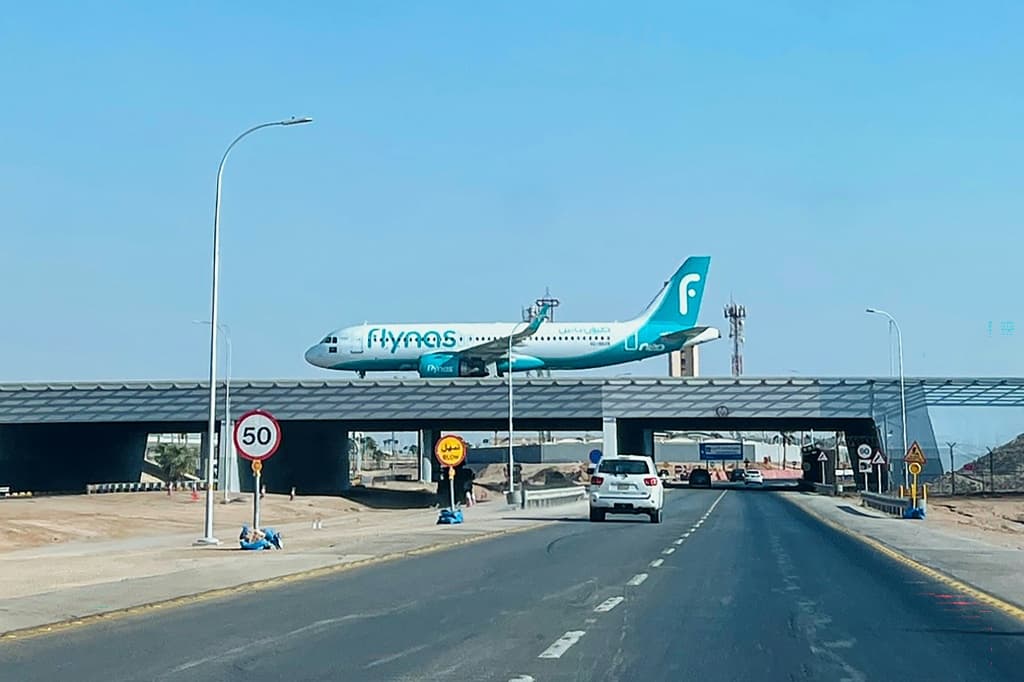
The deterioration in relations between Saudi Arabia and the Houthis began in July, after an airstrike on Sanaa international airport: the Houthis blamed Riyadh, while the Yemeni government backed by Saudi Arabia said it had struck the runway to prevent the landing of an unsanctioned Iranian aircraft. After that, the Houthis declared a 'blockade for blockade' policy — an embargo on Saudi shipping in the Red Sea, which had become an important alternative route for the kingdom's oil exports after the war with Iran disrupted supplies through the Strait of Hormuz. Notably, just hours after the Tehran talks, the Saudi-led coalition reported intercepting three ballistic missiles, launched by the Houthis towards the east of the kingdom, and four drones towards the south; later, two more missiles aimed at Riyadh were intercepted.
What else was discussed and what remains unclear
According to The National, the talks were not aimed at preventing a US and Israeli attack on Iran — the goal was to agree on principles and procedures in case hostilities resume, so that any new escalation could be quickly brought under control. Iran's Supreme National Security Council secretary, Mohsen Rezaei, described the discussions as 'very good' and said the sides agreed that security in the region should be provided by regional countries, not external powers. A day after the meeting, Iran's supreme leader, Mojtaba Khamenei, once again voiced the country's 'conditions' for ending the war with the United States. Earlier, Oman's foreign minister, Badr al-Busaidi, called for a non-aggression pact involving all six Gulf states, Iran and Iraq, noting that the United States would cease to be the main guarantor of security. An important caveat: the picture of the talks relies on sources from a single publication, and the official outcomes were not disclosed in detail by the parties.