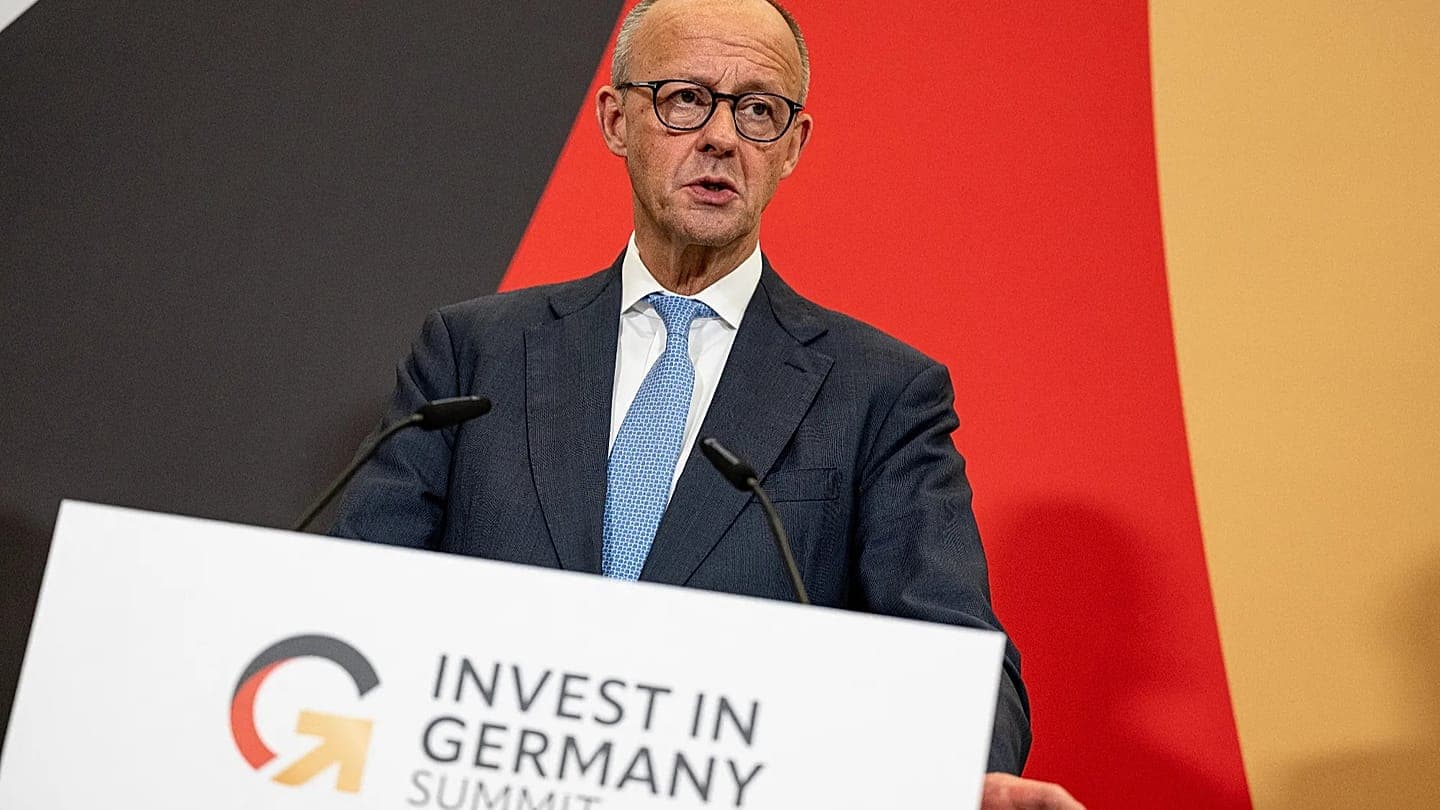
The key facts
- On October 27, Merz began a tour of Singapore, Japan and South Korea, declaring that 'there is no uncertainty in Europe'
- The goal is to expand Germany's ties in Asia beyond China, which remains its largest partner in the region
- The tour takes place against the backdrop of the resignation of a minister from the coalition's junior partner and a decline in Merz's approval ratings
Merz's Asian tour: Singapore, Japan, South Korea
German Chancellor Friedrich Merz began a three-country tour of Asia on October 27, aimed at expanding Germany's ties in the region beyond China. The first stop was Singapore, where, after talks with Prime Minister Lawrence Wong, Merz stated that there is 'no uncertainty in Europe' and that under the government he leads, 'investment opportunities will continually improve.' According to him, he 'encounters great confidence in Germany and Europe as places to invest' (euronews).
Context: domestic troubles and rivalry with China
The chancellor's optimistic message comes against the backdrop of political difficulties in Berlin: this month a key minister from the coalition's junior partner, Bärbel Bas, resigned, Merz's approval ratings have declined, support for the far right is growing, and in France weeks of protests have been accompanied by mass riots. At the same time, Wong noted that the confidence of Singaporean investors in Germany and Europe remains high, since they take a long-term view rather than focusing on a single electoral cycle. Berlin is diversifying its trade and strategic partnerships amid doubts about the reliability of the United States and the rise of China as an economic competitor: China remains Germany's largest economic partner in Asia, but is increasingly seen as a rival. Merz stated that Singapore, Japan and South Korea share 'common interests' with Germany, adding that joint efforts 'will significantly strengthen our independence from other countries,' without specifying which countries he meant.
Further itinerary of the trip
On October 28, the chancellor will hold a meeting with Japanese Prime Minister Sanae Takaichi, and on October 29–30 a two-day visit to South Korea will take place.