The key facts
- The patient's stomach had moved entirely into the chest cavity, compressing the left lung and heart; the organ was on the verge of strangulation.
- The operation lasted three hours: the stomach was returned to the abdominal cavity, the diaphragm defect was reinforced with an implant, and a Nissen fundoplication was performed.
- The hernia had been forming over years; a complicating factor was a shortened esophagus.
A stomach in the chest: a rare complication of a years-long hernia
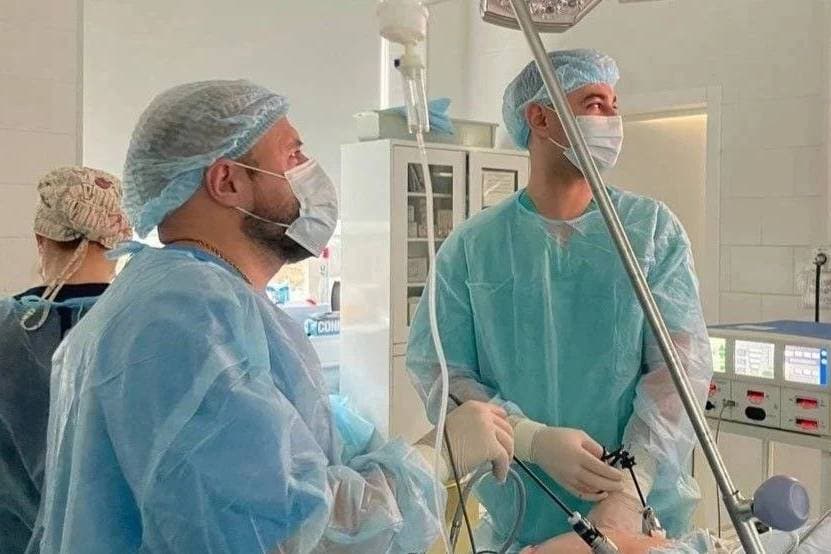
In Primorye, doctors at Regional Clinical Hospital No. 2 operated on a woman whose stomach had moved entirely into the chest cavity, compressing her left lung and heart. This was reported by the regional Health Ministry, as reported by Life.ru. The cause was a hiatal hernia that had been forming over years: all that time the patient suffered from heartburn, belching and pain behind the breastbone, and as the condition progressed it became increasingly difficult for her to breathe.
Why the surgery was difficult
The surgical intervention was complicated by a shortened esophagus: due to the hernia's long existence, the organ had contracted and hindered returning the stomach to its normal position. Andrei Merena, head of the surgery and transfusiology department, explained that the organ was on the verge of strangulation — a condition requiring emergency care. The operation lasted three hours: surgeons moved the stomach back into the abdominal cavity, reinforced the diaphragm defect with an implant, and performed a Nissen fundoplication — creating a cuff from the upper part of the stomach around the lower esophagus to prevent reflux of its contents. The woman is now recovering after the surgery.
Another case: removal of nearly 20 kilograms of tumor masses
This is a separate report about a different patient: doctors at the Moscow Regional Research Institute of Obstetrics and Gynecology removed tumor masses with a total weight of almost 20 kilograms from a woman from Africa, Life.ru reports in the same article. The four-hour operation was successful. The woman had suffered from uterine fibroids for several years; examination showed that the affected organ had enlarged almost 180 times, and the largest nodes reached 20 by 25 centimeters and occupied a significant part of the abdominal cavity and pelvis. Surgeons had to not only remove the affected uterus but also divide numerous adhesions involving the intestines, diaphragm, liver and gallbladder.