The key facts
- Machado announced her return on 25 October with a post “I am here. With you” on X after seven failed attempts over three months
- According to Reuters, the return was coordinated with the governments of the United States, Panama and Colombia; she crossed the border by land from Colombia
- Machado declared her readiness for dialogue with Rodríguez; Rodríguez in turn criticised the manner of the return itself
Return after ten months
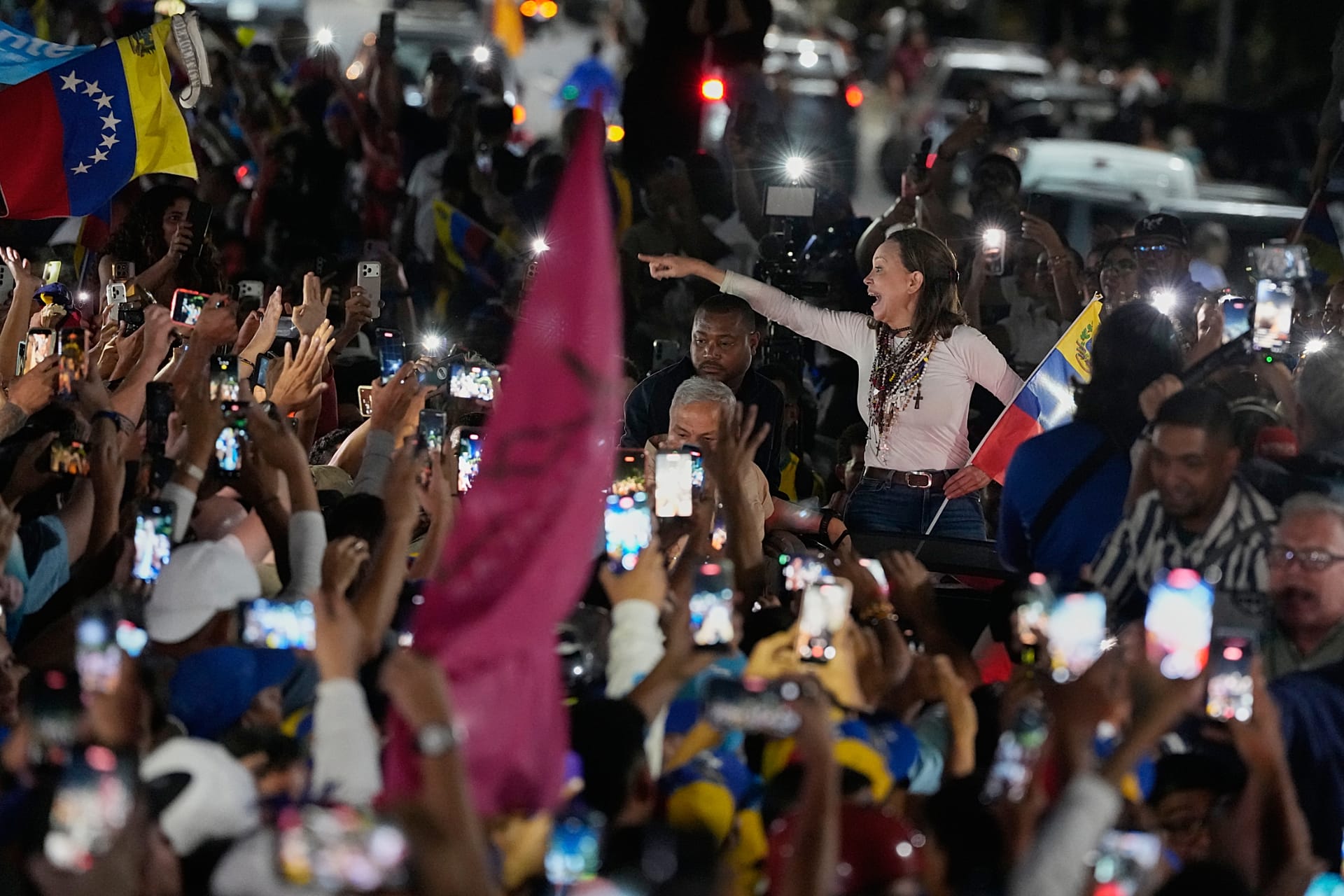
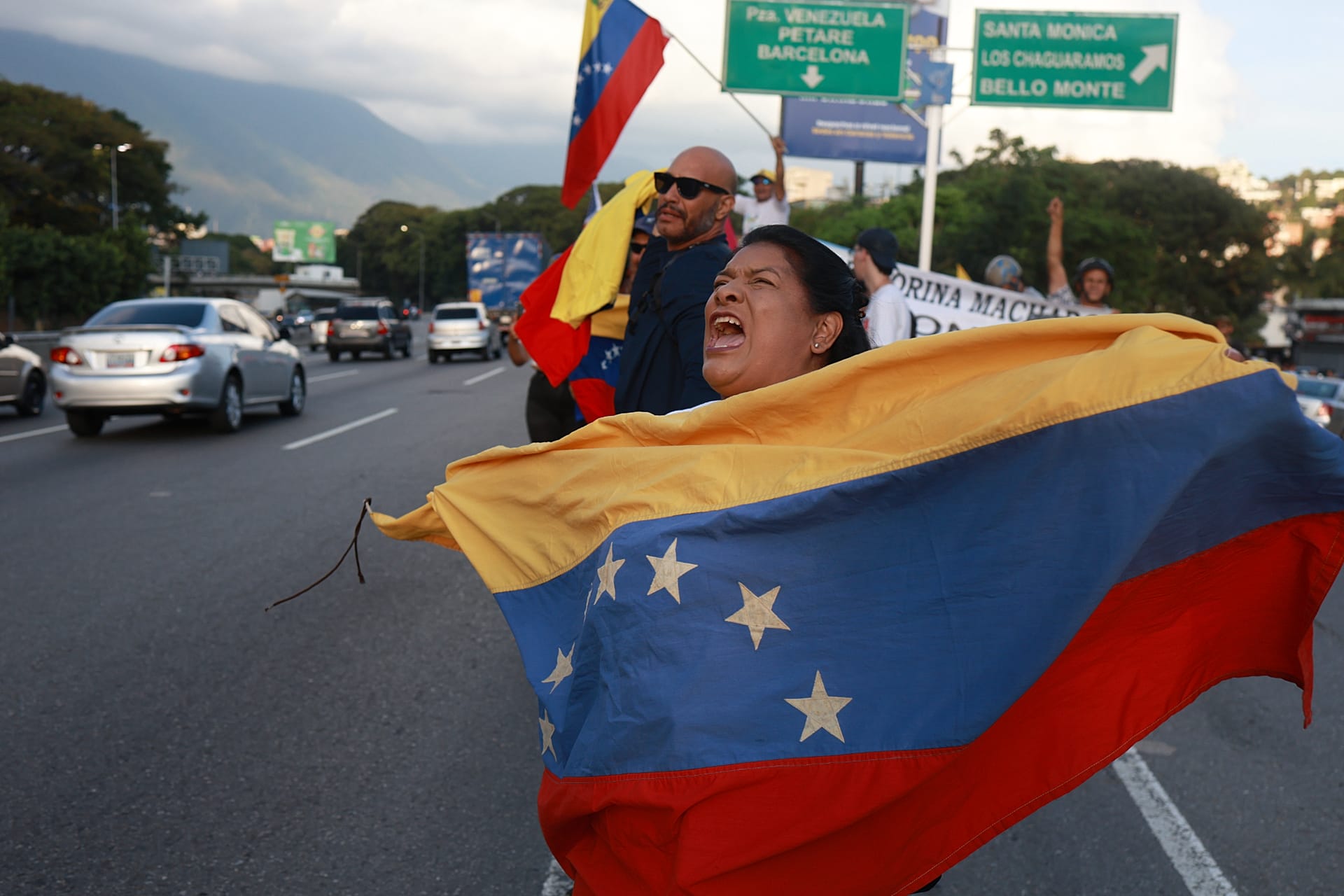
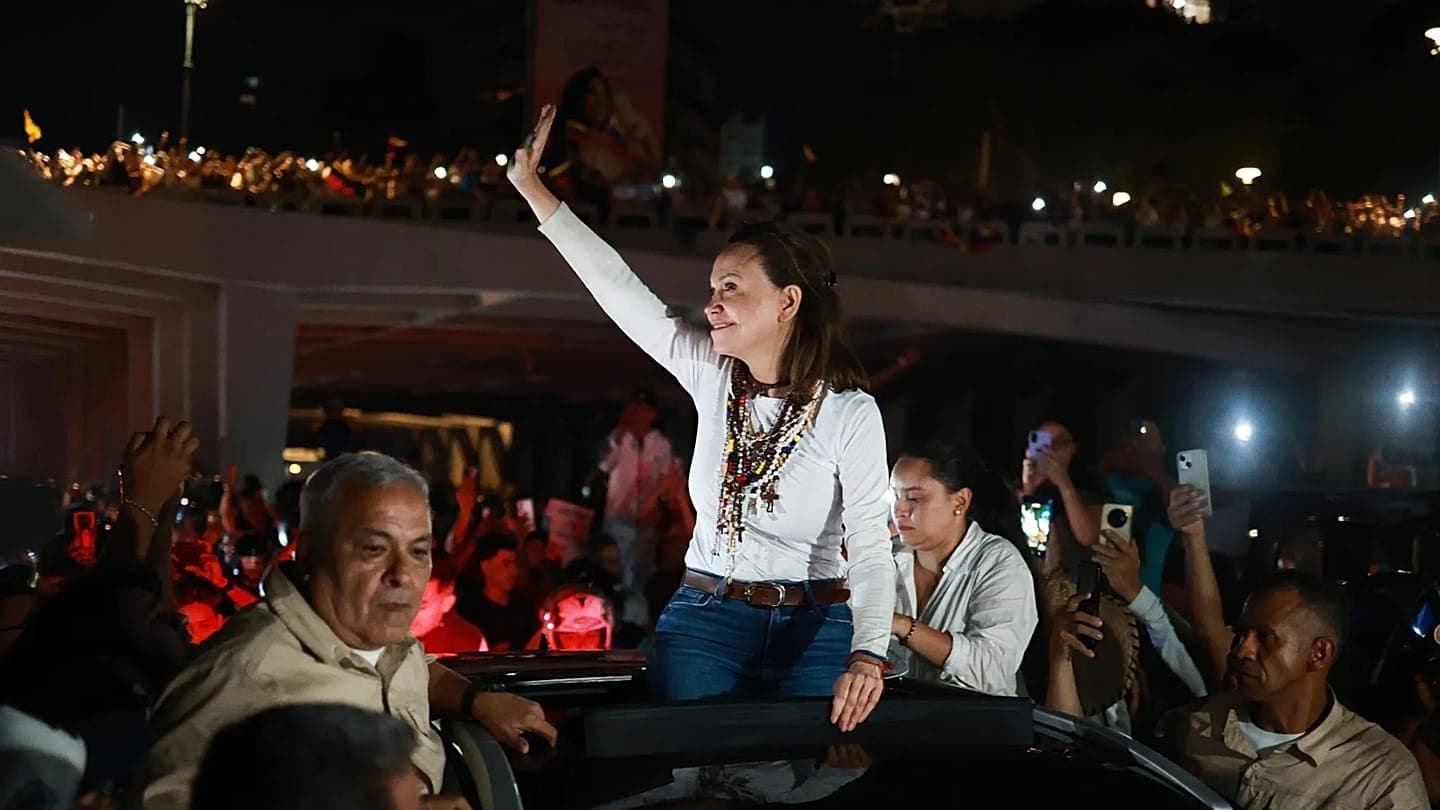
Venezuelan opposition leader and Nobel Peace Prize laureate María Corina Machado returned to Venezuela on 25 October 2026 after more than ten months in exile. She announced her return with a laconic post on the social network X: “I am here. With you.”Later the politician said she had reached the capital, Caracas, where thousands of supporters greeted her with flags and chants of “Freedom!”. On the way to the capital she greeted the crowds through the sunroof of a car, and earlier in the city of Guacara, according to AFP correspondents, she sang the national anthem in a square filled with supporters.
How it was done
The return was not easy: according to her party, over the past three months Machado tried to return at least seven times — from the United States, Panama and Curaçao, by air, sea and land — but each time the plans fell through due to cancelled flights and unclear obstacles. According to Reuters, cited by Gazeta.uz, the return was coordinated with the governments of the United States, Panama and Colombia: Machado flew by private plane from Panama to Colombia and on Sunday crossed the border with Venezuela by land; she was guarded by employees of a private American agency, and the United States, according to a source, warned the Venezuelan authorities against any interference. US Secretary of State Marco Rubio called the return “a direct result of US-backed reconciliation talks”, during which, in his words, hundreds of political prisoners were released and hundreds of opposition figures returned from exile. Earlier, however, Rubio denied that Washington had asked other countries to block Machado’s entry, and Deutsche Welle wrote that the impossibility of returning was partly linked to the Trump administration, which had placed its bets on Rodríguez.
Reactions and a new political reality
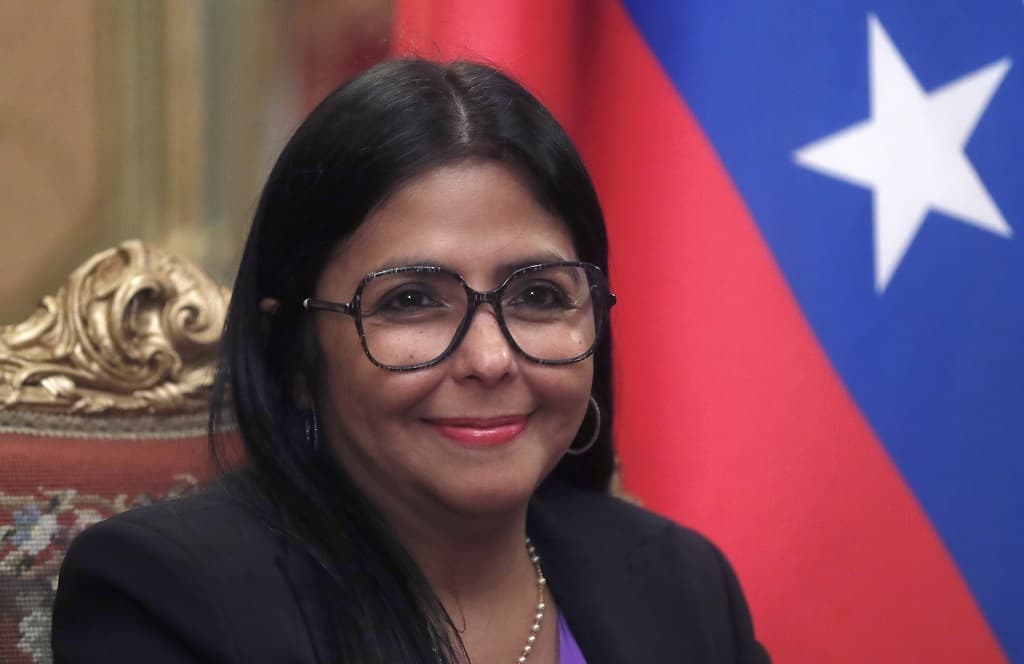
President Donald Trump told journaliststhat he knew nothing about the return, adding: “She is a very lovely woman. She gave me her Nobel Prize, so how can I say anything else?” — and expressed hope that Machado was safe. Machado’s ally, former presidential candidate Edmundo González, confirmed her arrival and promised to join her in Venezuela soon. On Monday, Machado said she was ready to sit down at the negotiating table with interim president Delcy Rodríguez — the former vice-president of Nicolás Maduro, who was captured by the United States in January 2026. Rodríguez, however, criticised the very manner of the return: “The show could have been avoided — the airports are right here”, she said on state television. The European Union called for using this moment for an inclusive dialogue leading to free and fair elections.
What changed during her absence
Machado left Venezuela secretly in December 2025 to receive the Nobel Peace Prize, after spending nearly a year in hiding following the disputed 2024 elections, in which Maduro was declared the winner while the opposition insisted that González had won. During her absence the country changed radically: in January 2026 the United States captured Maduro in a military operation and brought him to New York for trial, and power passed to Rodríguez, whom Washington supports — in particular, after the September energy agreement, which opened US access to Venezuelan oil. The interim government has promised elections but has not yet set a date; Machado had previously demanded that a date for presidential elections be set. Now the main question is not when she will return, but what role she will be able to play in a political process that has so far gone on without her.