The key facts
- Lord Justice Miles dismissed the appeal of Iskandar Safa's widow: the claim against her concerns her personally and falls within the jurisdiction of the English court
- In December 2024, Privinvest was ordered to pay Mozambique $534 million plus $40 million in interest
- The final amount inherited by, or owed by, the widow will be determined at future hearings
Widow's appeal dismissed
A court in London has removed an obstacle to Mozambique's claim against the widow of Lebanese tycoon Iskandar Safa for compensation over his role in a $2 billion corruption scandal known as the 'tuna bonds' case. According to The National, Mozambique filed its claim against Safa and his shipbuilding company Privinvest in the High Court in London in 2023, because the loan contracts were governed by English law.
The essence of the scandal
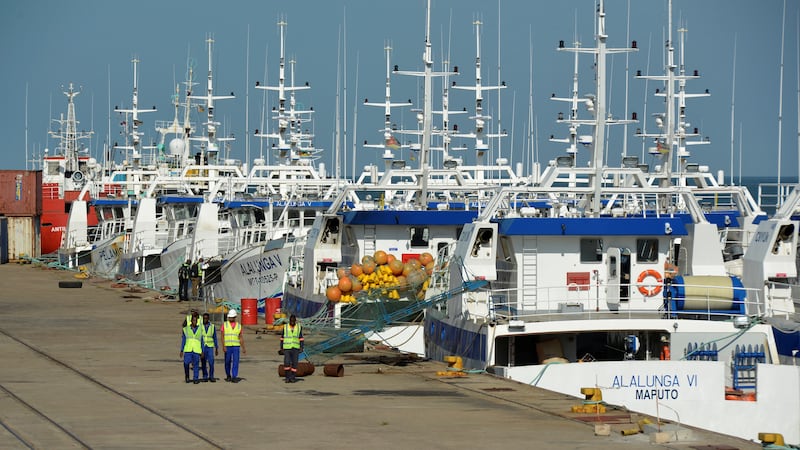
According to Mozambique, Privinvest and Safa paid more than $136 million in bribes to officials and bankers, in order to secure favourable contract terms, including a project to develop the country's tuna-rich coastal waters. The company sold the state fishing and patrol vessels and equipment at heavily inflated prices, while Mozambique was left with a $2 billion debt which, according to the publication, undermined the country's economy when the scandal broke. The country was left with a fleet of 24 rusting vessels, which were eventually sold at auction.
Course of the case
Iskandar Safa gave evidence in the High Court while seriously ill with cancer and died in January 2024 at the age of 68. In December 2024, a judge ordered Privinvest to pay Mozambique $534 million plus $40 million in interest. Another judge allowed the widow, Clara Martinez Thedy de Safa, to be added to the claim on the grounds that Safa had left no legally valid will: under Lebanese law, the closest relative automatically assumes the assets and debts of the deceased.
The parties' arguments
The widow's lawyer, Robert Howe KC, said at a hearing in July this year that she neither knew of nor participated in any of her husband's wrongdoing. The defence argued that the English court should not assume jurisdiction over claims against a person administering a foreign estate, and cited a rule preventing claims in England and Wales against an administrator of another person's property under foreign law. However, Lord Justice Miles ruled that under Lebanese law 'there is no concept of an estate as a separate mass', the inheritance of assets occurs automatically and immediately upon death, and the deceased's creditors face the risk of his assets being commingled with those of the heir. The claim therefore concerns the widow personally and may be heard in the English court; the appeal was dismissed.
What is known and what remains unclear
The actual amount inherited by the widow, or for which she is liable, has not yet been established and will be determined at future hearings. Earlier, Mozambique's former finance minister Manuel Chang was sentenced in the US to almost two years in prison and agreed to return $7 million for his role in the same scandal. According to an obituary in The Times, Safa was born in 1955 into a wealthy Maronite Christian family, received an engineering education at the American University of Beirut and, together with his brother Akram, founded Privinvest, which specialises in military and commercial vessels and megayachts.
Significance of the ruling
The ruling is important because it opens the way for Mozambique to recover compensation from the heir of the main figure in the case after the defendant's death — previously the court had already awarded $534 million against Privinvest, but the widow's ultimate liability has not been determined. In practical terms, this means the case will continue in the English court with the heiress as a party, and the extent of her obligations will be the subject of future hearings. For creditors and affected states, the ruling demonstrates that English courts are willing to hear claims against heirs under Lebanese law, where inheritance passes automatically.