The key facts
- At the start of the week, nighttime temperatures in Karakalpakstan, Khorezm and the Navoi deserts and mountains will drop to −2…−3°C, with daytime temperatures up to +20…+22°C by the end of the week.
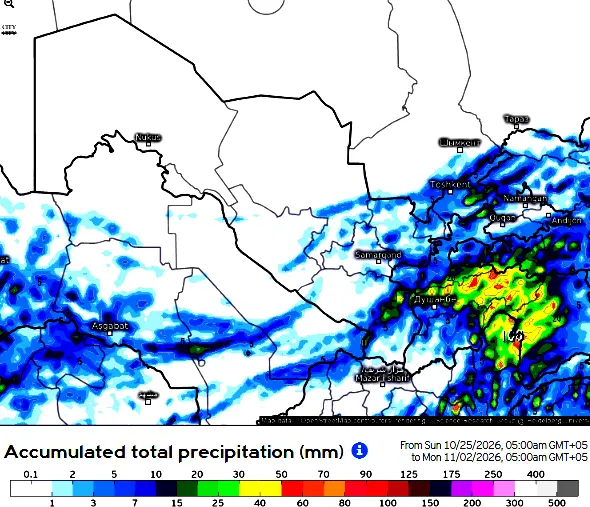
- From Thursday the anticyclone will retreat; light precipitation is possible in mountainous areas on October 28–29 and near the foothills over the weekend.
- Weak winds and atmospheric stagnation may temporarily worsen air quality in Tashkent and the valley; the average weekly temperature will be around the norm, 1–2 degrees below it in the north.
The Siberian anticyclone will determine the weather at the start of the week
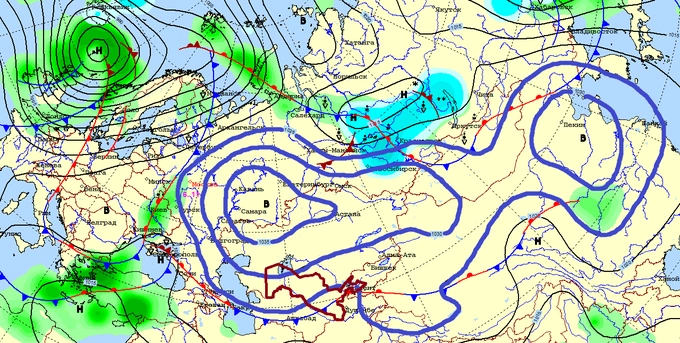
Climatologist Erkin Abdulakhatov, in another weekly weather review for Gazeta, explained the early-week cooling by the influence of the southern edge of the Siberian anticyclone. According to him, until Thursday the country is expected to see sunny, dry weather with frost at night. From Thursday the anticyclone will retreat, and warmer air will arrive from the south, which may bring a small amount of precipitation to mountainous areas and nearby territories.
Temperatures and precipitation according to Uzhydromet
According to Uzhydromet forecasts, the working days of the week will be mostly dry,, with precipitation expected only on October 28–29 in the mountains, and in places near the foothills over the weekend. At the start of the week in the Republic of Karakalpakstan, Khorezm region, the Kyzylkum deserts and the mountains of Navoi region, nighttime temperatures will drop to −2…−3 degrees. In the rest of the country, +3…+8 is expected at night, and +5…+10 degrees in the southern regions. From midweek, nighttime and morning temperatures will rise slightly, and by the weekend it will warm up noticeably in places.
Daytime warmth and deviations from the climate norm
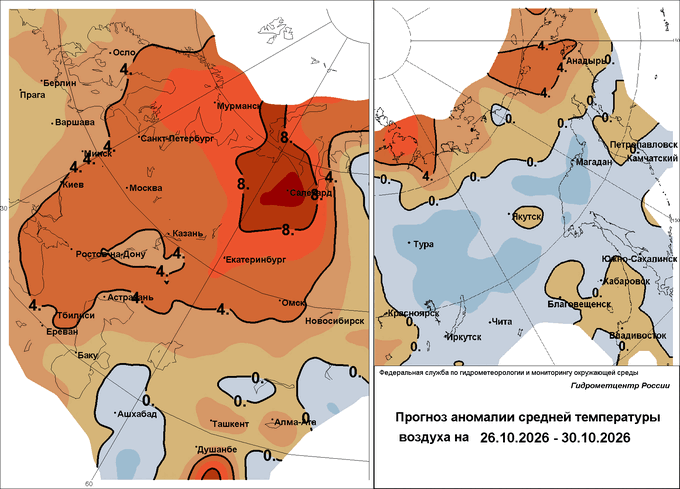
During the day at the start of the week, maximum temperatures in many areas will reach +20 degrees, and on October 29–31 up to +22 degrees; in the mountains +12…+17 degrees is expected. According to the foreign weather bureau Meteoinfo.ru, on October 26–30 the average temperature across most of Uzbekistan will be around the long-term climate norm or 1–2 degrees below it. According to another Uzhydromet report and forecasts from the European centre ECMWF,the average weekly temperature across most of the country is close to the norm, 1–2 degrees below it in the north, warmer in the mountains, and in terms of precipitation the period may turn out to be noticeably drier than October norms.
Air quality and health
The review notes that weakening winds under the anticyclone on October 26–28 and atmospheric stagnation may temporarily worsen air quality, especially in Tashkent and the valley, where the risk of accumulation of fine PM2.5 particles in the surface layer increases. Uzhydromet does not expect strong winds during the week, and no sharp increase in dust in the air is forecast so far. International epidemiological studies, as the author points out, show that an increase in the daily temperature range may raise the risks of adverse outcomesrelated to respiratory and cardiovascular diseases; children, the elderly, asthma sufferers and people with cardiovascular diseases should be more careful. If air quality deteriorates, the Sanitary and Epidemiological Committee has prepared recommendations for different age groups and patients.
Space influences and the week's summary
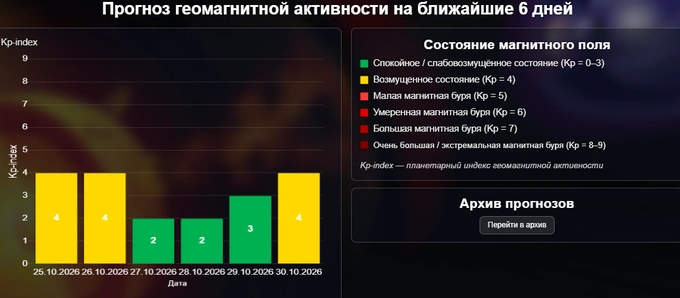
According to current solar activity forecasts, magnetospheric disturbances of yellow and green danger levels are possible during the working days of the week, with a yellow level expected at the beginning and end of the working week. The author emphasizes that there are no clear scientific conclusions yet about the effect of magnetic storms on health, so it would be a mistake to claim an unambiguous impact on well-being. Overall, for October 26 — November 1, the country is forecast to have stable weather that is first cold, then gradually warming; in densely populated areas, strengthening atmospheric inversions may lead to an increase in the concentration of fine dust particles.
Why this matters
The forecast directly affects the everyday decisions of the country's residents: at the start of the week, morning frosts down to −2…−3 degrees in the north require warmer clothing despite daytime warmth up to +20…+22 degrees, and the large difference between daytime and nighttime temperatures is especially significant for vulnerable groups. Residents of Tashkent and the valley should take into account the possible temporary deterioration of air quality due to atmospheric stagnation and, if necessary, follow the recommendations of the Sanitary and Epidemiological Committee. Exact temperature and precipitation values may be refined as Uzhydromet forecasts are updated.