The key facts
- From March 1, 2026, new requirements for combating dangerous invasive plants are in force
- For failure to comply with regional requirements, fines for individuals and organizations range from 2,000 to 30,000 rubles; if the land deteriorates — up to 50,000 for individuals and up to 700,000 for legal entities
- Goldenrod has spread to 49 regions of Russia; a single bush produces up to 100,000 seeds with a germination rate of up to 95%
A lawyer warned about fines for goldenrod on land plots
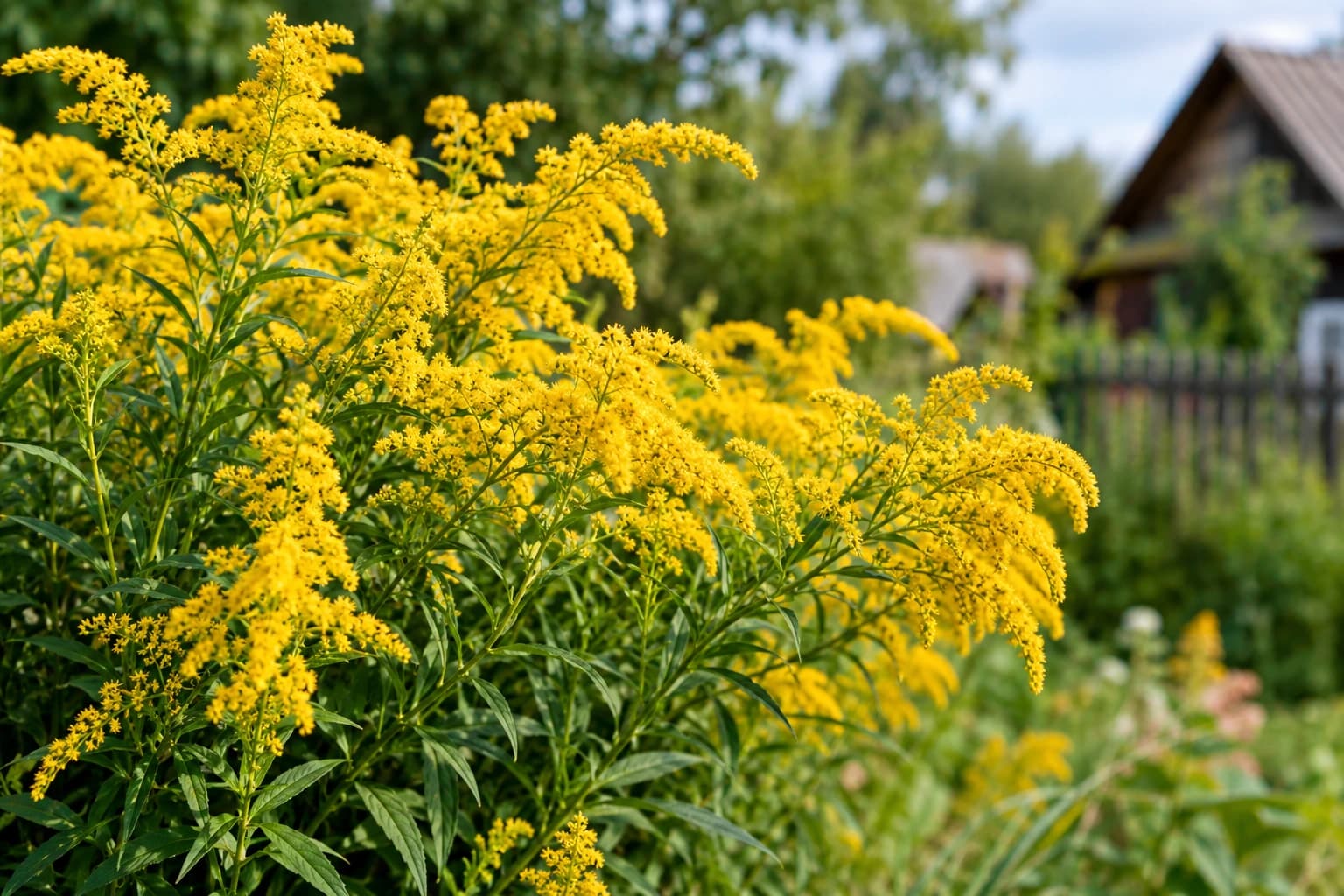
Owners of dacha plots in Russia face fines for the spread of Canada goldenrod — an ornamental plant with yellow inflorescences. New requirements for combating dangerous invasive plants came into force on March 1, 2026. Artemy Kupriyanov, managing partner of the law firm Kupriyanov, Kirillova and Partners, told the Prime news agency about this.
What landowners are required to do
According to the lawyer, the Land Code and the law 'On Environmental Protection' oblige owners of land plots and holders of a public easement to protect the land from dangerous invasive plants and to destroy them. Invasive plants are alien species capable of displacing local species and disrupting the functioning of ecosystems. Lists of such plants are in most cases established by regional authorities; separate rules apply to forests and specially protected natural areas.
Scale of spread and size of sanctions
Canada goldenrod spreads quickly: a single bush produces up to 100,000 seeds with a germination rate of up to 95%, and its roots release substances that hinder the development of other vegetation. According to expert estimates, the plant has already spread to 49 regions of Russia, with thicket density in some places reaching 300 shoots per square meter. In the Leningrad Region, goldenrod has been included in the list of dangerous invasive plants along with Sosnowsky hogweed, rugosa rose and box elder. For failure to comply with regional requirements, individuals and organizations may be fined from 2,000 to 30,000 rubles. If the condition of the land deteriorates, under Part 2 of Article 8.7 of the Russian Code of Administrative Offenses the fine for individuals can reach 50,000 rubles, and for legal entities — 700,000. If weeds prevent the plot from being used for its intended purpose, supervisory authorities may also consider liability under Part 4 of Article 8.8 of the Code of Administrative Offenses.
How to get rid of the plant
Earlier, ecologist Anatoly Batashev explained how to combat goldenrod on a plot. According to him, ordinary mowing does not destroy the plant completely: rhizomes remaining in the soil produce new shoots. The roots must be removed entirely, leaving no fragments in the soil. Plant residues should be destroyed rather than sent to compost, where goldenrod may continue to sprout; burning is permissible only in compliance with fire safety requirements. The ecologist also advised regularly mowing the thickets before the seeds ripen and warned that cut stems must not be left on the plot — the seeds are capable of ripening even after mowing.
Context
It is editorially important that liability is now tied not to the mere fact of the plant growing, but to compliance with regional requirements: lists of invasive species are established by the regions, so the set of 'prohibited' plants and the size of sanctions differ from region to region — the Leningrad Region list is an example. Kupriyanov recommends regularly inspecting the plot, removing dangerous plants together with their roots and monitoring their spread to neighboring territories, noting that the size of the fine depends on the specific violation, the land category and regional rules. The practical conclusion for dacha owners: from March 1, 2026, combating goldenrod has become a legal obligation, not merely an agronomic recommendation, and ignoring regional lists can result in fines of up to 700,000 rubles for organizations.