The key facts
- The first phase of the Ceylon Electricity Board (CEB) wind farm in Mannar (30 turbines, 104 MW) became operational in 2020; construction of 14 additional turbines is underway, while a contract for 52 turbines with Adani was terminated in 2025 due to a dispute over the kilowatt-hour price.
- Fishermen report their daily income has dropped from 5,000 rupees (approximately $15) to just over 1,000 rupees, attributing this decline to the turbines and competition from Indian trawlers.
- A resident of a coastal village links recent flooding to the concrete foundations of the turbines and road trenches; the government states it is conducting studies and has frozen new projects in Mannar.
Catch volumes are declining; residents blame the turbines
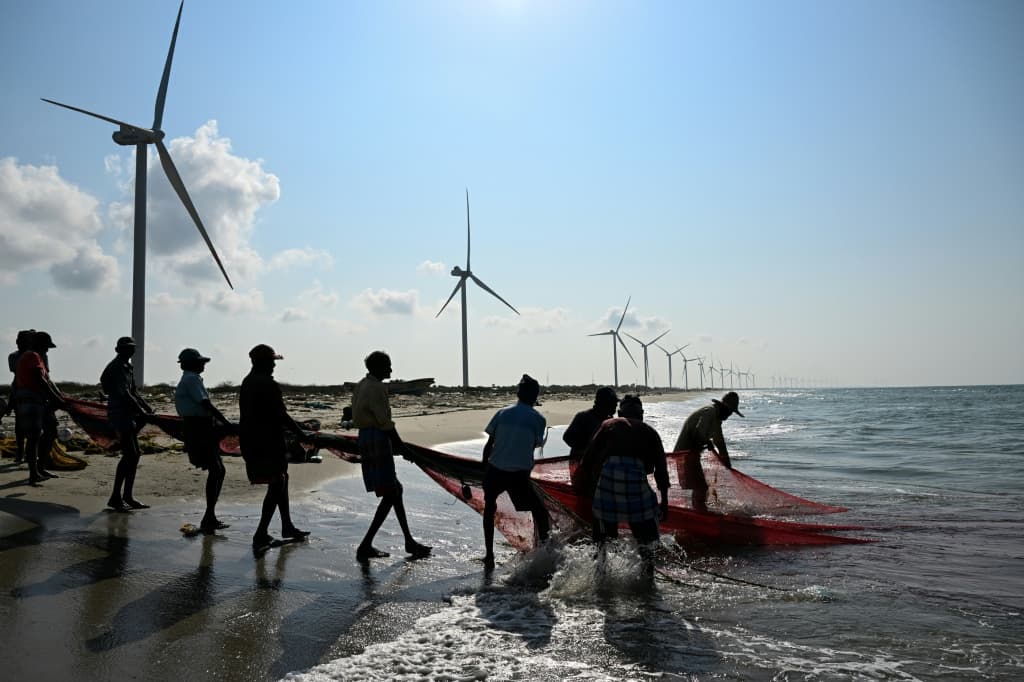
In the Mannar Peninsula in northern Sri Lanka, fishermen complain that their catch has sharply decreased since the wind turbines appeared. Venkatasamy Kalimuthu, 65, who has been fishing here since childhood, told AFP that before the turbines were installed, there was an abundance of fish, but now there is 'much less.' Acknowledging the lack of evidence, he believes the rotating blades scare the fish away: their shadow falls on the water, preventing fish from approaching shallow areas. His colleagues also point to competition from Indian trawlers. According to A. Stanislas Peries, head of the local fishermen's cooperative in nearby Pesalai, if fishermen previously earned up to 5,000 rupees (about $15) per day, now they earn barely more than 1,000 rupees.
Flooding and protests
Benedict Maria Vijilia, president of the Women's Rural Development Society (WRDS) and a resident of a village approximately 100 meters from the coast, claims that the concrete foundations of the turbines and the trenches for access roads prevent rainwater from draining into the sea. According to her, during monsoon rains, water reaches waist height, toilets overflow, and homes, livestock, crops, and well water suffer—something she asserts did not happen before 2020. Catholic priest S. Marcus, head of the Mannar Citizens' Committee, stated that the promised mitigation measures were never implemented. At his initiative, residents filed two complaints with Sri Lankan courts, but a separate lawsuit has been filed against him personally.
Authorities' stance and energy plans
The wind farm is owned by the state energy company Ceylon Electricity Board (CEB) and is located on a narrow strip of sand exposed to winds between Sri Lanka and India. The first phase—30 turbines with a total capacity of 104 megawatts—was connected to the grid in 2020, and construction of 14 more turbines has begun. The third phase, consisting of 52 turbines, was awarded to the Indian conglomerate Adani, but in 2025 the government terminated the contract due to a dispute over the kilowatt-hour price. Energy Minister Anura Karunatilaka said the authorities are listening to complaints and conducting feasibility studies, after which, according to him, the flooding situation can be alleviated. The government aims to generate 70% of its electricity from renewable sources by 2030, including wind energy, but has frozen new projects in Mannar to reduce local dissatisfaction, promising to proceed only with already approved projects.
Context of contradictions
The protests are unfolding against the backdrop of rising fuel and electricity prices due to the war in the Middle East, which, as AFP notes, makes the transition to renewable energy an economic necessity. Leslie Jesurajan, a representative of the local civil group OPEnE, stated that residents are 'not against renewable energy in principle,' but oppose its placement specifically here, as there are other suitable locations. Editorially, it must be emphasized: the link between the turbines and the decline in catches and flooding remains a claim by residents without presented evidence—Kalimuthu himself admits he has no proof, and the minister refers to ongoing studies. It is unknown how the court complaints will conclude or whether freezing the projects will improve the residents' situation.