The key facts
- Walid Jumblatt believes Israel will remain in southern Lebanon for decades and is “erasing the memory” of the region
- Walid Jumblatt believes Israel will remain in southern Lebanon for decades and is 'erasing the memory' of the region
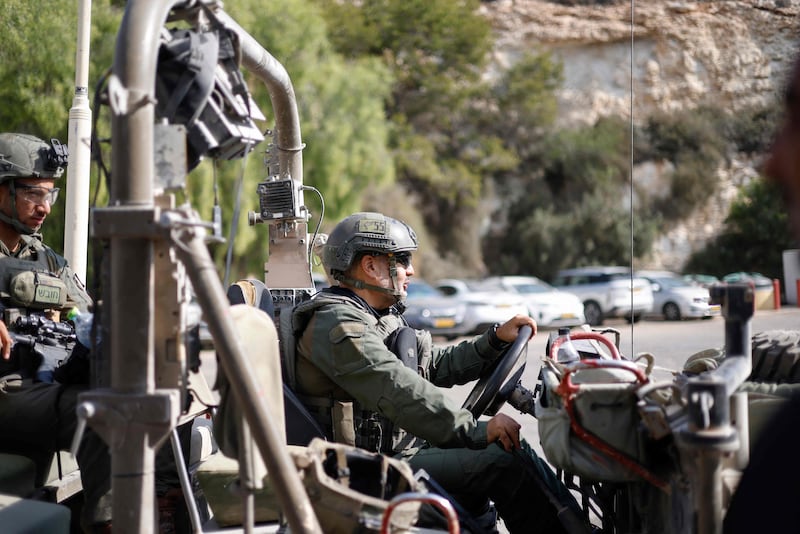
- Israel holds “security zones” on three fronts: southern Lebanon, southern Syria, and about 70% of Gaza, according to Defense Minister Israel Katz
- Israel holds 'security zones' on three fronts: southern Lebanon, southern Syria, and about 70% of Gaza, according to Defense Minister Israel Katz
- US-Israel-Lebanon military talks ended on October 22 without an agreement
Jumblatt's statement
Druze leader Walid Jumblatt said in an interview on the program On The Record with Hadley Gamble that Israel will remain in southern Lebanon for decades. “They will never leave”, he said from his home in Beirut. According to him, the Americans are leaving, while Benjamin Netanyahu remains, “controlling and expanding his own territory.” Jumblatt argues that in previous invasions southern Lebanon survived as a place, but now Israel “is simply trying to erase all memories of southern Lebanon, as if preparing for settlements.”
Zones of control and the scale of destruction
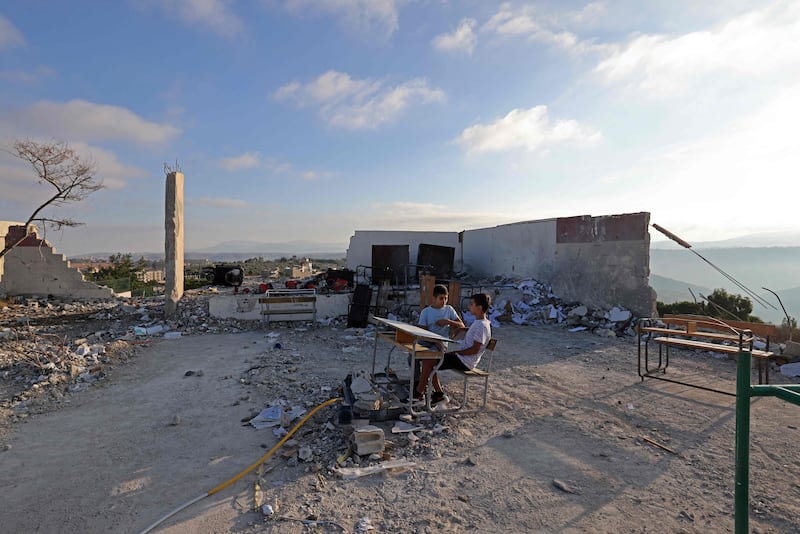
According to figures Jumblatt cites from Israeli Defense Minister Israel Katz, Israel holds “security zones” on three fronts: in southern Lebanon, in southern Syria beyond the 1974 disengagement line, and in nearly 70% of Gaza. On October 21, Katz said Israel will not withdraw from any of them. The Israeli military, officials claim, destroyed more than 60 villages and about 23,000 buildings in southern Lebanon; displacement orders covered about 2,000 sq. km south of the Zahrani River, and residents are barred from returning. In March, Finance Minister Bezalel Smotrich called for annexing all territory up to the Litani River.
Casualties and negotiations
Lebanon's Health Ministry reports 4,389 dead from March 2, when Hezbollah joined the regional war on Iran's side, through October 12. American and Israeli estimates of the group's losses since February stand at about 2,500 fighters. A June framework agreement between Lebanon, Israel and the US ties a phased Israeli withdrawal to Hezbollah's disarmament; Israel calls the deal “results-based” and says its troops will stay as long as the group poses a threat. Seven rounds of direct talks followed, but military negotiations at US Central Command ended on October 22 without an agreement and without a new meeting scheduled.
Criticism of Lebanon and the US
Jumblatt believes Lebanon wrongly chose “the Marco Rubio path, which will lead us nowhere,” and that the hope of some Lebanese ministers that Washington will force Israel to leave is “a complete delusion.” He also rejects the disarmament demand itself: the territory south of the Litani is largely cleared, but drones have changed the calculus — “you want to go after a drone factory in Baalbek? That's absurd.” In his view, disarmament will never be fully achieved, and that is precisely why it suits the force that intends to stay. On October 14, Katz warned that if Hezbollah takes part in an Iranian attack, the Nabatieh and Litani districts will become a permanent “security zone” and more than a million Shiites will be displaced. “He said that, not me,” Jumblatt noted.
Syria and the Druze question
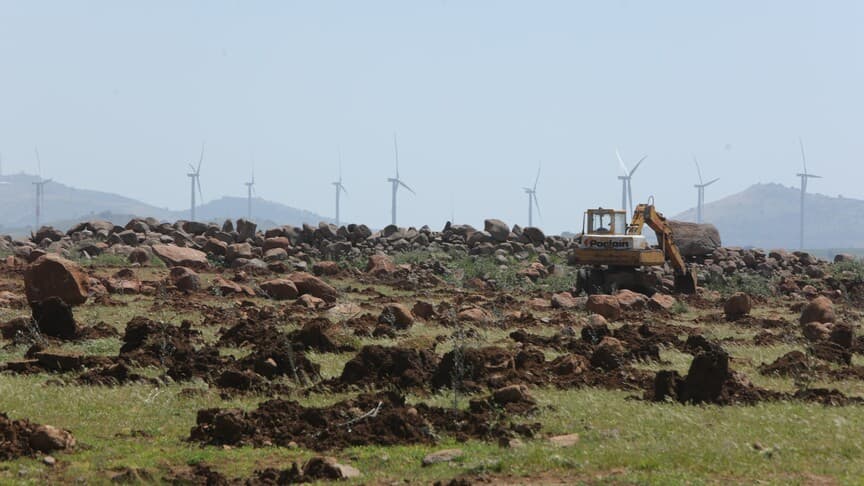
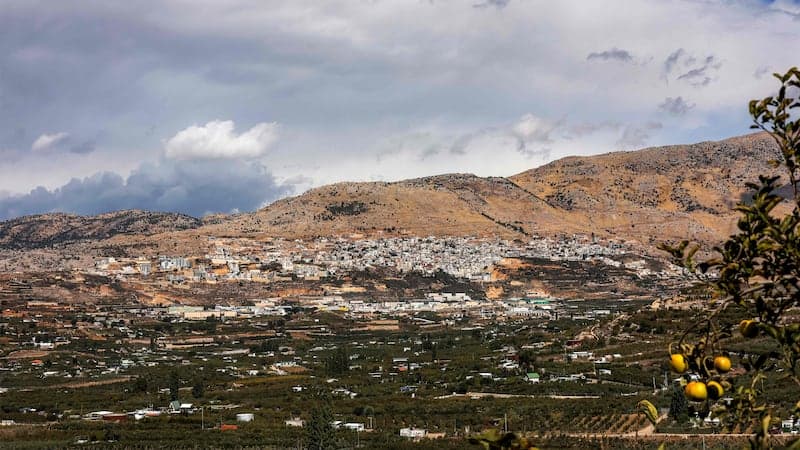
Jumblatt extends the same logic to Syria: after the fall of Bashar al-Assad in December 2024, Israel advanced beyond the 1974 disengagement line and, according to Jumblatt, its forces are now roughly 40 km from Damascus. Part of the “prize,” he believes, is water: “Mount Hermon is water.” He supports Syrian President Ahmad al-Sharaa, but notes that he has no army to resist. Jumblatt was harshest about part of his own community: the Druze spiritual leader Hikmat al-Hijri advocates separation from Damascus under Israeli protection, in August declared the Druze an “integral part” of Israel, and on October 7 his supporters marched through Suwayda with Israeli flags. “He is not a religious leader but a puppet in the hands of the Israelis,” Jumblatt said. In his view, a single project is taking shape on both sides of the border — a belt of Druze territories from the Golan Heights through southern Syria along the edge of southern Lebanon; Israel has never acknowledged the existence of such a plan, known to analysts as the “David corridor.” Meanwhile, Damascus sent troops to Suwayda amid reports that Israel had transferred surveillance equipment, and Syrian Foreign Minister Asaad al-Shaibani accused Israel of funding and arming Druze militias.
The power vacuum and Jumblatt's position
Jumblatt argues that with the US withdrawing and other players preoccupied — Russia in the fifth year of the war in Ukraine, Europe pushed aside by Washington, Saudi Arabia absorbed in the conflict with Yemen's Houthis — Israeli force will remain unchecked. 'The Arab world is powerless today,' he said. He would like Lebanon to become a neutral state on the Swiss model, but acknowledges that 'Israel will never accept this.' His prescription at home is a national dialogue based on the principle that only the state may bear arms, with an agreed disarmament of Hezbollah backed by Iran. Critics, including some Western diplomats, consider him too soft on the group; in response, he recalls how the Lebanese army split apart in the 1980s. The event matters because it records a shift that the sources themselves describe as a change in the regional balance: Israel, according to Katz, holds zones on three fronts and does not intend to leave, while the withdrawal talks have stalled. This directly affects the residents of southern Lebanon — about 2,000 sq. km are covered by displacement orders, and residents are barred from returning — as well as the fate of the Lebanese-Israeli agreement, whose further rounds have not yet been scheduled.