The key facts
- Uzbekistan's Health Ministry signed a contract with the South Korean consortium AUM & LEE for consulting on the project of a 265-bed oncology center in Tashkent
- The center will become part of a medical cluster being created with the Export-Import Bank of Korea; construction of a 300-bed hospital worth $149.8 million began earlier
- The cost of the consulting contract, its implementation timeline and the construction completion date are not disclosed
Consulting contract signed for the oncology center project
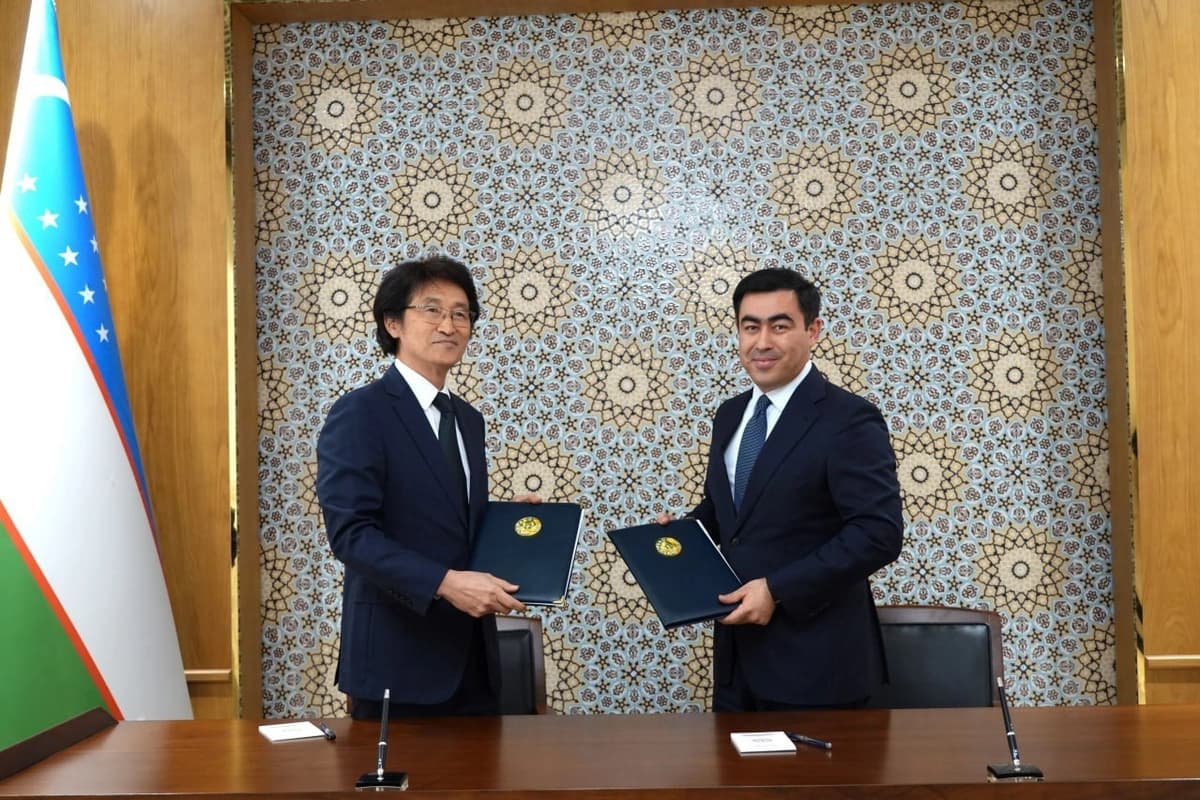
Uzbekistan's Minister of Health Eldor Adilov met with Lee Won-sok, vice president of the South Korean company AUM & LEE Architects & Associates, the ministry's press service reported. The parties discussed the next stages of the project to build a new 265-bed oncology center in Tashkent and signed a consulting services agreement. According to Gazeta, the project concerns the National Oncology Center.
What tasks fall to the Korean consortium
Under the agreement, the AUM & LEE consortium will provide consulting on the facility's design, construction management and supervision, selection of medical equipment, as well as planning of medical services and the center's information system. The institution's staff are provided with three-stage practical training in healthcare quality, radiology, nuclear medicine and radiation therapy. 'It is important for us to build a center of high quality. We trust the experience and quality of work of the Korean side,' said Eldor Adilov. However, the cost of the consulting contract, its implementation timeline and the construction completion date are not specified in the Health Ministry's statement.
The center will join a Korean medical cluster
The new oncology center will become part of a medical cluster being created in Tashkent jointly with the Export-Import Bank of Korea. In October 2025, construction began in the capital on another cluster facility — a multidisciplinary adult hospital worth $149.8 million with 300 beds; the general contractor is the South Korean company Kyeryong. Of this amount, $124 million is provided as an EDCF loan through the Export-Import Bank of Korea, with another $25.8 million contributed by Uzbekistan. According to Gazeta, once operational, the hospital is expected to create more than 700 jobs and perform up to 8,500 high-tech surgeries annually. In May 2026, the parties discussed creating a cluster with a total value of $424.3 million.
What is known about the project's financing
Plans to build the oncology center with South Korea's financial support were reported several years ago. In June 2019, the Korean government approved a concessional loan to Uzbekistan of $127.5 million through the Economic Development Cooperation Fund (EDCF) of the Export-Import Bank of Korea. According to September 2023 data, the loan agreement provided for funds disbursed over 40 years with a ten-year grace period and an interest rate of 0.1% per annum; responsibility for implementing the project rests with the Health Ministry, with debt repayment to come from the state budget. Under the 2023–2025 investment program, the center's construction was planned for 2022–2027. On September 15, 2026, at the Uzbek-Korean business forum in Seoul attended by President Shavkat Mirziyoyev, it was announced that construction of the oncology center and a higher medical education institution in Tashkent would begin.
Context and significance
It was also previously reported that the creation of a National Reference Pathomorphology Center in Uzbekistan for cancer diagnostics was under consideration, along with plans by 2030 to train 100 young oncological surgeons at clinics in France. The signing of the consulting contract is another practical step in implementing the project announced in September 2026: it identifies the contractor for design, construction supervision and equipment selection for the 265-bed center. For patients, this means progress toward expanding oncology care in the capital, but key parameters — the contract's cost and the construction completion timeline — remain unknown, making it impossible to assess the feasibility of the previously announced horizon of 2027.