The key facts
- “Ali G: Who Iz I?” is Sacha Baron Cohen's directorial debut, reviving the character from “Da Ali G Show”
- Cohen also plays Professor Niru Kane-N'Degeocello and Colonel Murad
- Variety's review called the film “limp and unwieldy,” and Cohen admitted the character “should have stayed in the 2000s”
Ali G Returns
Sacha Baron Cohen has returned to the guerrilla style of comedy that brought him worldwide fame, releasing the film “Ali G: Who Iz I?” — his directorial debut. The character Ali G, a white man obsessed with hip-hop and reggae, first appeared in a British TV segment and then became the star of “Da Ali G Show,” where Cohen interviewed public figures, including Donald Trump and Buzz Aldrin, who did not know it was a prank. This was reported by AFP.
Plot and Characters
The new mockumentary shows the hero, known for his flashy outfits and gold chains, searching for a chance to return to television to make money after learning that his girlfriend Julie, played by Morwenna Banks/Morgana Robinson, is pregnant. According to AFP, Cohen, seeking to highlight society's polarization, also plays the character's antagonist — Professor Niru Kane-N'Degeocello, so far-left that “he makes Ocasio-Cortez look like MAGA” (a reference to the democratic socialist congresswoman from New York, Alexandria Ocasio-Cortez), as well as Colonel Murad, at the opposite political pole.
Criticism and the Author's Response
Not everyone welcomed the character's return: according to AFP, for some, Ali G is a relic of the past whose cultural appropriation is no longer funny. Variety's review stated: “The film has a few scattered chuckles, but it's limp and unwieldy, and far less ‘relevant’ than it thinks it is,” adding that “the joke of Ali G was that he was the maximally clueless white poser,” and that he was funniest as a talk-show stooge. Cohen himself, meeting with journalists, admitted that times have changed and called that the reason for the hero's return: “I brought back Ali G because he is a problematic dinosaur”, he said, adding that “this is the perfect time to bring back a character who should have stayed in the 2000s.”
Premiere and Remarks on Satire
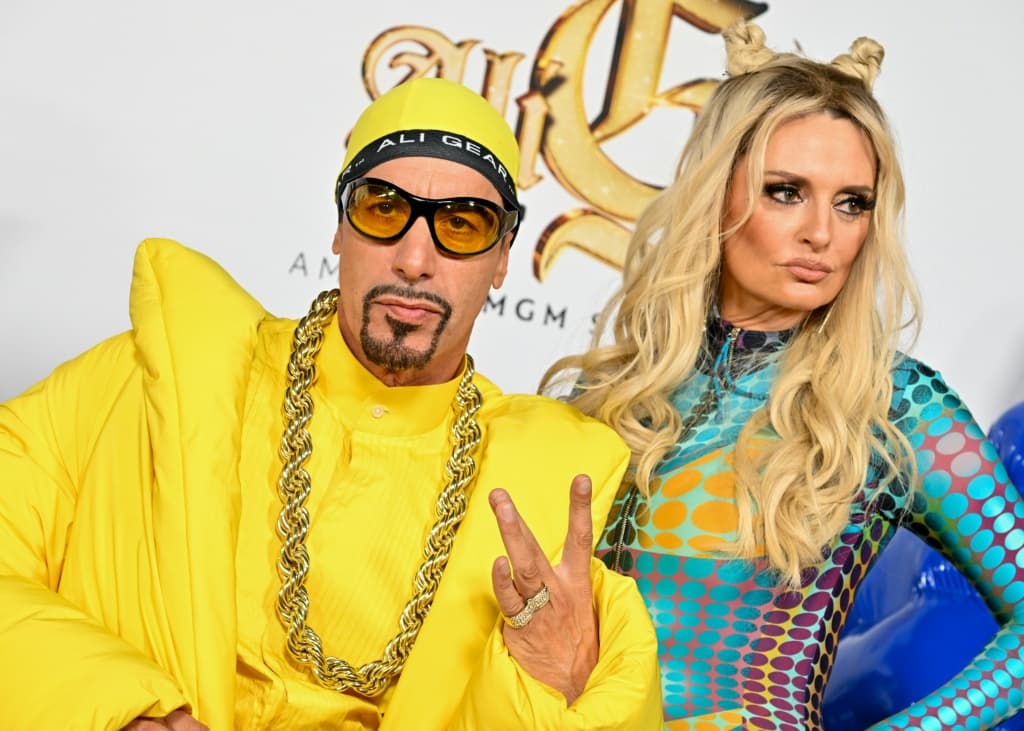
At the Los Angeles premiere, the 55-year-old Cohen arrived in character, dressed head to toe in neon yellow, stepping out of a convertible alongside Julie and performing the song “Richer than Elon,” mocking Elon Musk — the head of SpaceX and the world's richest man. In character, he told AFP: “The world is going to hell. Wars, COVID, people listen to Ed Sheeran more now”, and also remarked that “Coldplay still exists — that's kind of depressing.” At the press conference, speaking as himself, Cohen defended satire as a format for “shedding light on topics that society may not have discussed before,” and warned: “We are at a really dangerous point where a handful of billionaires control the distribution of information,” noting that societies and democracies rest on shared facts while autocracies rest on shared lies, and asking who chooses the information that goes into AI. AFP also notes that Cohen's work has been compared to that of director Nathan Fielder, whose documentary about Elizabeth Holmes was released last week to critical acclaim and box-office success; Cohen praised Fielder, saying he had “created something completely different.” Two decades ago, Cohen used the film “Borat” as a sociological mirror exposing prejudices in American society.
Why It Matters
Ali G's return touches on a long-standing debate about the limits of satire: as Variety's reaction and Cohen's own admission show, a device that worked in the 2000s now raises questions about cultural appropriation. For audiences and the industry, the practical significance is that the film tests whether the classic prank format — interviews with unsuspecting people — can survive in an era of polarization and AI, as the author himself states outright.