The key facts
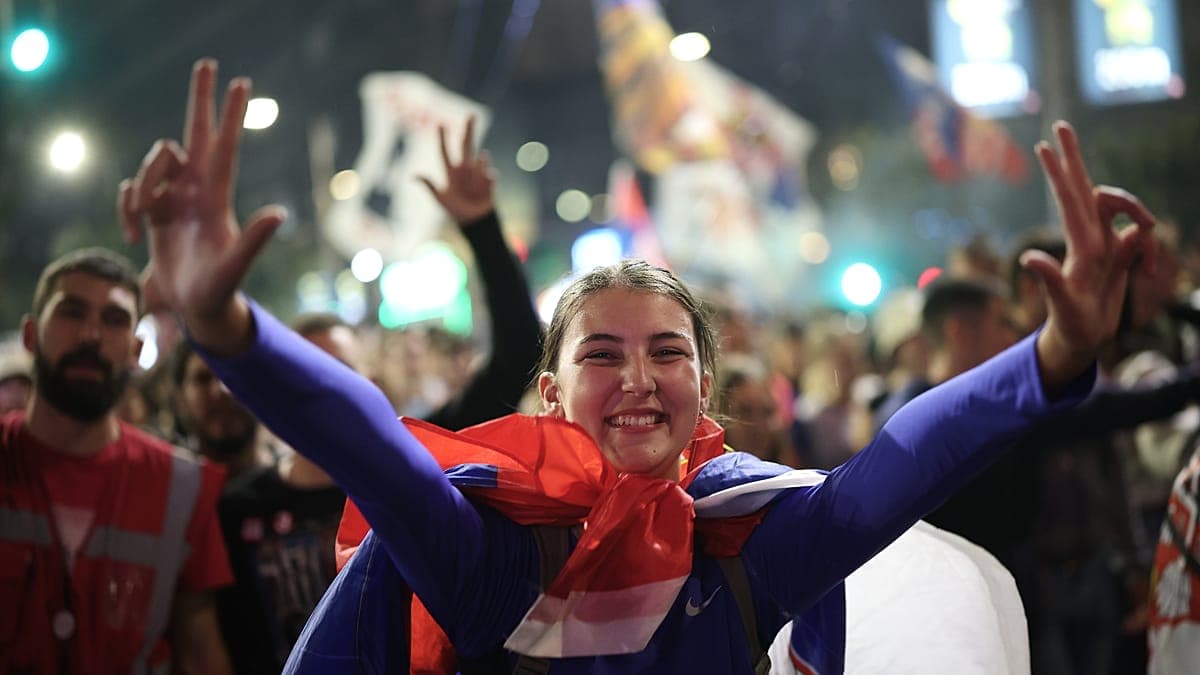
- Tens of thousands of supporters of the 'Students' List' gathered at Slavija Square in Belgrade ahead of Sunday's elections
- Vucic held a counter-rally and called the student movement an attempted coup with foreign funding
- Civil society organisations warned that conditions for free and fair elections are absent
Duelling rallies in Belgrade
On Thursday, a few days ahead of Serbia's parliamentary elections, two competing final rallies took place in Belgrade. Tens of thousands of supporters of the opposition student movement gathered at Slavija Square — the site of some of the largest protests of recent years. Meanwhile, the country's incumbent leader Aleksandar Vucic addressed supporters at a sports hall on the other side of the city. The elections are scheduled for Sunday, 25 October.
The 'Students' List' and its demands
The 'Students' List' is a leaderless movement of candidates backed by students, fielding 250 candidates for 250 parliamentary seats. Many of them come from academia or are deliberate political outsiders. The movement has a broad platform, but at its core is a commitment to fight corruption. It seeks to end more than 14 years of rule by the right-wing populist Serbian Progressive Party (SNS).
Origins of the protests
The elections are the culmination of nearly two years of student protests that began after a canopy collapsed at the renovated railway station in Novi Sad in 2024, killing 16 people. The tragedy was widely linked to corruption; it sparked the largest protests in Serbia since the fall of Slobodan Milosevic in 2000. The movement grew from a demand for a transparent investigation into a demand for early elections. Under pressure, Vucic announced the early vote last month.
Vucic's reaction
Vucic, who has dominated Serbian politics for more than a decade as prime minister or president, has repeatedly accused the student movement of attempting a coup with foreign funding. The 56-year-old politician, who stepped down as president to run for prime minister, said: 'Let us never forget how they tried to overthrow our state. Let us always defend and stand up for it. Let us go and defeat them! Defeat them decisively!'
Assessments and forecasts
There are no reliable independent polls in Serbia, and survey results differ widely. Belgrade University political scientist Dusan Vucicevic told AFP that the outcome is hard to predict, but he expects the students to win more than 40% of the vote — a result far exceeding the performance of any opposition coalition since the SNS came to power in 2012.
Concerns about election fairness
On the eve of the vote, 24 Serbian civil society organisations warned in a joint statement that conditions for 'free and fair elections' are absent, citing documented findings by independent organisations: intimidation, arrests, assaults, misuse of public resources and a distorted media environment. On Wednesday, Belgrade prosecutors questioned six detainees suspected of preparing 'violence, riots and attacks' on election day. Reports of threats against students have increased, but their rallies have remained largely peaceful. Rally participants expressed hope for change: 47-year-old Marija Nedeljkovic Radic told AFP that for the first time she believed it was 'possible to live in a normal country'.