The key facts
- OpenAI opened Decisions API to all customers; the model is built on ChatGPT Luna with accelerated inference (100–180 ms instead of 1–3 s)
- The market was created by the Jev model of startup TypeSafe (valued at $7.6 billion); in the AIM System One Index and Artificial Analysis Decision Index benchmarks, D1 Ultra (Liquid) and Elephant-1 (Base Lab) lead, OpenAI ranks 8th and 14th
- In trials with Box, Datadog, Ramp and Speak, the API reduced latency: for Speak from 1.4 s to 0.13 s
OpenAI enters the decision models market
OpenAI has for the first time made its Decisions API model generally available, entering the market for fast and cheap 'decision-making intelligence.' This segment was created by the Jev model of startup TypeSafe, founded by a former OpenAI researcher — thanks to it, the company was valued at $7.6 billion. Models of this class, also called System One, act as 'super-classifiers': given a set of options, they quickly make a choice and output a confidence score. Developers have found that such models can replace LLMs in many workflows, working faster and significantly cheaper.
How OpenAI created its analog
OpenAI API product leader Nikunj Handa told TechCrunch that colleagues, upon seeing Jev, decided they had 'a million use cases' for such technology. Instead of building a specially calibrated decision model, the team took ChatGPT Luna and reconfigured it to speed up inference and reduce cost. 'The main breakthrough of Decisions API was speed: cutting it from one to three seconds down to 100, 120, 180 milliseconds,' Handa said, adding that specialized model training may be possible in the future, but for now 'it's just regular Luna that gets the job done.'
Deployment and first customers
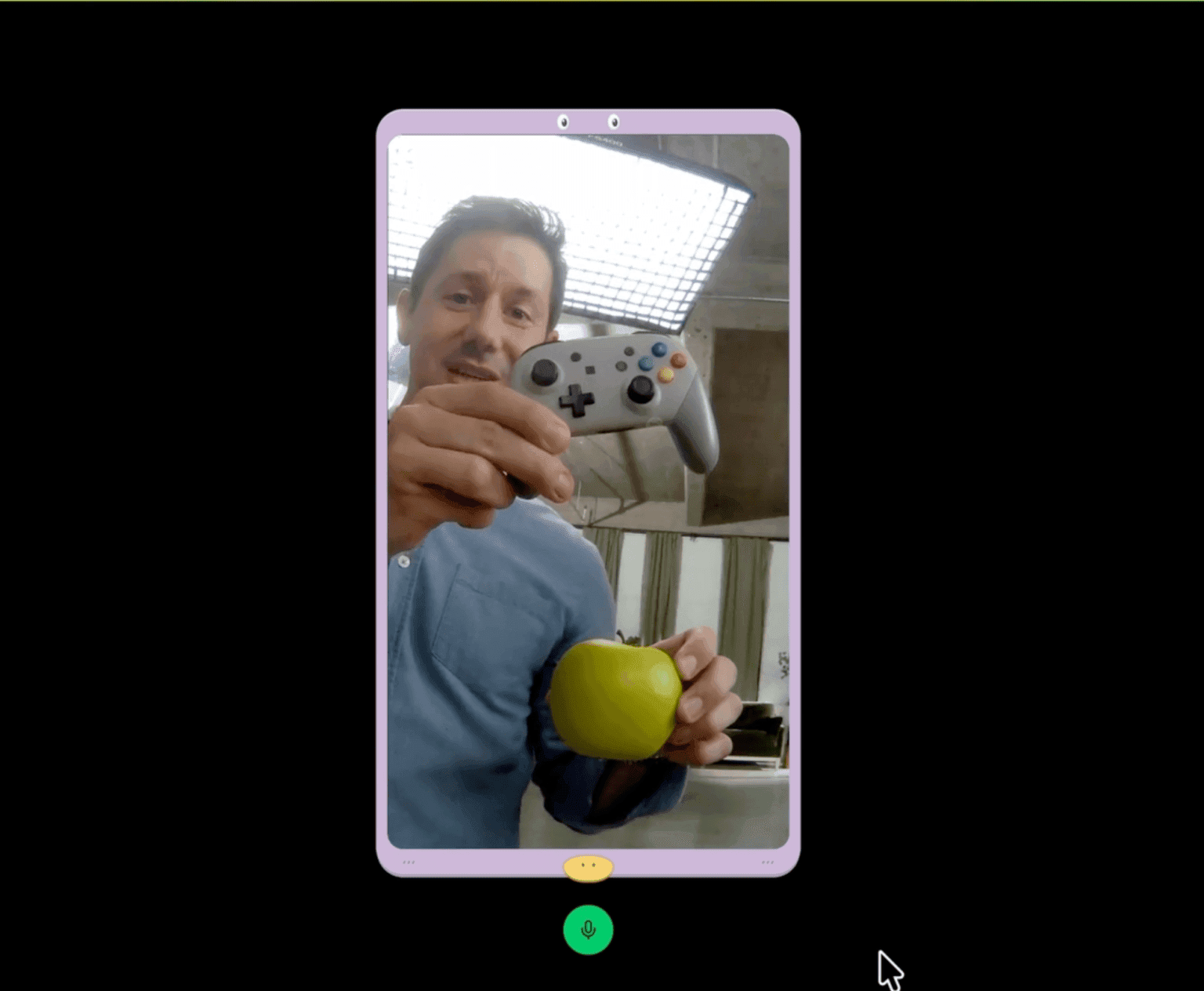
Decisions API was announced at OpenAI's developer day on September 29 and became available to all customers on Thursday. The public version adds voice and visual modalities, and inference resources are geographically distributed to reduce latency across regions. In initial trials with Box, Datadog, Ramp and Speak, engineers used the API to replace OpenAI LLMs with higher throughput. Andrew Hsu, CTO of Speak (the developer of AI language tutors), said the API cut the time between actions from 1.4 seconds to 0.13 seconds. OpenAI has also applied the product to the responsiveness of its voice assistant Dots.
Benchmarks and competition
There is no single criterion for a 'good' decision model — optimization across intelligence, cost, calibration and speed depends on the task. TypeSafe CEO Diogo Almeida distrusts benchmarks and urges testing models in one's own work, yet TypeSafe itself published its own ranking last week alongside the release of a new version of Jev. The public benchmarks AIM System One Index and Artificial Analysis Decision Index favor D1 Ultra from Liquid (released last week) and Elephant-1 from Base Lab. The newest Jev ranks seventh and third respectively, while OpenAI's model ranks eighth and fourteenth. Meanwhile, TypeSafe's offerings remain the most requested on OpenRouter. In the gaming benchmark JevMan, where models play PacMan, the latest Jev leads; Felix Wunderlich of Opper AI, which created the benchmark, noted that the game is 'an interesting test because of the continuous stream of fast, high-stakes decisions.'
OpenAI's advantages and prospects
An advantage of OpenAI's more powerful model may be multimodality: according to Handa, in image classification 'Luna is extremely powerful and shows the best calibration.' Customers are also asking for more flexibility in using images as outputs. Handa sees potential in further acceleration: 'Can we get down to 60 milliseconds — then you could imagine an API call for every frame of video.' As such models become cheaper and faster, TechCrunch notes, they may live up to the name Jev, given in honor of the economist who predicted that a cheap good only becomes more ubiquitous.