The key facts
- About 280 companies from 33 countries, ~70% from outside Qatar
- Qatar's defense minister said lessons were drawn from the war with Iran: protection against ballistic missiles, drones and cyberattacks
- Qatar and France signed an interior ministry cooperation plan for 2027–2030
Doha exhibition and the new security context
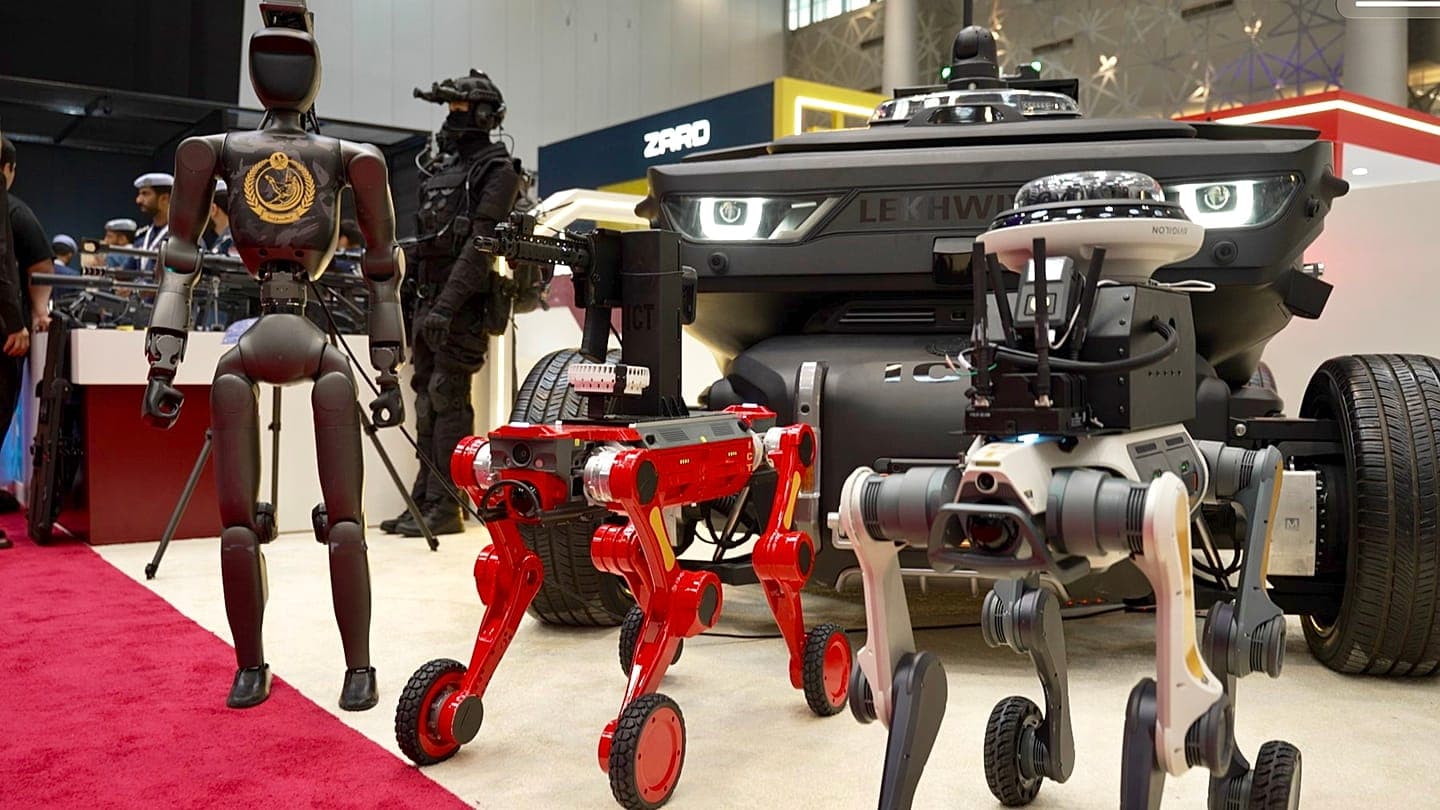
A three-day Milipol Qatar exhibition took place in Doha this week, ending on Thursday. According to organizing committee member Major Khalid Saadoun Al Kuwari, about 280 companies participated, roughly 70% of which came from outside Qatar. The exhibition at the Doha Exhibition and Convention Center covered equipment for police, emergency services and industrial safety, as well as discussions on cybersecurity and protection of critical services. The exhibition was held against the backdrop of Qatar rethinking its defense after the war with Iran.
Growing demand for security
Alexandros Lakatamitis, general manager of West Bay Petroleum, which brought drones to the exhibition, told Euronews that government and corporate clients have begun taking security more seriously: 'The security bubble we have enjoyed for so long no longer exists.' Raised in Qatar, he noted that security has become a more pressing issue for both the government and business. Major Al Kuwari called the exhibition a platform of 'solutions for any challenges faced by different governments and countries,' allowing the study of systems already tested in other states.
Statements by Qatari leadership
On Monday, Qatar's Defense Minister Saoud bin Abdulrahman Al Thani said the country is drawing lessons from the war with Iran to improve protection against ballistic missiles, drones and cyberattacks. He also announced the creation of a local defense production hub and closer cooperation with regional and international partners. On Thursday, Prime Minister Sheikh Mohammed bin Abdulrahman Al Thani, visiting the exhibition, launched the sixth 'Watan' exercises, bringing together security, military and civilian agencies to practice emergency response.
Drones and AI for civilian tasks
The exhibition also showcased solutions for civilian emergencies and hazardous industrial work. Lakatamitis explained how drones can search for missing people over large areas: images from a flight are analyzed by software that detects possible signs of a person and helps rescuers focus their efforts. Another application is industrial inspections: a drone equipped with gas detection equipment can check a suspected leak without sending a person into a dangerous location. Alongside Milipol, the second international Doha International Conference on AI & Security was held, with sessions on responsible AI use, autonomous systems and critical infrastructure protection.
Cybersecurity and bilateral agreements
A cybersecurity seminar on Thursday discussed how to keep vital services running during an attack. Khalid Al Nasr, deputy director of the information security department at Qatar's National Cybersecurity Agency, said that response must go beyond restoring IT infrastructure — key government services must continue operating or be restored within acceptable timeframes. He called for including cybersecurity in disaster recovery and crisis management plans with a clear distribution of responsibilities. The exhibition was also accompanied by new international agreements: Qatar and France signed an interior ministry cooperation plan for 2027–2030 aimed at strengthening coordination and exchanging experience. In a joint statement following French President Emmanuel Macron's visit to Doha, it was said that the expanded partnership covers internal security and civil defense.