The key facts
- The Aman system (Saned + Sharjah Civil Defence) is being tested at open sites and warehouses
- A drone can stay airborne for up to an hour, covers up to 20 km, and transmits data over 5G
- About 13,700 buildings are connected to the system; 500 fires have been verified and reported
Aman system trials
The Emirate of Sharjah is testing an artificial intelligence-based fire detection system that uses thermal cameras and drones to verify whether an alarm has actually gone off before dispatching emergency crews. The Aman system was developed by facilities management company Saned in cooperation with Sharjah Civil Defence. Its aim is to cut unnecessary callouts and speed up response to industrial fires. The technology is being tested at open sites and in warehouse zones, with plans to expand its use once testing is complete.
Demonstration in the Al Sajaa industrial zone
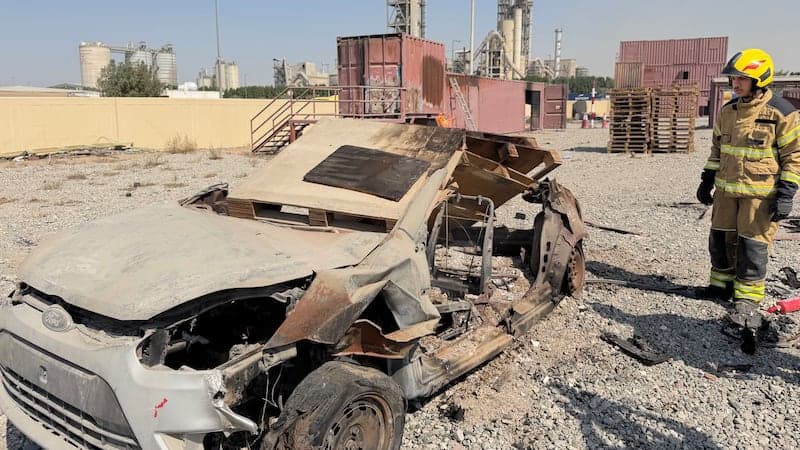
During a demonstration in the Al Sajaa industrial zone, which was attended by The National's editorial team, crews set fire to a container and a damaged car, after which a drone flew around the scene, inspected it and transmitted the information to the command centre. Saned director Hamad Al Zarouni said the system was created to report fires in commercial and industrial zones in order to detect incidents faster, speed up response and improve warehouse safety. According to him, previously the system only reported incidents, but now, with the help of AI, cameras and drones, it can also confirm the presence of a fire.
Capabilities of the technology
Thermal cameras detect flames, smoke and abnormal temperature rises, while drones are sent to areas without cameras to check potential incidents. A drone's battery lasts up to an hour, its flight range is up to 20 km, and data is transmitted over a 5G network, allowing operators to assess the situation remotely. Al Zarouni noted that Aman has been operating since 2018, the technology was developed by Saned, and the rights to it belong to the relevant authority. According to a presentation at Thursday's demonstration, about 13,700 buildings are connected to the system under round-the-clock monitoring, and after verification 500 fires were identified and reported to the authority.
Civil Defence assessment
Brigadier Khalid Al Sharji of Sharjah Civil Defence said the new tests are aimed at applying advanced technologies to improve response to fire reports, especially in industrial zones. “Sometimes the signal is unclear, we send firefighters with vehicles, but there is no fire. This wastes time and effort,” The National quoted him as saying. In his view, transmitting drone images to the command centre will make it possible to verify reports before dispatching emergency crews. The technology is particularly useful at warehouses and industrial facilities, where large volumes of stored goods, including flammable materials, increase the risk of fire. The brigadier added that Aman already provides monitoring of residential areas. The trials are expected to show how effectively the system detects and confirms fires in complex industrial conditions, where early detection is critical for limiting damage and protecting workers.