The key facts
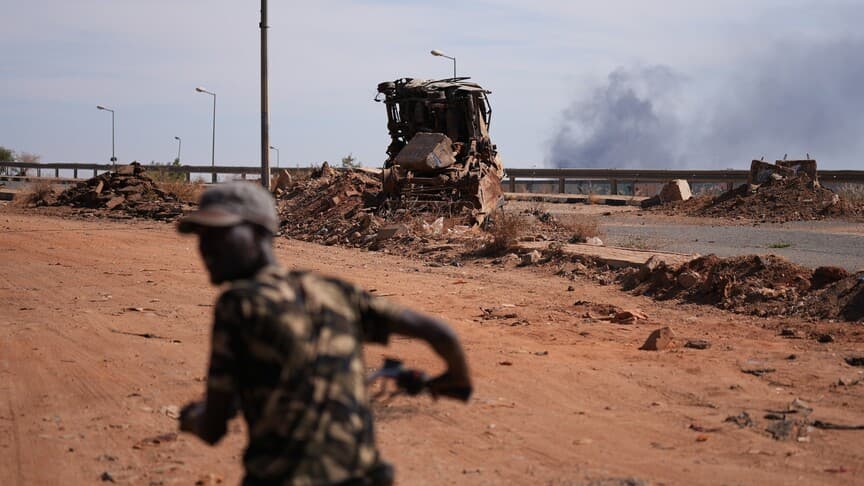
- BBC documented at least 43 attacks on hospitals and medical facilities in El Fasher between May 2024 and October 2025
- From April 2023 to October 2025, 120 health workers were wounded, 55 killed, and 10 'disappeared' or were abducted
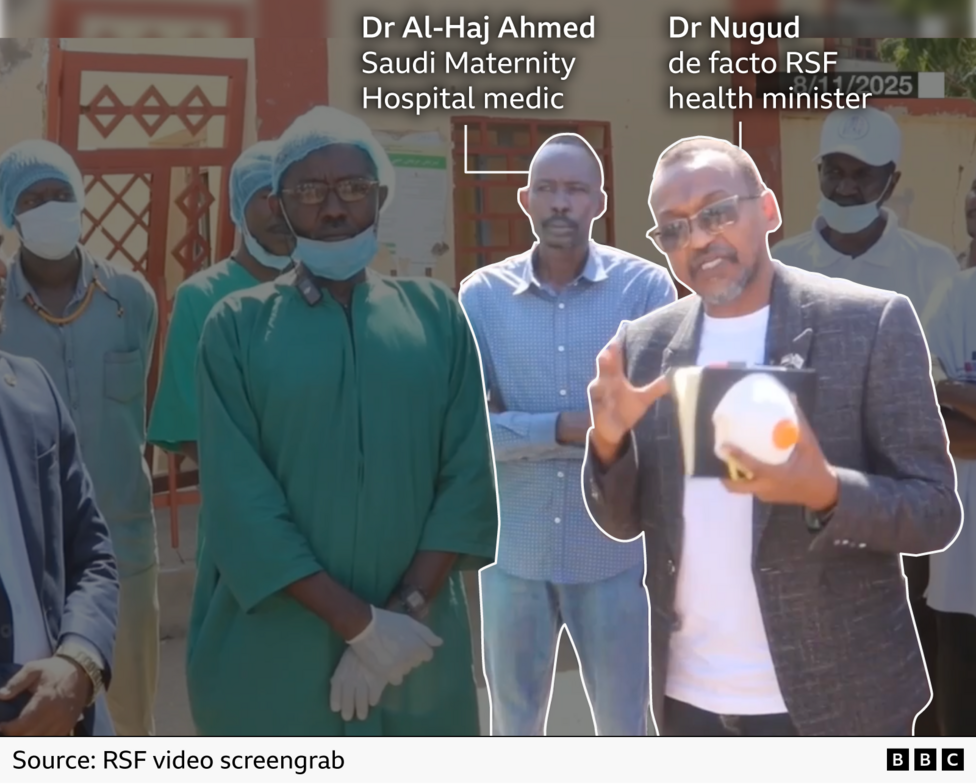
- The RSF rejects the findings; the RSF health minister calls them propaganda and claims the hospitals were used by the military
BBC investigation: systematic strikes on the healthcare system
A BBC investigation has established that fighters of the Rapid Support Forces (RSF), during the prolonged siege and subsequent capture of El Fasher in Darfur, systematically destroyed the city's healthcare system. Based on eyewitness testimony, BBC documented at least 43 separate attacks on hospitals and medical facilities between May 2024 and October 2025, with some facilities hit multiple times. Under international law, attacks on medical facilities and their staff in a conflict are unlawful. UN High Commissioner for Human Rights Volker Türk called the findings 'deeply alarming', stating that the RSF's multiple strikes on civilian infrastructure, including medical facilities, constitute serious violations of international humanitarian law and may qualify as war crimes. The RSF rejected the BBC's findings; the health minister of the RSF-backed government, Dr Alaa El-Din Nugud, called the accusations propaganda by the army and its allies aimed at discrediting the RSF.
Timeline of attacks and the fate of medics
According to the BBC, from April 2023 to October 2025, 120 health workers in the city were wounded, 55 killed, and 10 forcibly 'disappeared' or abducted. Some medical facilities closed in the very first weeks of the war, which began in April 2023, including the Teaching Hospital, whose functions transferred to the Southern Hospital. In late May and early June 2024, the Southern Hospital was shelled several times; on 8 June, RSF fighters stormed into it. The hospital's director, surgeon Izzeldin Ahmed Dawad Asow, recounted that he was beaten with rifle butts amid ethnic slurs ('You are Falange') and survived by pretending to be dead. That same day, the RSF drove the Sudanese army out of the hospital; later, after the army's retreat, the hospital came under RSF control. After the Southern Hospital closed, staff and equipment were moved to the Saudi maternity hospital in the west of the city, where the army's main bases were located; attacks on it intensified. The organization Médecins Sans Frontières (MSF) stated it did not know whether the strikes were deliberate, but that 'the warring parties are taking no precautions'. Six doctors described to the BBC a pattern of systematic targeting: the Saudi Hospital was sometimes attacked up to 25 times a day with artillery and precision-guided drones. Private hospitals and district clinics also closed; when medical facilities were relocated, the new sites were shelled too — as happened with the Paediatric Specialized Hospital (two relocations, both sites shelled) and the main dialysis centre.
Doctors' testimony and episodes of strikes
Medics described how sandbags were erected around the Saudi Hospital, underground bunkers were built from steel containers, and alternative sites were set up for receiving patients and performing operations. According to Dr Asow, the makeshift operating theatre was attacked five times in 2025. He recounted that on 15 March 2025, a drone chased people carrying the wounded to a temporary ward and struck at the gate, killing nine people. On 17 August of the same year, a drone attacked a cart carrying patients (all ambulances had been destroyed), killing two patients, the driver and a donkey. Doctors believed the medical facilities were being targeted deliberately because army or allied fighters were among the patients.
Hospital storming and accusations of mass slaughter
The shelling and bombardment culminated on 25 October 2025 with the RSF's storming of the Saudi Hospital, amid claims of a massacre in which more than 460 patients and their companions were killed. The RSF denies that a massacre took place, but the WHO condemned the reports of killings, and satellite images, according to the BBC, showed clusters of bodies on the hospital grounds. In response to a BBC query, the WHO called the events in El Fasher 'one of the clearest and most severe examples' of the conflict's impact on healthcare in Sudan. At the same time, both sides of the conflict stand accused of attacks on medical facilities: in March 2026, the WHO condemned the bombing of a hospital in Ed Daein in RSF-held territory in eastern Darfur, which killed dozens; the drone strikes are believed to have been carried out by the Sudanese army, which denies responsibility. UN experts reported that the fighting for El Fasher bore ' hallmarks of genocide': Arab militias forming the core of the RSF attacked non-Arab groups.
The RSF's position and the current situation
The RSF health minister, Dr Nugud, insisted that the Southern Hospital had been used as a military base, and showed a video of weapons remnants filmed more than a year after the hospital's closure, as well as, he said, maps of minefields around the Teaching Hospital, located next to the army's headquarters. Under international law, hospitals lose their protection when used by a party to the conflict for 'acts harmful to the enemy'. Doctors told the BBC that the hospital was not part of the base and that they had visited it during the war to obtain medical equipment. The BBC found no independent confirmation of Nugud's claims; the Darfur regional government categorically rejected the accusations. Nugud also denied the forcible abduction of doctors, claiming they had stayed to work voluntarily, and showed a video of medical staff he said had been freed. One of the doctors in the video, Dr Al-Haj Mohamed Ahmed, told the BBC that he had had no choice: 'I was forced to be there. If I had said anything wrong, they would have put a bullet in my forehead.' He and Dr Mustafa Ahmed were captured while trying to leave the city and brought back; they suppressed a cholera outbreak in a temporary camp at the paediatric hospital, where, according to Mustafa Ahmed, he found 50 dead detainees each morning, after which they were assigned to work at the Saudi Hospital. Healthcare in El Fasher is now run by the RSF-backed government, which published videos of the reopened Saudi and Teaching hospitals; Nugud announced plans to open the Southern one as well. A year after the city's fall, the front lines have shifted, there are no signs of a resolution to the conflict, and attacks on healthcare continue amid a large-scale humanitarian crisis.
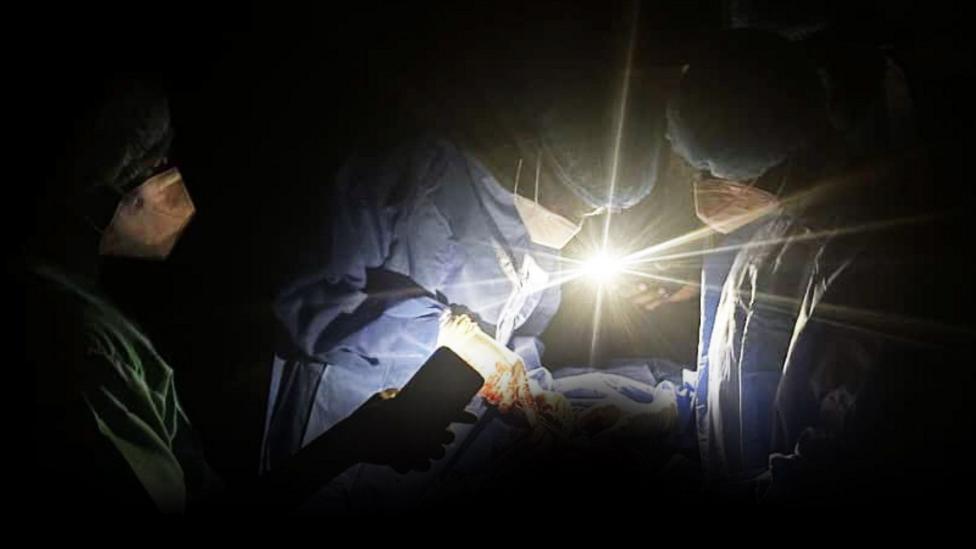 Image source, Saudi Hospital medics
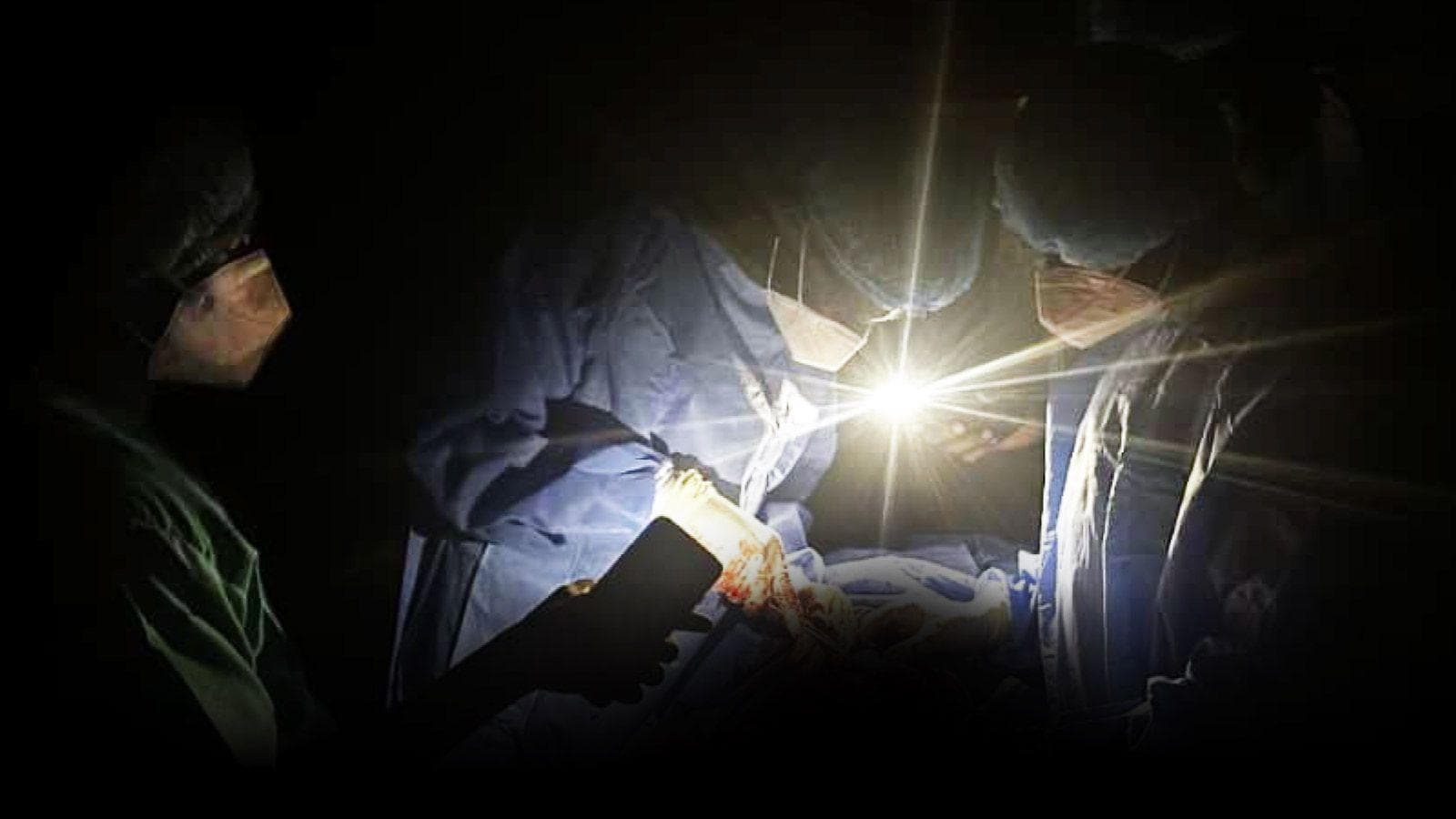
Medics at el-Fasher's Saudi Hospital performed a Caesarean by phone light on the day it was bombed
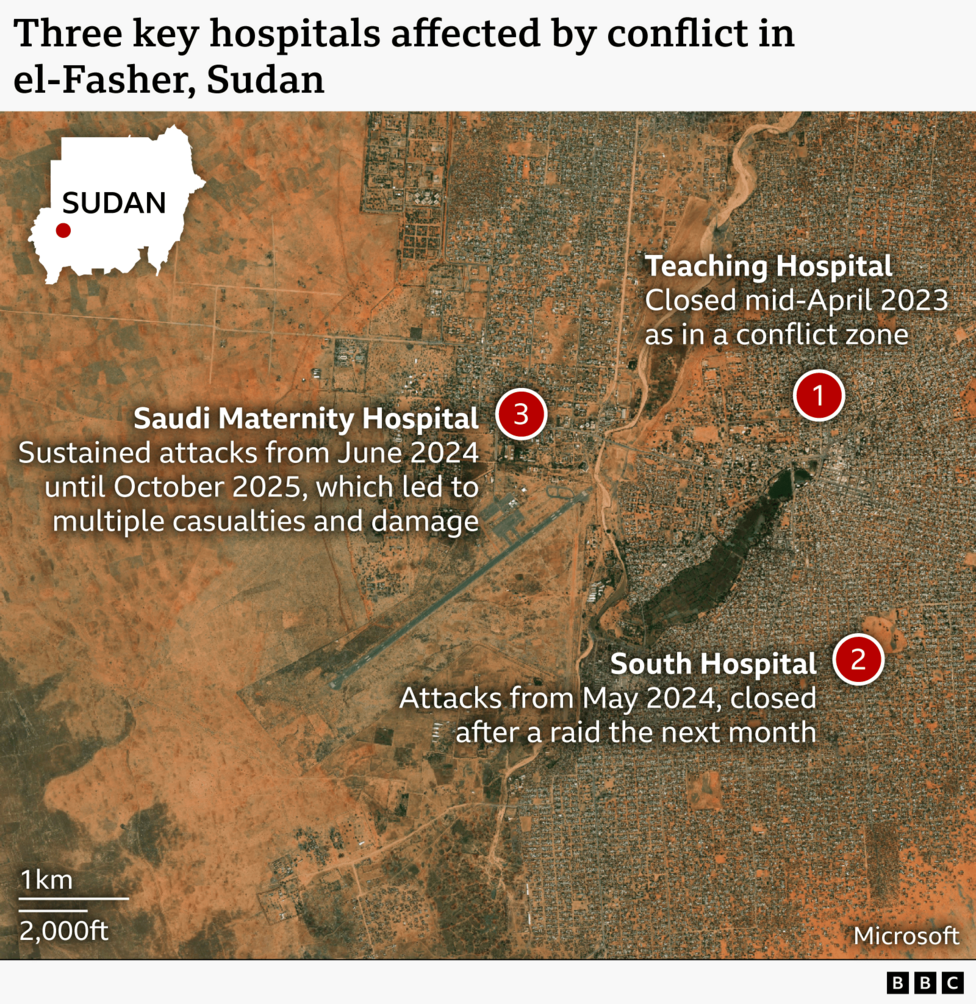
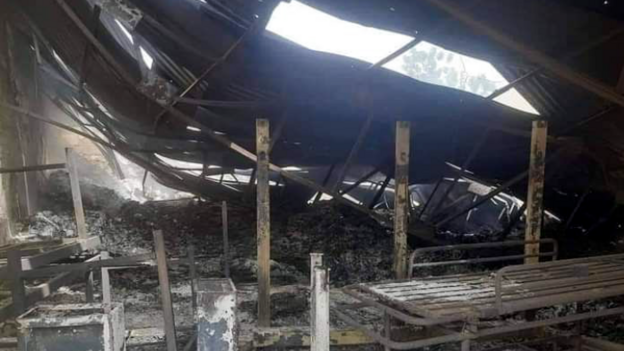 Image source, El-Fasher Resistance Committee
The burnt-out ruins of a building in a compound that housed a medical warehouse and dialysis centre in el-Fasher pictured after it was hit by a missile