The key facts
- More than 500,000 people joined protests on Saturday; the government said it was ready to deploy military forces
- Several teenagers suffered serious injuries: a hand amputation, loss of an eye, a broken jaw
- France is the only EU country where police routinely use flash-bang grenades, notes criminologist Anastasia Tsoukala
Protests and videos of alleged violence
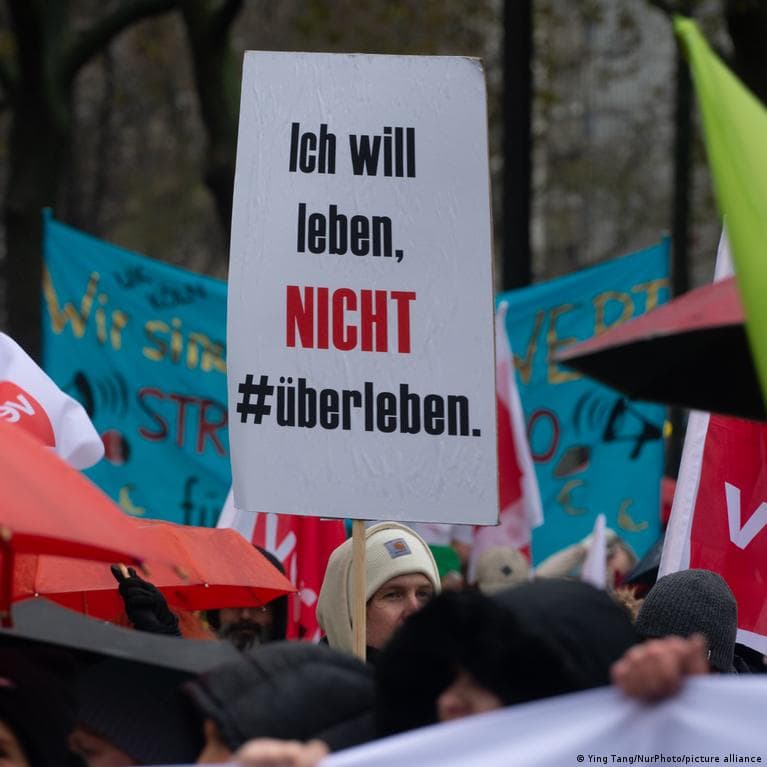
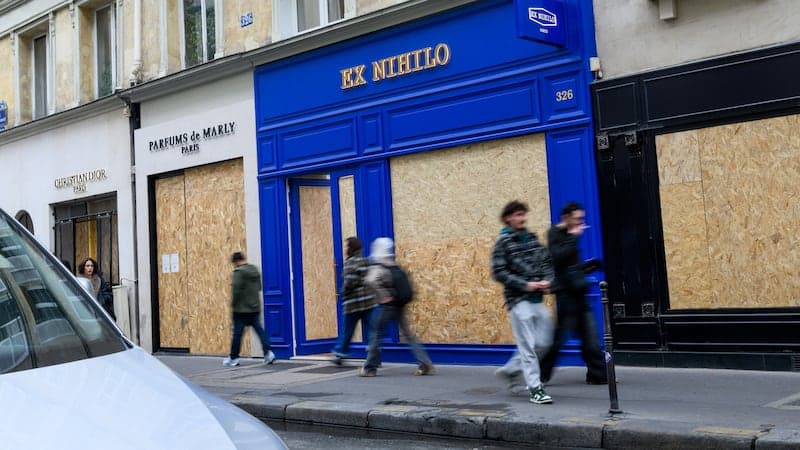
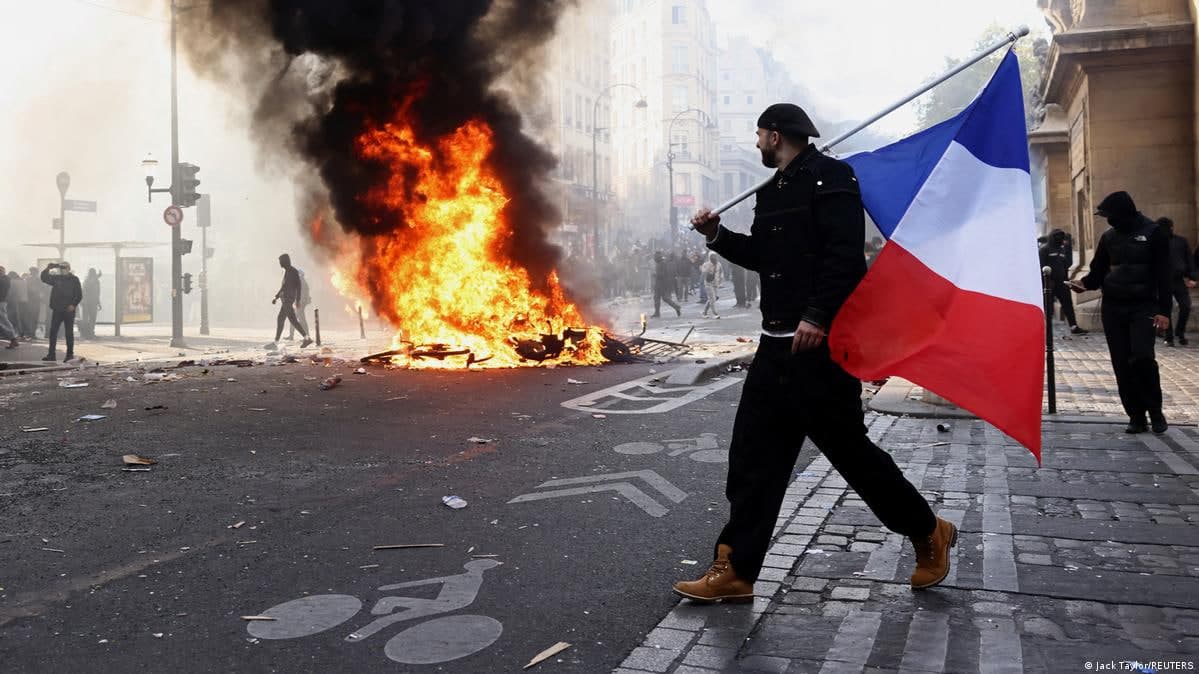
Videos of alleged police violence are spreading on French social media amid a wave of protests: one recording shows police officers beating a man until he loses consciousness and dragging him away; others show the detention of a young man by the neck and the removal of a young woman with her arm twisted, screaming in pain. These videos could not be independently verified. According to Deutsche Welle, more than half a million people took to the streets on Saturday, with most protesting peacefully — against cuts in the public sector, the cost-of-living crisis, and in support of students' demands for improved learning conditions. At the same time, rioters set buildings on fire, looted shops, and threw objects at the police. The protests were preceded by actions by schoolchildren who barricaded school buildings due to a shortage of teachers and demanded infrastructure repairs. New protests are expected next weekend; the government said it would deploy even military forces.
Police equipment and injuries
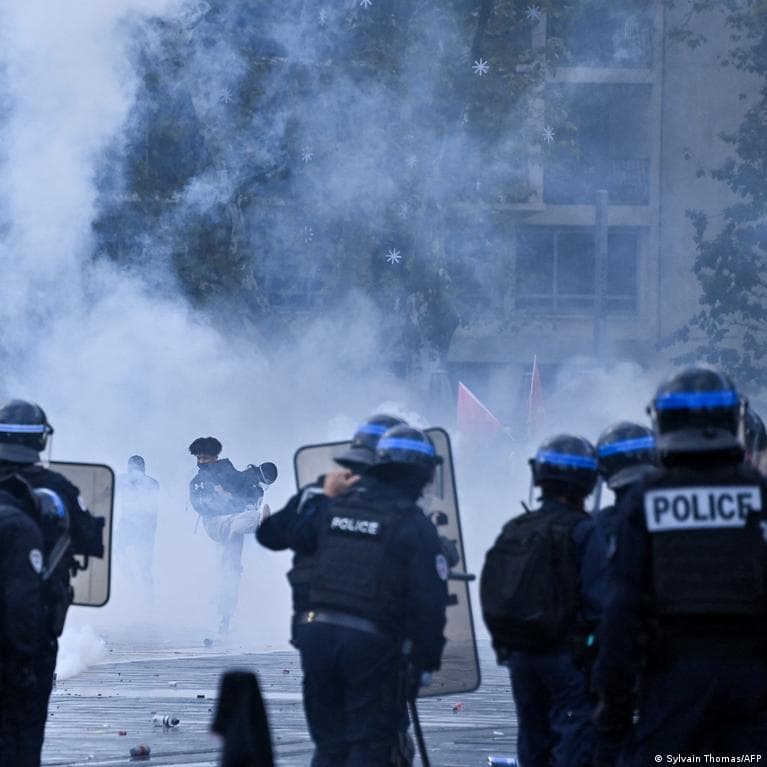
The French police possess one of the largest arsenals in Europe, including the LBD-40 — a weapon for firing rubber bullets. In the UK and Germany, rubber bullets are largely banned at protests; in Spain they are used less frequently and cause fewer injuries. Anastasia Tsoukala, Associate Professor of Criminology at Paris-Sud University, noted that their use requires distance, but 'people can move and suddenly lose an eye.' According to her, what makes France unique is the use of flash-bang grenades with a high explosive content. Over the past weeks of protests, several teenagers have suffered serious injuries: one had his hand torn off, one lost sight in one eye (suspected to be from a rubber bullet fired from an LBD-40 at point-blank range), and another had his jaw broken. Interior Minister Laurent Nuñez insists that the police's weapons are 'non-lethal,' yet part of the equipment is classified by France's internal security code as 'military material.' Expert Roche notes that LBDs were originally intended for units combating organized crime and are now used to disperse demonstrations, reflecting the evolution of policymakers' approach to protests.
Comparison with other countries and expert assessments
In Roche's view, if police brutality is measured by the number of demonstrators killed and maimed, 'the French police are the most brutal in the entire European Union.' He compared the dispersal of environmental protests in Lützerath (Germany, 2023), where there were fewer serious injuries, and in Sainte-Soline (France, 2023), where the gendarmerie intensively used LBDs and grenades; two protesters fell into a coma. Under UN standards, the use of force must be exceptional and proportionate. Nuñez claims that officers mostly adhered to this principle, and in Marseille on Tuesday he stated: 'The police did an excellent job, and thanks to their dedication, a large number of crimes were prevented.' Amnesty International calls the police response 'disproportionate' and urges the authorities to 'fulfill their human rights obligations'; the French branch of the League of Human Rights condemns the 'violent suppression' of the school movement. Tsoukala emphasizes: 'Public order is subordinate to human life and safety.'
Oversight and investigations
The French police have no independent oversight body — investigations are conducted by the internal IGPN division (General Inspectorate of the National Police), which reported opening at least 40 cases since the start of the latest protests. The UK and Denmark have independent oversight bodies. At the same time, Tsoukala criticizes the leniency and lack of transparency across Europe: 'They are acquitted or given extremely light sentences, and, I fear, this is the standard approach to police violence cases throughout Europe.' DW contacted two police unions and the French Interior Ministry for comment but received no response before publication.