The key facts
- Vance defended Musk's position: decisions on Starshield should be made by the Pentagon or the president
- The statement was made before a campaign rally in Nebraska ahead of the November 3 midterm elections
- Vance accused European countries of waging a 'regulatory war' against SpaceX
Vance: the issue is not Musk, but US policy
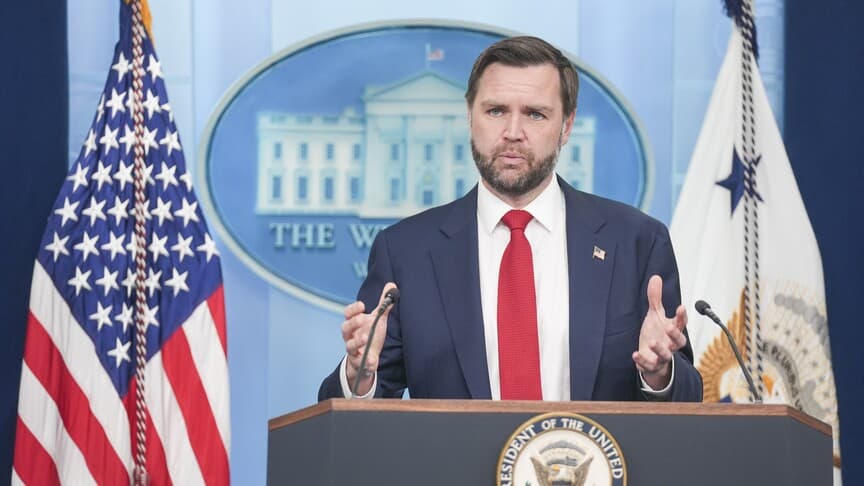
US Vice President JD Vance said on Thursday that questions surrounding Elon Musk's military satellite service Starshield and the war in Ukraine should be viewed in the context of the broader policy of the Trump administration toward Russia and Ukraine, not as a problem concerning Musk personally. He was responding to a journalist's question about whether he shares the position of some Republicans who called for an investigation after Musk said that decisions on the Starshield unit would be made by the Pentagon or the president.
Defense of Musk's position
Vance backed the position of the SpaceX chief, emphasizing the government's responsibility for setting policy. 'Essentially, Elon Musk runs a private corporation, and it is entirely understandable that he does not want to find himself in the middle of a war between two states without the US government actually telling him what to do,' the vice president told journalists before departing for a campaign rally in Nebraska ahead of the November 3 midterm elections. 'I don't think this is about Elon. Essentially, the question is what America's policy toward Ukraine and Russia will be.'
Criticism of European regulation
Vance also criticized what he called a regulatory 'war' by European countries against SpaceX — the company behind Starlink, which is involved in providing satellite internet in Ukraine. 'It seems a bit ironic to me that European countries, which have nothing like the technologies Elon developed in Starlink and Stargaze and in all of SpaceX's internet communication services, have almost all decided to wage a regulatory and licensing war against SpaceX,' he said. According to him, European countries are now turning to the company for help, which underscores their dependence on American technological and military capabilities. 'European countries depend on American technology, American business, and the American military, and yet European political leaders love to criticize US allies on whom they depend so heavily,' Vance added.