The key facts
- On October 20 the Sejm passed two laws: on decriminalization of abortion assistance and on termination of pregnancy in cases of severe fetal defects
- Protests are taking place in 26 Polish cities and in London, most on October 22 at 6:00 PM
- Organizers demand legalization of abortion up to the 12th week, citing the pre-election promise of Tusk's government
Protests on the anniversary of the Constitutional Tribunal ruling
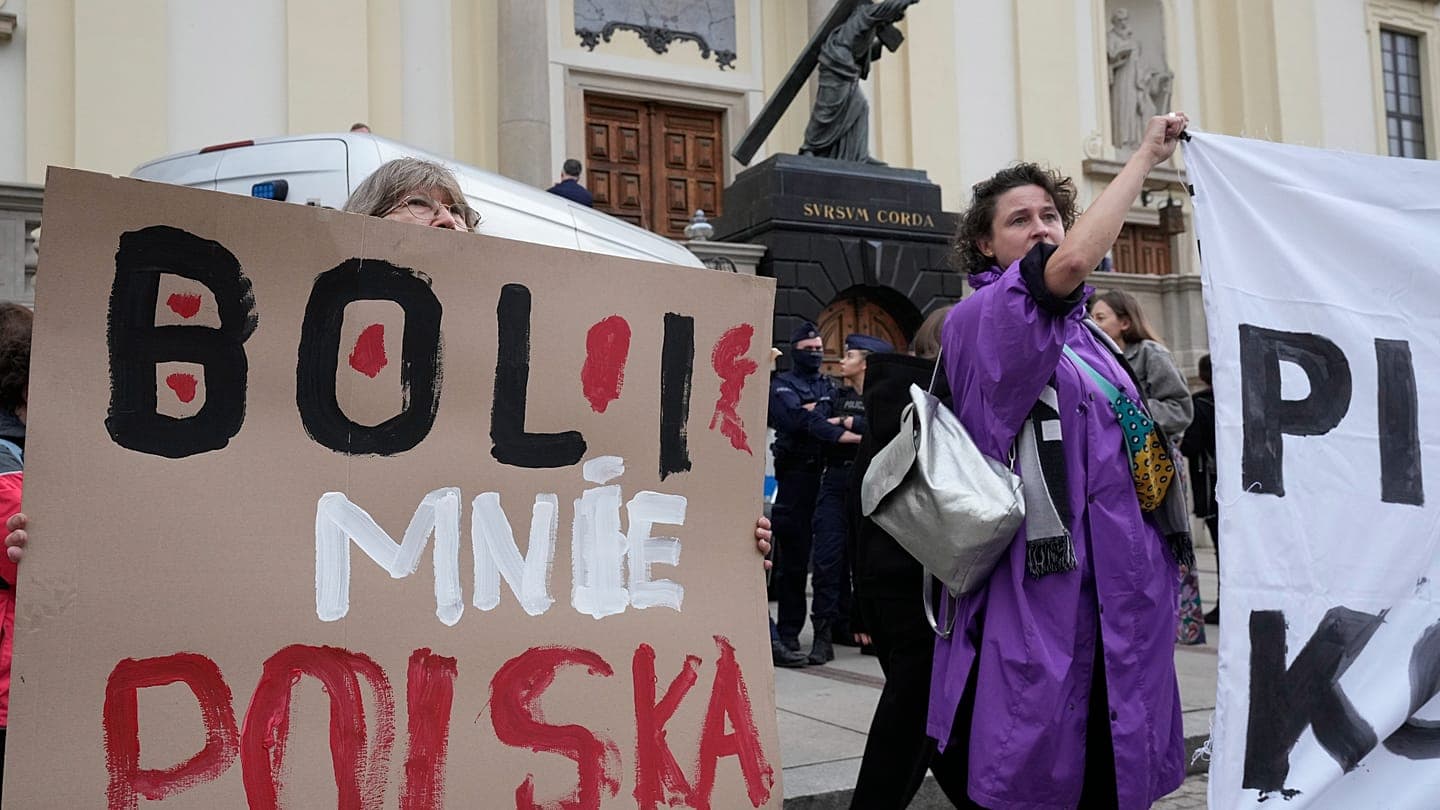
October 22, 2026 marks six years since the Constitutional Tribunal's ruling in the abortion case, which became the starting point for the largest protests in Poland since 1989. On that day, actions under the slogan 'Red Card for Abortions' are planned in 26 Polish cities as well as in London. Most protests will begin at 6:00 PM, in some cities as early as 5:00 PM. The organizers are the foundations and movements Widzialne, Strajk Kobiet, Akcja Demokracja, Legalna Aborcja and Wschód. According to Euronews, demonstrations are taking place in more than 20 cities.
Organizers' demands
In addition to full decriminalization of abortion, protesters demand legalization of termination of pregnancy up to the 12th week, full access to emergency contraception pills, as well as an end by local authorities to unlawful protests in front of hospitals in Warsaw and Gdansk and outside the AboTak clinic in Warsaw. The organizers emphasize that the laws adopted by the Sejm do not meet their demands: the point was not about removing criminal liability and not about returning to the 1993 ban, but about legal abortion up to the 12th week.
Laws adopted by the Sejm
On Tuesday, October 20, the Sejm passed two laws, which will now go to the Senate and then to the president. The first, proposed by Donald Tusk's Civic Coalition and Lewica, partially decriminalizes abortion and removes criminal liability for assisting in its performance — such an act is currently punishable by up to three years in prison. It passed with 217 votes in favor, 213 against and three abstentions. The second, introduced by more conservative coalition partners — Poland 2050 and the Polish People's Party — repeals the consequences of the 2020 Constitutional Tribunal ruling that banned abortion in cases of severe fetal defects; it was approved by 233 votes to 203 with one abstention.
Criticism and accusations against the government
Zofia Marcinek of the Warsaw group Abortion Dream Team called the legislation 'symbolic gestures' rather than a genuine reform attempt, noting that the government knew of the low likelihood of overriding a presidential veto. She accused the authorities of trying to win back women's support ahead of next year's parliamentary elections. Both laws are expected to face a veto from conservative President Karol Nawrocki.
Reference to pre-election promises
The organizers remind that legalization of abortion up to the 12th week was a pre-election promise of Donald Tusk's government, number 9 in the list of one hundred steps for the cabinet's first 100 days. The promise read: 'Abortion up to the 12th week of pregnancy will be legal, safe and accessible. No hospital operating within the national health system will be able to invoke the so-called conscience clause and refuse to perform the procedure. The decision must remain with the woman.' The activists write: 'After more than 800 days of complete inaction, the commission is offering us a return to the 1993 ban. We were not seeking a time machine, but the safety of women in hospitals.'
Statements by Strajk Kobiet
On Instagram, Strajk Kobiet stated that those in power are 'genuinely frightened': the prospect of protests against a government that fails to keep its promises means for them 'a real risk of losing power, privileges, glamour, fame and constant media presence.' According to the activists, 'this is not fear of further deaths in hospitals. It is fear of ending up on the opposition bench.' They also addressed the president's supporters: 'And don't write to us now about Nawrocki. He promised us nothing, unlike the ruling majority.' The organizers note that the announcement of the protests has already brought the abortion issue back onto the Sejm's agenda: 'These are not the bills we are waiting for, but it is clear that the pressure is genuinely producing results.' They also remind that October 3 marked ten years since the 'Black Monday' actions, and that, despite pre-election promises, Poland has one of the strictest abortion laws in Europe.