The key facts
- Attacks and clashes have increased in Sistan and Baluchistan province; among the victims were IRGC members, Basij militiamen and a Sunni cleric.
- In December 2025, Baluch opposition groups united as the Popular Fighters Front.
- Baluchis, making up 2–6% of Iran's population, accounted for 9% of executions in 2025, according to Iran Human Rights.
Rising Violence in Southeastern Iran
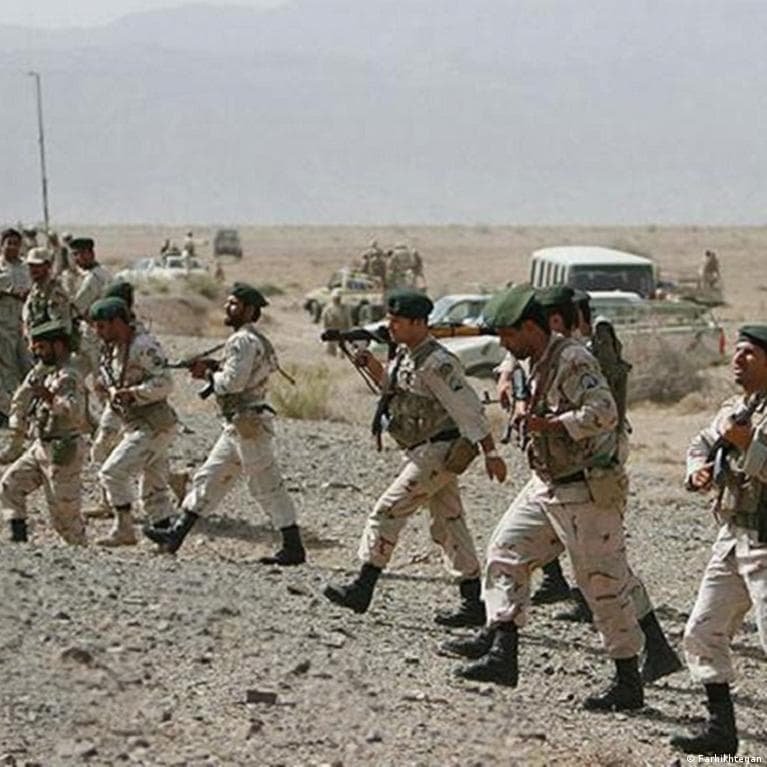
In recent weeks, attacks, assassination attempts and armed clashes have again occurred in Iran's province of Sistan and Baluchistan, which borders Pakistan and Afghanistan. Incidents have been recorded in the provincial capital Zahedan and in smaller border towns. Among the victims were members of the Islamic Revolutionary Guard Corps, the Basij militia, armed individuals and a Sunni cleric. DW notes that it cannot be stated with certainty that the surge in violence is caused by security gaps after the war with Iran, but the growing number of attacks points to a continuing deterioration in an already fragile border region.
Unification of Opposition Groups
In December 2025, several Baluch opposition groups in Iran united under the umbrella of the Popular Fighters Front. Observers see this as an attempt to more closely integrate political and military activity. The coalition was formed before the start of the war with Iran. Iranian journalist Mehdi Nakhl Ahmadi, who lives in Italy and has covered the situation of the Baluchis for many years, told DW that the new security situation may allow armed groups to expand their operations and exploit the emerging gaps. At the same time, there is no evidence yet of coordinated cross-border cooperation between the various Baluch organizations of Iran and Pakistan; some groups seek independence for Baluchistan.
Structural Causes of Discontent
Ahmadi links Baluch discontent to structural factors: in his words, the Islamic Republic's security policy toward ethnic and religious regions over recent decades has widened the gap in economic development between them and the rest of the country. A source inside Iran familiar with the situation of the Baluchis (whose identity is not disclosed for security reasons) linked part of the armed violence to political, economic and religious grievances: discrimination in employment, education, regional development and religious matters heightens tensions. He emphasized that the conflict should not be viewed in isolation: clergy, scholars and other community leaders have for years tried peacefully to push for better social policies and investment, but without success, which has pushed some toward more radical measures.
Executions and Smuggling
The source also cited the large number of executions in recent decades as a factor of discontent; most documented executions in the province are related to drug offenses. Baluchis make up, by estimates, only 2–6% of Iran's population, but are disproportionately subjected to the death penalty: according to Iran Human Rights, they accounted for 9% of all recorded executions in 2025, 11% in 2024 and 20% in 2023. For many residents of the poor region, smuggling opium into Iran and fuel out of the country is one of the few ways to earn a living, which, in turn, sustains a constant military and security presence on the border. It is unknown whether armed groups in southeastern Iran receive support from abroad.
Escalation in Pakistan's Baluchistan as Well
Violence is also growing in Pakistan's province of Baluchistan, rich in gas, gold and copper but economically underdeveloped. According to the Pakistan Institute for Conflict and Security Studies, 131 armed attacks were recorded there in September, compared with 89 in August. In addition to the long-standing separatist movement, the Pakistani Taliban (TTP) is also expanding its operations. This increases pressure on the strategically important transport links between Iran and Pakistan. Far less is known about the situation of the Baluchis in Afghanistan.