The key facts
- Pascal raised $8.5 million as an extension of its seed round (co-led by Sazze Partners and LB Investment, with participation from KDB Silicon Valley)
- The technology promises roughly a 20% efficiency improvement for refrigerators and heat pumps
- The first prototype is expected early next year, with a batch of refrigerators in 2028
A Chance Discovery at the Core of the Startup
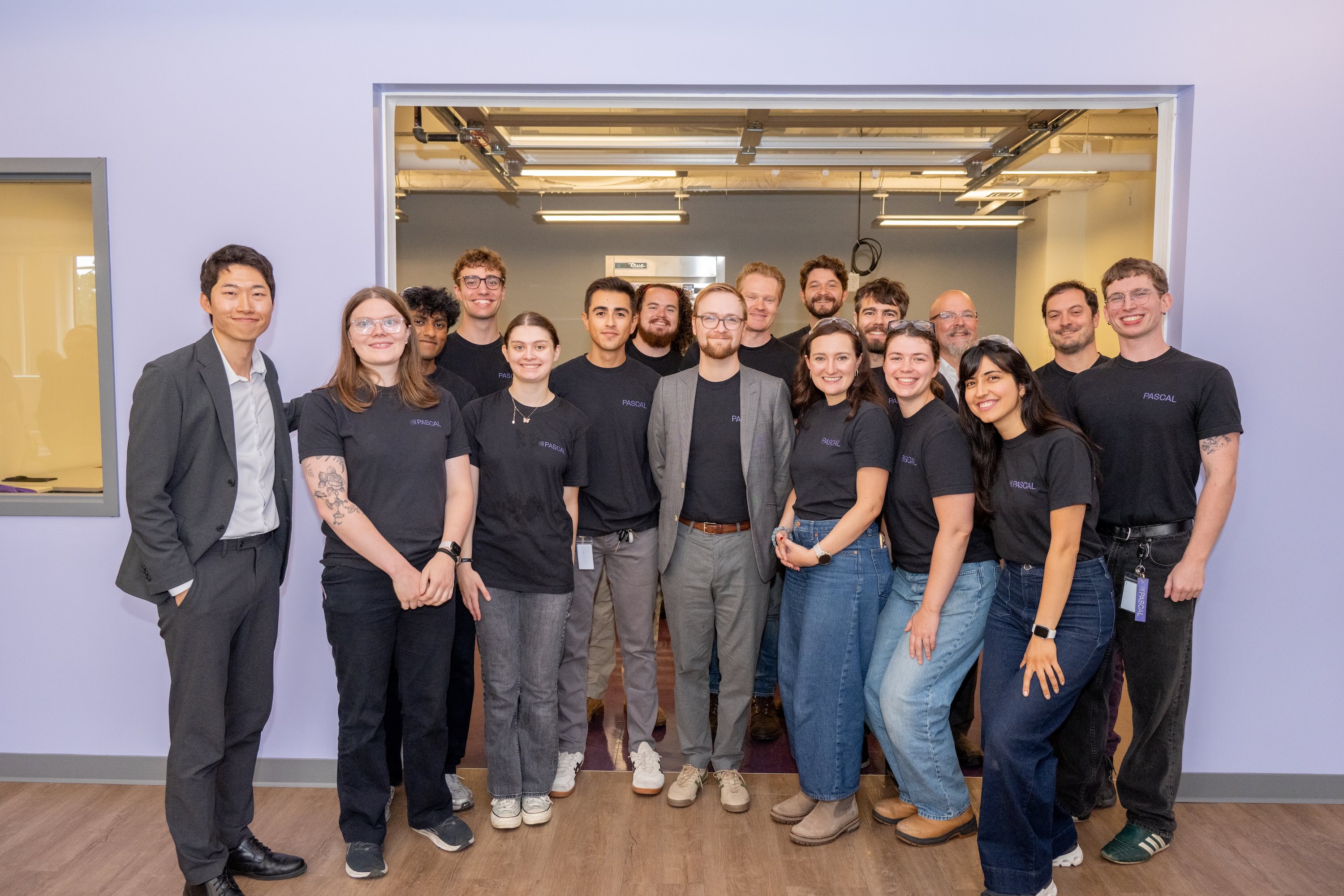
Pascal's founders — CEO Adam Slavney and CTO Jinyoung Seo — encountered unexplainable experimental results while testing a new class of materials for more efficient refrigerators, air conditioners, and heat pumps. According to Slavney, the team had guesses after about three months, but final proof took a year or two. Before that, Slavney and colleagues at Harvard University had been researching solid-state refrigerants: while taking measurements under high pressure, they swapped one gas for another and noticed a difference that should not have been there.
Funding and Plans
Pascal recently raised $8.5 million as an extension of its seed round; the round was co-led by Sazze Partners and LB Investment with participation from KDB Silicon Valley. Slavney noted that the round came together thanks to a customer contract secured earlier than expected: the company signed an agreement with a multinational beverage manufacturer for a pilot deployment of the technology. Pascal expects to deliver its first prototype early next year, followed by a batch of more refined refrigerators in 2028.
The Refrigerant Problem
Scientists have been searching for more efficient and safer refrigerants for decades. Slavney described the situation as an 'endless treadmill': older gaseous refrigerants like freon destroyed the ozone layer, while newer ones, such as R-134a, remain extremely potent greenhouse gases. According to him, the industry has been 'playing whack-a-mole' with refrigerants for 35–40 years. Solid-state refrigerants, since they cannot escape into the atmosphere, eliminate these problems and promise higher efficiency.
How Pascal's Technology Works
Instead of compressing a solid block of material, Pascal compresses a gas — carbon dioxide — in a cartridge containing a sponge-like porous material whose composition the company keeps secret. As CO2 molecules penetrate the pores, they collide with the walls and transfer energy to the material, heating it; a heat exchanger removes some of the heat. On the reverse stroke, the material absorbs energy from the heat exchanger and transfers it to the CO2 molecules. In a Pascal refrigerator, two cartridges operate simultaneously: one draws heat from the interior chamber, the other releases it to the outside air; when they get too hot or too cold, the flow is reversed.
Reliability and Prospects
Slavney said the material has withstood up to 300,000 cycles — equivalent to roughly a year of operation. According to him, the system transfers heat more effectively than other solid-state refrigerants, so it does not require high pressures. 'We use ordinary systems,' he said. 'That means we can make this cheap, and therefore widespread.' Heat pumps and refrigerators use the same underlying technology, so Pascal's solution is applicable to both classes of devices.