The key facts
- Protest outside NYT headquarters in New York over Gaza and Lebanon coverage
- Demonstrators accused the outlet of bias and handed out leaflets
- The New York Times did not publicly comment on the action
Action Outside The New York Times Offices
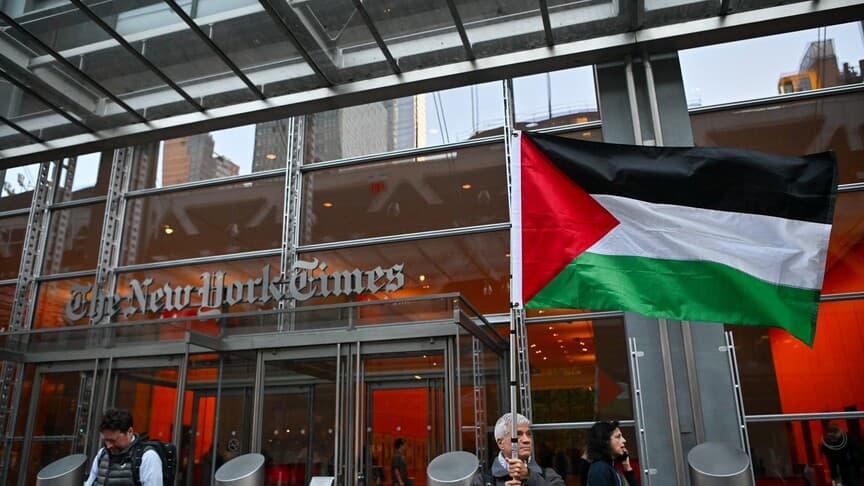
On Tuesday, pro-Palestinian activists held an action outside The New York Times headquarters in New York. According to Anadolu, demonstrators protested against the newspaper's coverage of what they call the genocide in Gaza, as well as the occupation of Palestinian and Lebanese territories.
Chants and Actions of Participants
At the entrance to the building, participants chanted 'New York Times, you liar,' accusing the outlet of bias in its editorial policy. One of the prominent placards read: 'Consent for genocide is manufactured here.' Demonstrators with Palestinian flags and wearing keffiyehs handed out leaflets to passersby, while a drummer accompanied the chanting.
Reaction of Authorities and the Newspaper
Law enforcement maintained heightened security around the perimeter of the building in Manhattan. The New York Times did not publicly comment on the action.
Context According to the Agency
According to Anadolu's wording, since October 2023 Israel has been committing genocide in Gaza and continues the occupation of West Bank territories. In Lebanon, Israel, according to the agency, maintains the self-proclaimed 'security zone' in the south, which Lebanon and the UN characterize as an occupation in violation of the ceasefire framework. It should be noted that these assessments reflect the position of the source and the participants of the action.