The key facts
- The Daphne Caruana Galizia Prize was awarded to the investigation by Maite Vermeulen and Giacomo Zandonini, published by De Correspondent in January 2026.
- According to the authors, about €259 million was spent on the centers over two years with 256 detainees — roughly €1 million per person.
- Five EU countries plan to create similar 'return hubs' in Africa by 2027.
Prize for investigation into Albanian centers
The European Parliament awarded the Daphne Caruana Galizia Prize for Journalism to an investigation into human rights violations in migrant centers created by Italy on Albanian territory. The laureates are Maite Vermeulen and Giacomo Zandonini, authors of the piece by the Dutch outlet De Correspondent, published in January 2026 under the title 'Cuffed, caged, cast away: this is Europe's 'innovative solution' for unwanted migrants'.
What is known about the centers
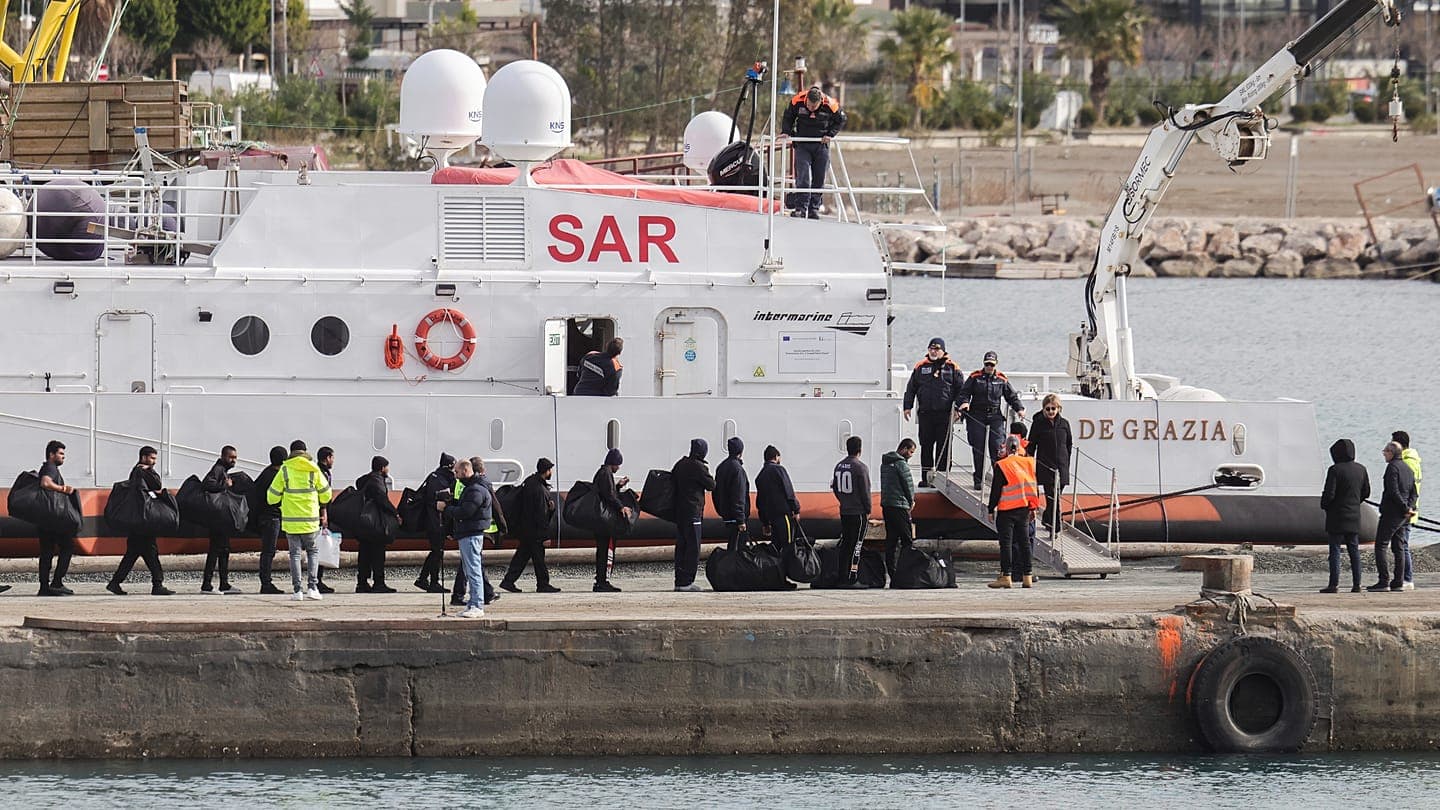
The centers in question are located in Shengjin and Gjader, opened in 2024 to house asylum seekers rescued at sea while their applications were being processed by Italian authorities. After a series of court defeats, Giorgia Meloni's government repurposed the centers in March 2025: they began holding irregular migrants who were already in Italy, ahead of their deportation to their countries of origin. The investigation questions the legality of the centers, which have become a model for European migration policy.
The authors' conclusions
The journalists documented violations of fundamental rights and European law in the treatment of migrants and their transfer to the centers, and also warned of a new EU migration policy. According to their estimate, about €259 million was spent on the facilities in the first two years of operation, while 256 people were detained — roughly €1 million per person. Vermeulen called the project 'a big PR operation, not a policy that actually speeds up returns', noting that the Italian approach is not cheaper, not more effective, and does not deter irregular arrivals. In her view, other EU countries will not be able to replicate the Italian model without violating human rights. The article states that the deal is 'an example of how to undermine human rights, the rule of European law, and normalize far-right views on migration'.
Opacity and other countries' plans
The investigation criticizes the 'smoke screen' of the Italian authorities: journalists were denied access, freedom of information requests often went unanswered, center staff signed strict non-disclosure agreements, and contracts were not published. After the adoption of a controversial EU law creating a legal basis for transferring irregular migrants to countries with which they have no ties, five countries of the bloc intend to create similar 'return hubs' in Africa by 2027. The prize jury consists of journalists from all EU member states.