The key facts
- Google connects Gemini in cars to Gmail, Calendar, YouTube, Maps, and search history
- Launch in Android Auto on October 20, 2026, and in Google Built-in in the coming months
- The feature works only after user consent; it can be turned off and connected apps can be chosen
A personal assistant in the car
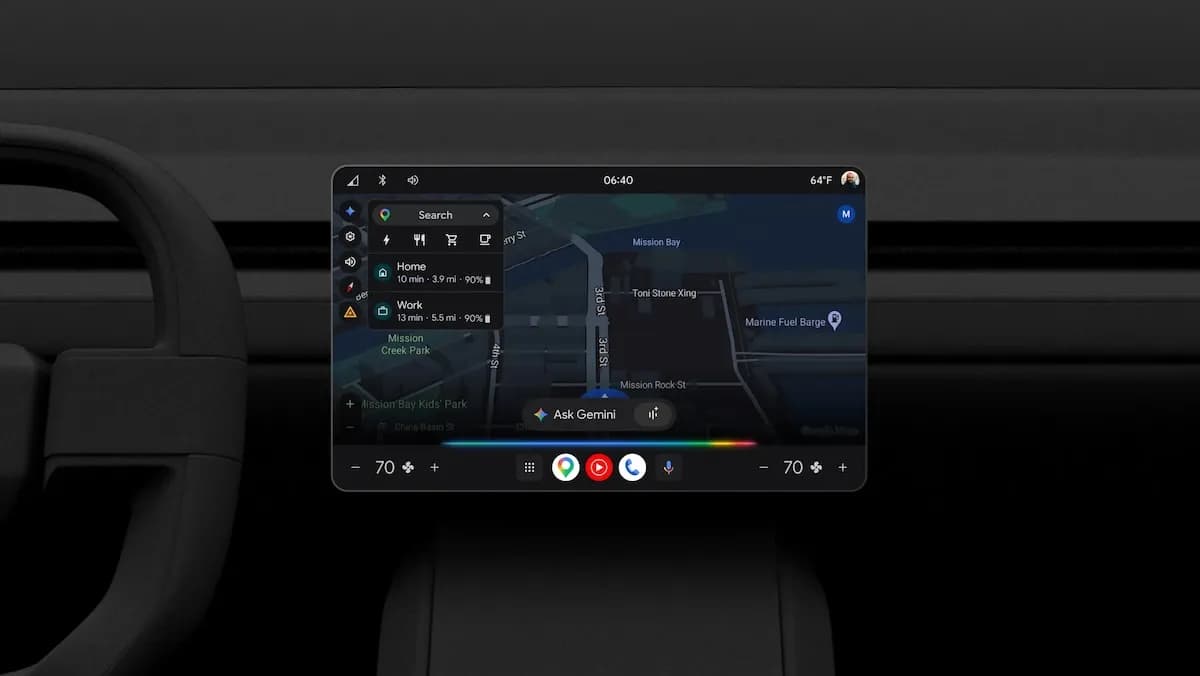
On Tuesday, October 20, 2026, Google announced an update to its AI assistant Gemini, which is already installed in millions of cars. The new feature, called 'Personal Intelligence with Gemini,' will be able to use information from Gmail, Google Calendar, YouTube, Maps, Google Search history, and other connected company services to take into account the user's preferences, activities, and past experience. According to TechCrunch, this step could tie consumers even more tightly to the ecosystem of Google products.
How and when it launches
The feature will roll out in two ways: through Android Auto — a phone app that sends navigation, media, and messages to the car's screen — and through Google Built-in, i.e., services built directly into the car. In Android Auto, the launch took place on the day of the announcement, while in cars with Google Built-in the feature will appear in the coming months. Gemini arrived in Android Auto in November of last year, and 'Personal Intelligence' was rolled out in the US in March and is currently in beta on global markets.
What the feature can do
Google describes the update as a way to 'connect the dots' between the user's apps. For example, a driver heading to the airport may receive a notification about a delay of the flight listed in their calendar. The assistant also supports complex natural-language queries: a user can ask for the boarding gate and, right after, whether the flight is still on schedule — Gemini will answer both questions at once.
Data and control
To use the feature, the user must give explicit consent. Google states that users retain full control over their data: Personal Intelligence can be turned on and off at any time, and users can selectively decide which apps to connect. The publication notes that such a degree of data integration may cause discomfort among consumers.