The key facts
- Most often gums bleed due to bacterial plaque and gingivitis, but the symptom is nonspecific.
- Bleeding combined with bruises, nosebleeds and red spots on the skin requires medical evaluation.
- Before implantation, per European Federation of Periodontology recommendations, gum inflammation is treated first.
Blood on the brush is not always 'sensitive gums'
Dental surgeon and implantologist at the Dream Team clinic in Kaliningrad, Valentin Shopov, told Life.ru that recurring gum bleeding should not be attributed solely to trauma or inflammation: it can be linked to blood diseases, deficiency states and medications being taken. In his view, it is important to find out the cause rather than simply pick a toothpaste promising to remove the symptom. However, one should not start with rare diseases: most often gums bleed due to bacterial plaque at the gum margin, which causes gingivitis. Local injuries are also possible — excessive pressure with the brush, improper use of dental floss, injury from an uncomfortable denture.
Gingivitis or periodontitis
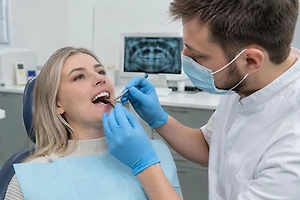
One of the dentist's tasks, according to Shopov, is to distinguish gingivitis from periodontitis, in which the tissues holding the tooth are damaged, including the bone support. The doctor examines the gums, measures pocket depth and, if necessary, orders an X-ray. The amount of blood on the brush cannot be used to determine how far the process has progressed.
When to check more than just the oral cavity
The expert listed conditions in which bleeding requires broader examination. In diabetes mellitus with poor glucose control, the risk of periodontal disease increases and healing slows, but the symptom itself does not make a diagnosis; patients with diabetes should inform the dentist about it. Special attention is required when bleeding is combined with unexplained bruises, nosebleeds, red spots on the skin or prolonged bleeding after injury — this may indicate a low platelet count or impaired platelet function, and medical evaluation is needed here. Among possible causes are blood diseases, including leukemias, but looking for a dangerous diagnosis solely because of blood when brushing is wrong: the symptom is nonspecific. A lack of vitamins C and K may be accompanied by bleeding, but taking supplements at random should not be done — only an established deficiency should be replenished. Bleeding is intensified by anticoagulants and antiplatelet agents; they must not be stopped on one's own, changes are coordinated between the dentist and the attending physician. Hormonal changes, for example during pregnancy, intensify the gums' inflammatory response to plaque, but treatment of gum diseases is not postponed until after childbirth.
Implantation and inflammation around the implant
The recommendations of the European Federation of Periodontology, Shopov noted, provide for assessment of risk factors, treatment of gingivitis and periodontitis to a stable state, and supportive care even before implants are placed. With active inflammation, the goal is to achieve disease control, not to remove the symptom. Uncontrolled diabetes increases the risk of complications and implantation failure; based on bleeding alone, one can neither approve the surgery nor declare it contraindicated forever. Bleeding next to a long-installed crown requires examination: peri-implant mucositis is inflammation of soft tissues without bone loss, peri-implantitis is with bone destruction; a diagnosis cannot be made on one's own, and implant removal is not mandatory — first the tissues and treatment options are assessed. Patients with previously suffered periodontitis are in the risk group.
What to do with recurring bleeding
Shopov advises that with recurring bleeding one should make an appointment with a dentist and tell them when the symptom appeared, whether it occurs only when brushing, what diseases have been diagnosed and what medications are being taken. Before the consultation, one should not give up oral hygiene: teeth should be brushed gently, without excessive pressure, and interdental cleaning products should be selected with the dentist. With unexplained bruises and nosebleeds, a general medical evaluation is needed, and heavy or non-stopping bleeding is a reason for urgent care.