The key facts
- 2.7 million Cubans lack access to water — nearly 29% of the country's population
- The situation has worsened since January due to the energy crisis and blackouts
- The government has installed more than 870 of the 1,300 planned solar pumps
A Daily Struggle for Water
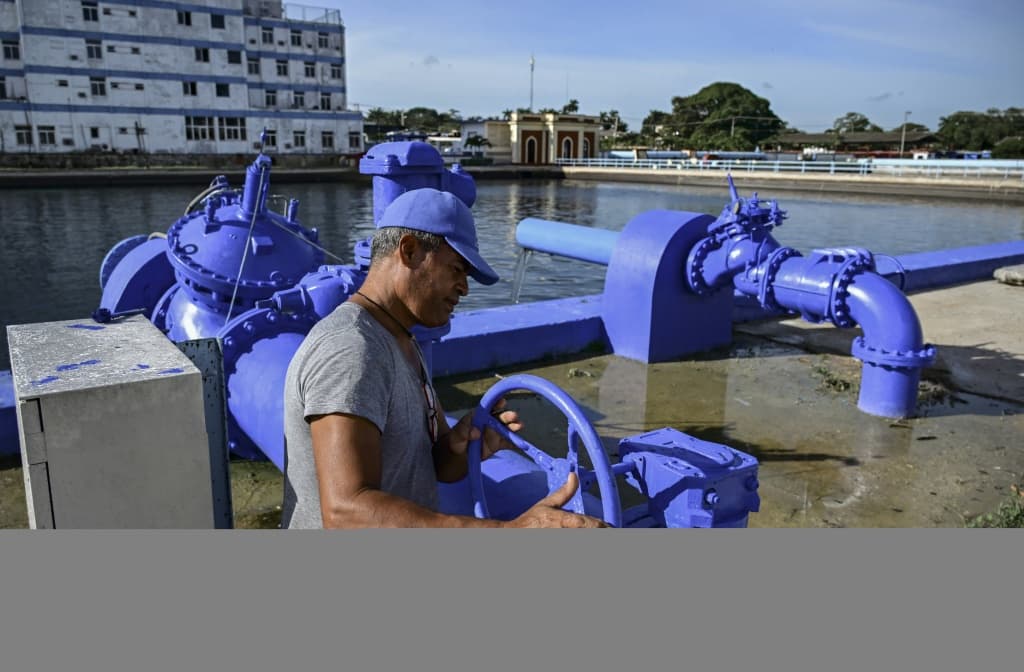
The water crisis in Cuba affects nearly 29% of the country's 9.4 million residents, according to official data. According to Junior González, a senior official at the national water company, water does not reach the homes of 2.7 million Cubans. Between 80% and 85% of the water supplied has to be pumped to deliver it to these homes, while equipment breakdowns, leaks and drought aggravate the problem. The situation has deteriorated significantly since January amid an energy crisis caused, in AFP's wording, by the American energy embargo on the island. Prolonged power outages have become the norm, and the water supply, which depends mainly on electric pumps, is shrinking.
Residents Seek Their Own Sources
More and more Cubans are drilling wells on their plots, building cisterns in their yards, installing storage tanks and even using so-called 'water thieves' — pumps that draw water from main pipes. Several such installations in one neighborhood reduce pressure in the network and make access to water difficult for other homes. Restaurant owner Kevin Martínez in Matanzas province, 100 km east of Havana, drilled a well after being forced to close his establishment several times due to lack of water. 'I never thought I would have to dig a well, just as I never thought I would have to cook on charcoal or install solar panels,' he told AFP. Well digger Elisardo Cardoso, who found water 10 meters beneath Martínez's restaurant, says his services are increasingly in demand.
Water on Wheelbarrows and Bicycles
The water shortage forces residents to transport it over long distances — in wheelbarrows, on bicycles, in car trunks and even on horse-drawn carts. Thirty-year-old Maykel Aguilar filled a 200-liter container and several buckets at a pipe connected to a source on a street in Old Havana, then wheeled the water home on a wheelbarrow and carried it upstairs. 'One such trip is enough for laundry, cleaning and cooking — and then the water is gone,' he said. Neighbors line up in a queue, marking their place with tanks, buckets and canisters. 'Power outages happen here every day, and we have to haul water. It's a daily struggle,' said Yusimi Guerra, a 40-year-old mother of two.
Protests and the Authorities' Response
The water shortage adds to runaway inflation and shortages of food and medicine amid growing social discontent. In recent months, several protests led by women over the lack of water have taken place in Havana's municipalities. The government, according to González, is restructuring the energy mix of the water sector to reduce dependence on the unreliable national power grid: more than 870 solar water pumps out of 1,300 planned have been installed, benefiting half a million Cubans. The Albear Aqueduct, one of Havana's main sources of water supply, recently received two new powerful diesel backup generators. However, González warned that 'these are very expensive programs.'