The key facts
- Vote counting began on Monday; results may only be announced early on Tuesday morning.
- 1.4 million of 3.1 million voters cast their ballots early.
- Premier Danielle Smith opposes independence but promises a binding referendum if separatists win.
Voting and counting
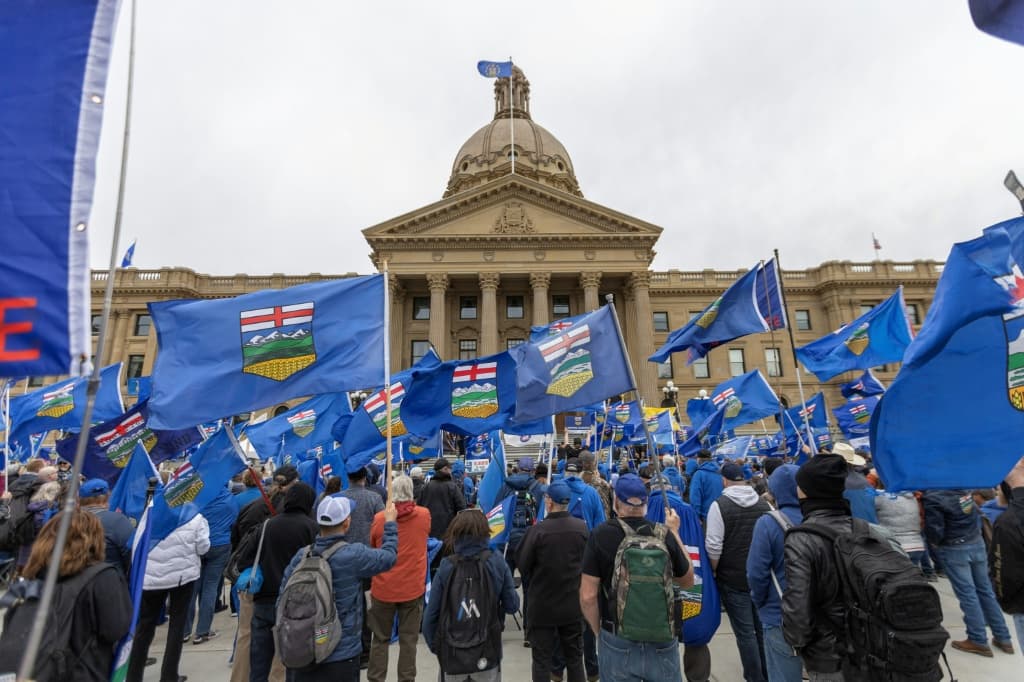
In the western Canadian province of Alberta, vote counting began on Monday in a referendum on whether a binding vote on independence should be held. According to Elections Alberta, 1.4 million of 3.1 million voters cast their ballots early; their ballots began to be counted at 17:00. Most polling stations close at 20:00 (02:00 GMT on Tuesday), but more than 100 stations closed later due to delayed openings. The electoral commission warned that results may only become known early on Tuesday morning.
Politicians' positions
Canadian Prime Minister Mark Carney said in recent days that the vote is taking place 'at the worst possible moment' and called on Canadians to unite in the face of a trade war and annexation threats from US President Donald Trump. Alberta's conservative Premier Danielle Smith said she is voting against independence, but held the referendum to settle a question that is dividing the province. According to her, if the separatists win, she will advance a binding referendum, and if federalists win, the question of secession should be considered closed.
Sentiment and motives
Polls showed that less than a quarter of the province's residents support independence, but separatist leader Mitch Sylvestre, who heads the Alberta Prosperity Project, told AFP on Monday: 'We hope to win.' Alberta holds the world's fourth-largest proven oil reserves, and the separatist momentum is largely tied to dissatisfaction with the management of the oil industry. Smith blamed Carney's predecessor Justin Trudeau, accusing him of attempting to strangle oil production for the sake of the climate agenda.
US interest and Carney's response
The topic of Alberta's independence has drawn sustained interest from Trump's allies: US Treasury Secretary Scott Bessent called the province a 'natural partner' of the United States, and Elon Musk wrote on X that Alberta 'should separate.' Separatist leaders also held meetings at the US State Department and with Republican political operatives. Carney, who grew up in Alberta, has worked since taking office last year to improve the province's relations with Ottawa and, together with Smith, promoted a new pipeline for bitumen exports — a project considered unfeasible under Trudeau. At the same time, he warned that even an advisory vote on independence is a 'dangerous bluff,' citing his experience as head of the Bank of England during the Brexit period, when the 'enormous uncertainty' after the referendum harmed the British economy.
Reactions during the campaign
Sylvestre said that Carney 'threatened' the province in the final days of the campaign: according to him, the premier's message boiled down to the claim that 'voting against Canada is dangerous,' which he called 'very, very unwise.' Residents of Edmonton expressed differing positions: 58-year-old David Gallagher called an independent Alberta a 'stupid idea' that he wants to 'nip in the bud,' while 44-year-old Hayley Erdegaard doubted the separatists' claim that the province is forced to share too large a portion of oil revenues, noting the need to 'work more on cooperation before making rash decisions' about creating one's own state.