The key facts
- Zelensky: 76 strikes on energy facilities in the week after Trump announced the 'energy truce'; overnight strikes damaged more than 10 facilities, leaving at least 550,000 families without power
- The World Bank estimates energy sector recovery at ~$91 billion, including $4.9 billion for urgent repairs in 2026; a DiXi Group expert believes the figure could rise to $6–7 billion
- Kyiv Mayor Klitschko said the city's generating capacity has been 'destroyed'; Kyiv's three thermal power plants (about 1.3 GW) were built in the 1970s–80s, and spare parts are running short
Strikes Continue Despite the 'Energy Truce'
President Volodymyr Zelensky said on Sunday that in the week after Donald Trump announced the so-called 'energy truce,' Moscow attacked electricity and oil-and-gas sector facilities 76 times. On Monday he reported that overnight strikes had damaged more than 10 energy infrastructure facilities, leaving at least 550,000 families without electricity. According to Kyiv, the country initially refrained from retaliatory strikes but later resumed them.
The Cost of Recovery
In February, the World Bank estimated the long-term cost of restoring Ukraine's energy sector at roughly $91 billion, of which $4.9 billion is needed for urgent repairs this year alone. Olena Pavlenko, head of the DiXi Group energy think tank, believes that given the ongoing attacks this figure may be understated: 'I am confident that at this level of attacks and destruction, the amount for 2026 alone will be around $6–7 billion,' she told AFP.
Kyiv: Capacity 'Destroyed'
Kyiv is served by three combined heat and power plants with a combined capacity of about 1.3 GW (Global Energy Monitor data). Mayor Vitali Klitschko said this month that the city's ability to generate electricity has been 'destroyed,' despite repairs after last winter. Pavlenko noted that exact data on damaged capacity is not published, but in her assessment most of the thermal power plants have again been completely knocked out. Distributed generation, she said, will not cover the city's needs, and in the event of a new attack the situation will repeat itself. Kyiv's thermal power plants were built in the 1970s–1980s, and the stock of spare parts for repairs is running out.
Shift in Strike Tactics
DTEK reported on October 1 that its thermal power plants have been attacked more than 230 times since the start of the conflict. Vitaly Zaichenko of grid operator Ukrenergo said last week that recent strikes with ballistic missiles and drones have significantly complicated the work of energy workers: whereas the enemy previously targeted high-voltage substations and generating facilities, it has now moved to direct attacks on high-voltage power lines. Quickly arranging backup power is 'extremely difficult'; distribution companies' networks are also under attack, and round-the-clock air alerts lasting for hours complicate repair work.
State of the Power System and Winter Preparations
According to the International Energy Agency, before Russia's full-scale invasion in February 2022 Ukraine had about 38 GW of generating capacity; over nearly five years of war this figure has fallen sharply, although current generation remains unclear. Three operating nuclear plants now provide more than 55% of the country's electricity production. To strengthen the system, decentralization, local generation, battery storage, microgrids and cogeneration are proposed, but time is running short. Zelensky has openly criticized Klitschko over the pace of winter preparations, but the mayor assures that contingency plans will be ready: generators will be installed in schools and medical facilities for light, heating and hot water.
Threat to Water Supply
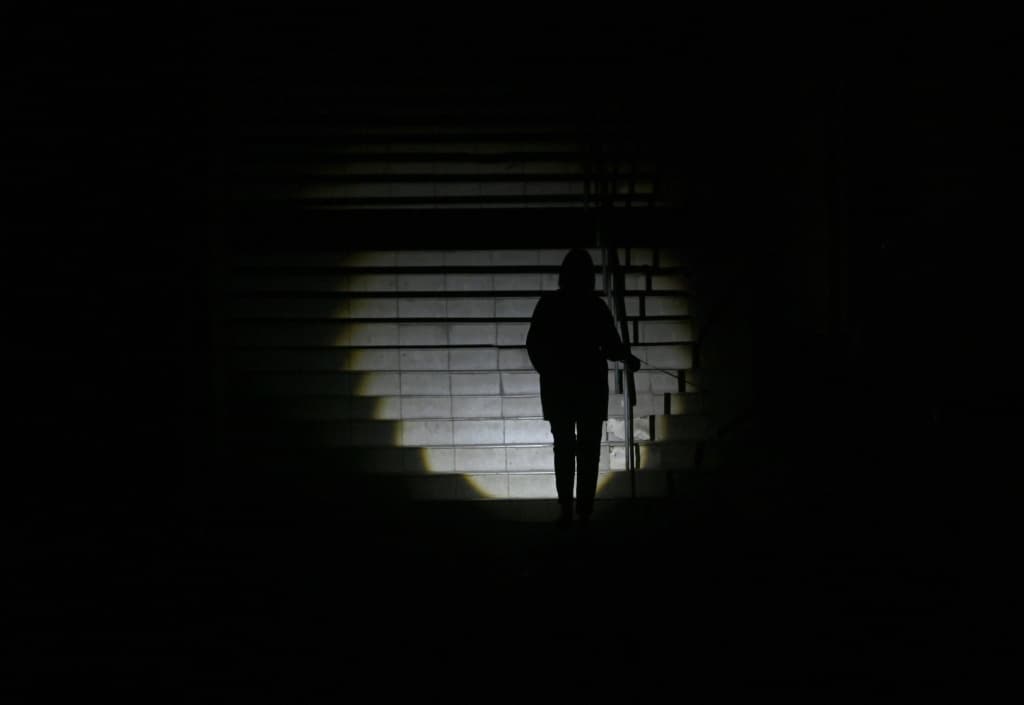
Power supply instability has already led to temporary shutdowns of the Kyiv metro. Serhiy Gorkuchenko, deputy director general of Kyivvodokanal, warned that without electricity there will be no water in the city: scheduled and emergency outages will hit the company's ability to pump water, including to high-rise buildings. Residents have already faced water supply shutdowns, and problems with wastewater drainage raise sanitation concerns. 'If there is no sewage system, there will be an epidemiological catastrophe in three days,' Gorkuchenko said.