The key facts
- A Corsair 32 GB kit on Amazon US rose from $52 in June 2025 to $250 in September 2026 (+380%); of 18 tracked products, all rose — by 85–553%
- HBM sales grew from ~$4 billion in 2023 to ~$77 billion in 2026; the five largest cloud companies may spend $780 billion on infrastructure in a year
- IDC expects PC shipments to fall 11.3% and average prices to rise 18.3%; Deloitte estimates new capacity will not appear before 2029–2030
Memory and storage are getting more expensive across the entire market
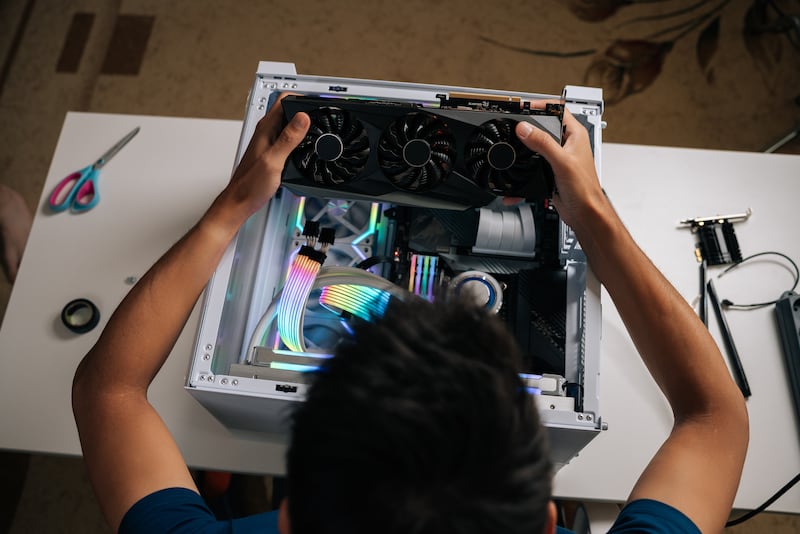
Building a PC and buying components are becoming noticeably more expensive. According to The National’s analysis of Amazon US prices, a 32 GB Corsair memory kit cost $52 in June 2025, and by September 2026 — $250, that is, roughly 380% more. Of the 18 popular memory and storage products tracked by the outlet, each rose by 85–553%: a 1 TB Crucial SSD went from $100 to $392, a Corsair DDR5 kit — from $125 to $550. Even hard drives were affected, having risen in price since 2023. The phenomenon is already being called “chipflation.”
The cause — AI industry demand for DRAM and NAND
Two types of chips in demand by both consumers and the AI industry are getting more expensive: DRAM (random access memory) and NAND flash (storage). Particularly valuable is high-speed HBM memory — a specialized type of DRAM for processors on which AI models run. Manufacturers are forced to divide capacity between consumer and server products, and large long-term contracts incentivize them to prioritize AI. Consulting group Bain notes that this shift is already “worsening shortages and raising prices for smartphones and PCs.” The five largest cloud companies may spend $780 billion on infrastructure this year — almost five times more than three years ago. HBM sales grew from approximately $4 billion in 2023 to an estimated $77 billion in the current year.
How the pressure showed up in retail
In October 2025, OpenAI announced a partnership with Samsung and SK Hynix under the Stargate data center initiative with plans for up to 900,000 DRAM wafer starts per month — this is future demand and capacity expansion, not an immediate withdrawal of memory from the consumer market. A month later, Samsung raised prices on some memory chips by up to 60% compared with September. According to the Keepa service, on Amazon US a Corsair DDR5 kit was in stock only 11–21% of the time from November 2025 to February 2026, whereas in summer it was sold continuously. In the UAE, on the Sharaf DG website as of October 1, 11 of the 14 tracked drives were listed as out of stock, including all internal SSDs in the sample.
Prices in the UAE and comments from observers
According to data collected by Kevin Sebastian, a creative director and technology commentator from the UAE, in the first half of 2025 a 32 GB DDR5-6000 kit cost 400–500 dirhams in the Emirates, and a gaming PC build in Dubai in April 2025 included Corsair Vengeance 32 GB for 449 dirhams. Now 32 GB DDR5 modules and kits are found costing more than 2,000 dirhams: Kingston Fury Beast 32GB DDR5-6000 — about 2,250 dirhams, and some Kingston sets on Microless and Amazon exceed 3,000 dirhams. A SanDisk Extreme 256 GB microSD rose in price from 120–150 to 190–280 dirhams. “A component that last year took up less than 10% of the average gaming PC budget can now eat up a much larger share of it,” Sebastian noted. He also explained the price spread between stores: a retailer that bought memory at 400 dirhams has to decide whether to raise prices, cut margins, or risk being unable to restock if a new batch costs 1,200–1,500 dirhams.
Graphics cards and the question of whether building your own PC is still worthwhile
Graphics cards have also suffered, since they carry gigabytes of fast memory: GDDR6 and GDDR7 chip prices rose by several hundred percent in the months after AI data centers absorbed the supply. The flagship Nvidia RTX 5090, released in January 2025 for $1,999, cost about $4,329 on Amazon US by July 2026; in the UAE, individual listings reach 25,000–30,000 dirhams. Building a PC yourself may remain cheaper than replacing a computer, but the savings are narrowing: large manufacturers are protected by contracts, while private builders pay current retail prices. The outlet emphasizes that rising memory and SSD prices by themselves do not prove that building has become more expensive in every case — the outcome depends on the configuration, the seller, and the moment of purchase.
Who wins and what analysts say
Some chip manufacturers are posting record results: Micron’s quarterly revenue was $54.2 billion — roughly 4.8 times more than a year earlier, with operating margin rising from 32% to almost 81%. Samsung’s memory business showed strong profit, while the company’s mobile division posted its first operating loss, partly related to rising component costs. SanDisk shares, spun off from Western Digital in February 2025, have grown almost 38-fold since late June 2025, Kioxia — roughly 20-fold; both specialize in NAND. According to an IDC forecast, global PC shipments will fall 11.3% this year, while average prices will rise 18.3%. Some SSD prices have already retreated from their peaks, but, according to Deloitte’s estimate, new plants will add meaningful capacity no earlier than 2029–2030. Bain describes the market shift as “structural, not cyclical”: prices may decline, but a long-term question remains about whom manufacturers are building capacity for.