The key facts
- Spain's Supreme Court rejected Vox's appeal against the cancellation of arrest warrants for Puigdemont, Lluís Puig and Toni Comín.
- Puigdemont has been in self-exile in Belgium since 2017, after the Catalan independence referendum.
- In 2024 the socialist government introduced an amnesty, but the Supreme Court excluded Puigdemont over financial crime charges; the Constitutional Court this month overturned that interpretation.
Court allows return
Spain's Supreme Court on Monday upheld the decision to cancel the arrest warrants for former Catalan president Carles Puigdemont, as well as his former ministers Lluís Puig and Toni Comín, rejecting an appeal by the far-right party Vox. This opens the way for them to return to Spain almost ten years after Puigdemont went into self-exile, having led the region's failed bid for secession.
Background: the 2017 referendum
In 2017, the regional government of Catalonia held an independence referendum against Madrid's position. The vote, which the authorities considered illegal, was accompanied by a harsh police crackdown and triggered the biggest political crisis since the restoration of democracy after Franco's death. After the separatist majority declared independence, Madrid dissolved the regional parliament, dismissed its leadership and called early elections. Puigdemont fled to Belgium, where he lived in Waterloo; nine of his colleagues were jailed but pardoned by the government in 2021.
Legal battle over the amnesty
In 2024, the socialist government introduced a controversial amnesty for dozens of Catalan politicians and activists involved in the separatist movement, but the Supreme Court ruled to exclude Puigdemont and a number of his allies from it over charges of alleged financial crimes related to the organisation of the referendum. Earlier this month, the Constitutional Court overturned that interpretation, and on Monday the Supreme Court ended the years-long legal battle by rejecting Vox's appeal.
Years in exile
Puigdemont was elected a member of the European Parliament in 2019, and in 2024 to the Catalan parliament as leader of the centre-right party 'Together for Catalonia' (JxCat). He campaigned in southern France, holding rallies with supporters who crossed the border. At least one brief return to Spain is known: in 2024 he addressed supporters in Barcelona, then went into hiding and, evading a police sweep, returned to France. In a video posted on social media at the moment the court's decision was announced, Puigdemont said: 'My role was to awaken public opinion, internationalise the conflict and work from the heart of Europe to explain the reality of Spain.' When he may return is unknown. Comín, the former regional health minister, plans to travel to Madrid this week for administrative procedures related to his status as an MEP.
A changed political context
The Spain to which Puigdemont may return differs markedly from the country of a decade ago: Catalan independence has become a marginal topic, while housing and immigration dominate the agenda. JxCat's support in parliament was important for Pedro Sánchez forming a centre-left government after the 2023 elections, but within Catalonia the party is losing voters to the far-right separatist party Catalan Alliance. Next month Spain will hold early general elections, in which the far right could enter government for the first time.
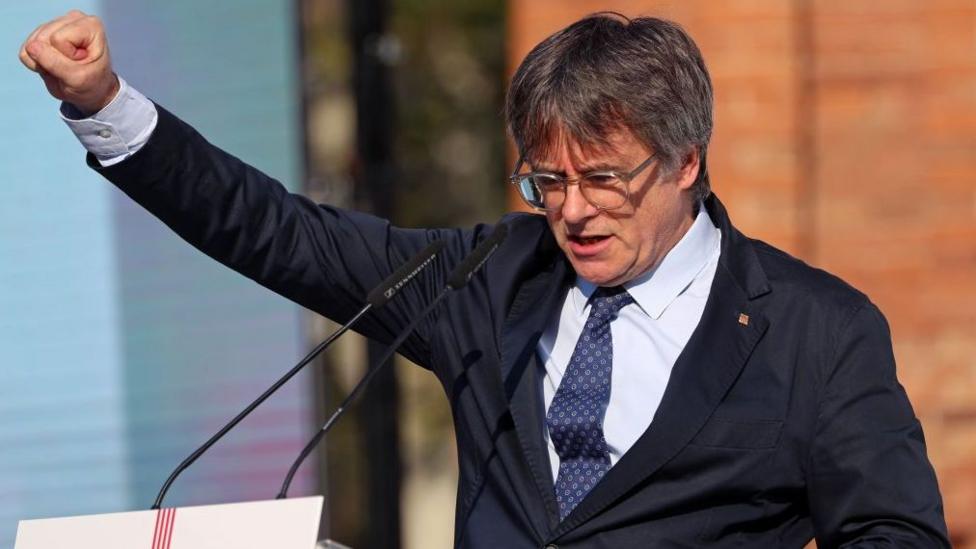 Image source, NurPhoto via Getty Images
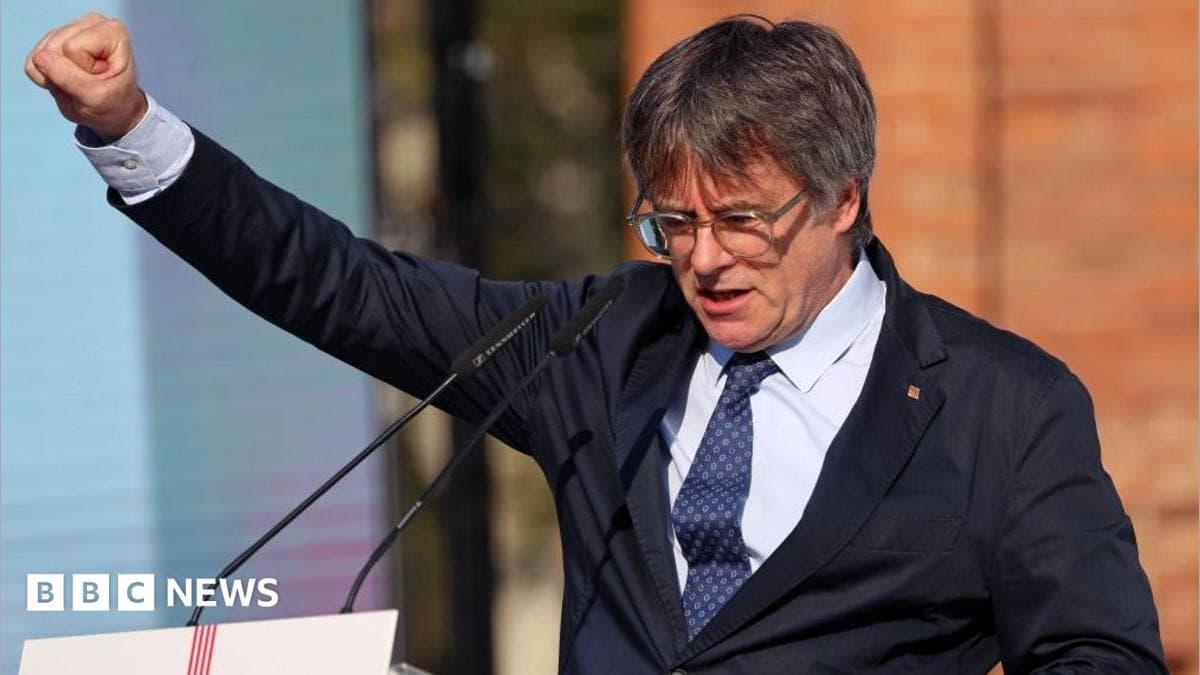
Puigdemont pictured during his only known return to Spain since fleeing, in 2024 - an appearance which prompted a police manhunt