The key facts
- Rubio: nearly 300 American companies are present in Samarkand, agreements worth billions of dollars are being discussed; “This is not the end, this is the beginning”
- Critical minerals named a key area of cooperation; the topic was discussed at the C5+1 summit in Washington in November 2025
- Rubio denies a pause in intelligence sharing with Ukraine, while Zelensky spoke of a three-day suspension
Business forum in Samarkand
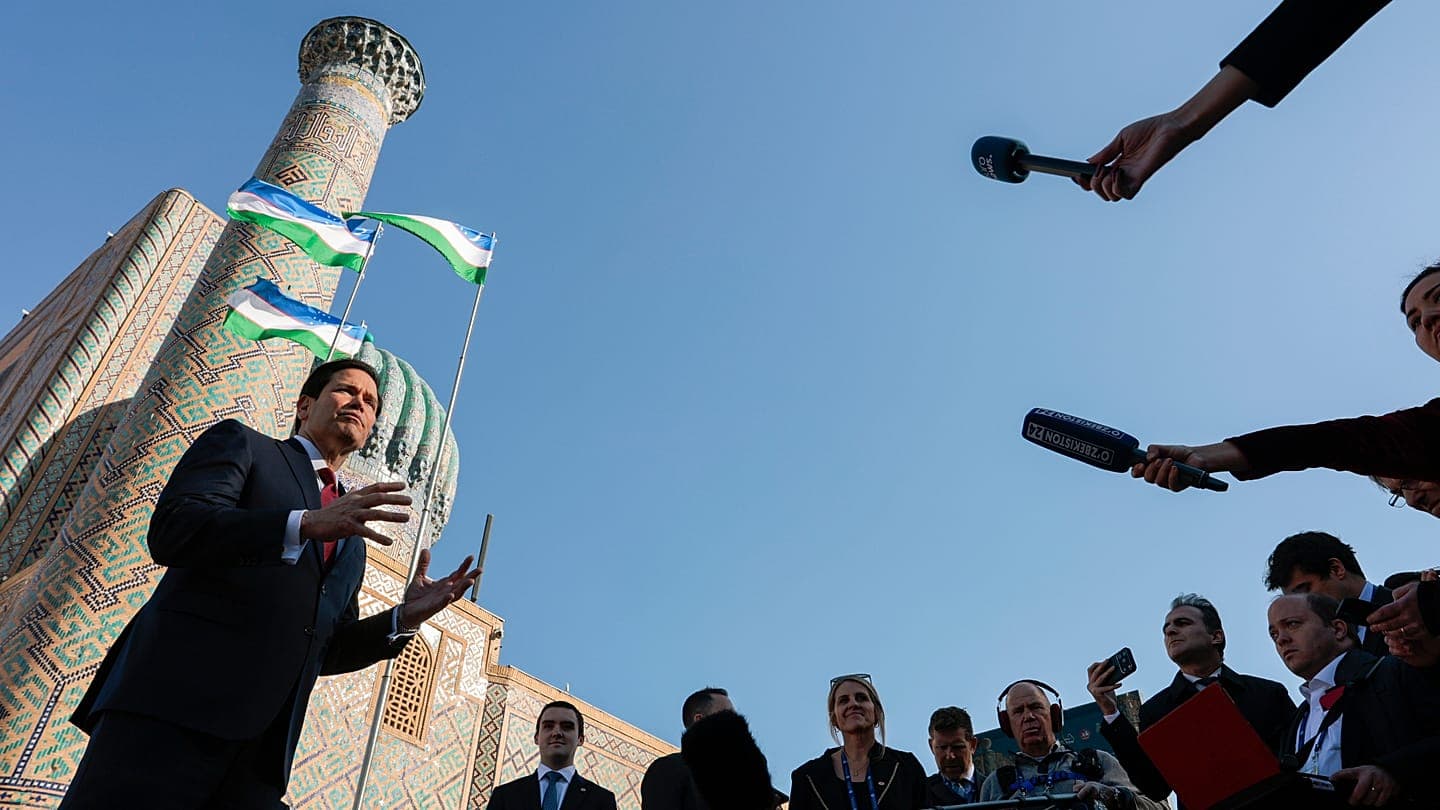
US Secretary of State Marco Rubio, during a visit to Samarkand on Monday, October 19, 2026, told Euronews that American companies are preparing to announce new agreements in Uzbekistan. According to him, nearly 300 American companies are represented in Samarkand, discussing agreements that could be worth billions of dollars. The State Department previously reported that the trip is accompanied by more than 200 American business leaders; the final list of agreements and their value had not been announced at the time of Rubio's remarks. “I think we will have concrete deals to announce,” Rubio said, adding: “This is not the end. This is the beginning.” He believes American policymakers have paid too little attention to the region.
Critical minerals and supply chains
Answering an Euronews question, Rubio named critical minerals as an area of potential cooperation with Uzbekistan. “It is unwise for the whole world to depend 100% on one place for anything,” he noted, emphasizing that he is not pointing to any specific country. In his view, the industries and technologies that define the 21st century will increasingly depend on critical minerals, so diversifying supply chains is an international, not only American, priority. For resource-rich countries, responsible development of deposits and processing capacity serves their own economic interests, Rubio believes. The topic was raised at the C5+1 summit, which President Donald Trump held in Washington in November 2025. Uzbekistan and its neighbors are seeking investment and technology to develop mineral resources, while the US and Europe are seeking alternatives to concentrated supply chains.
Competition with China and the visit program
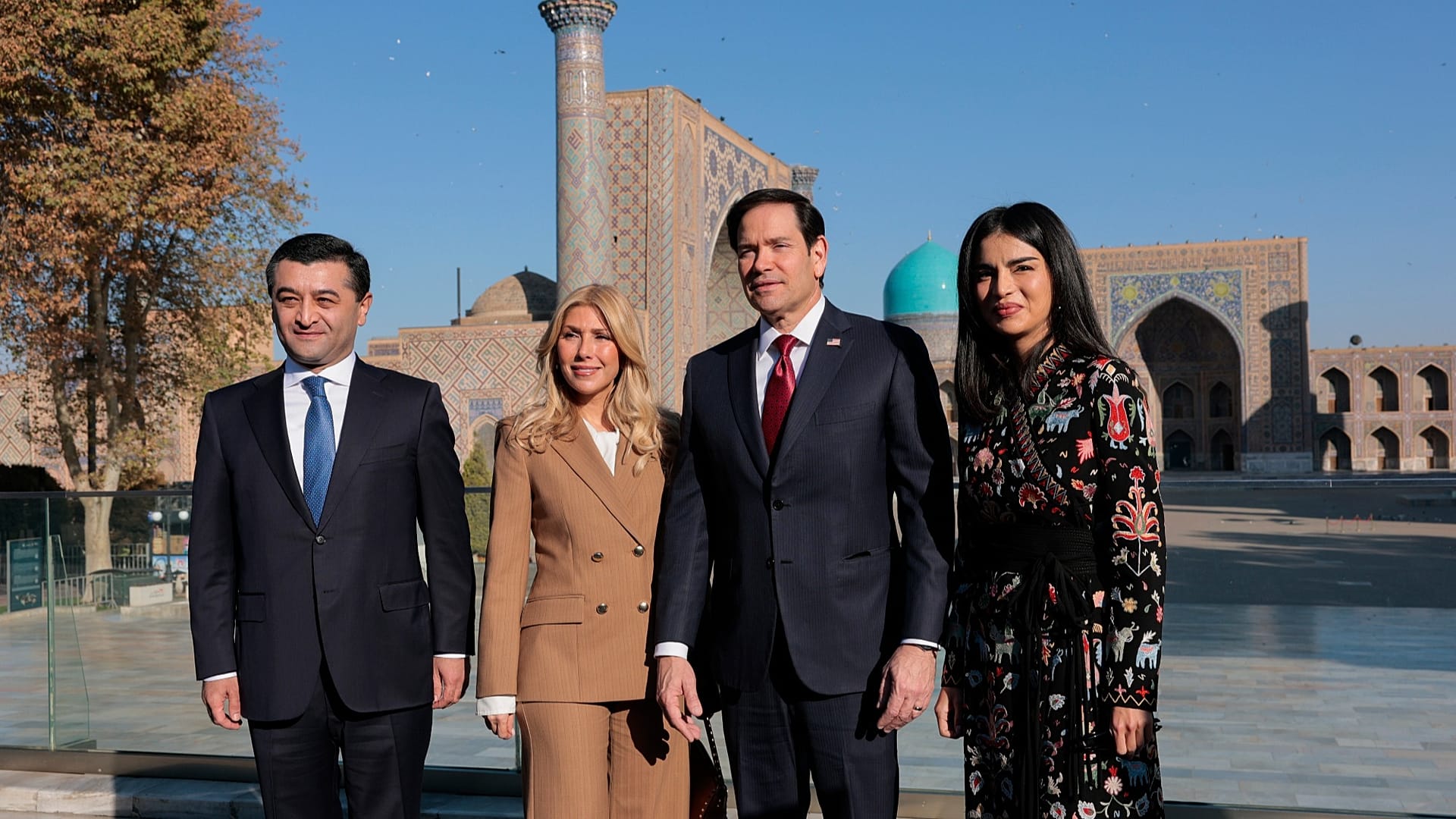
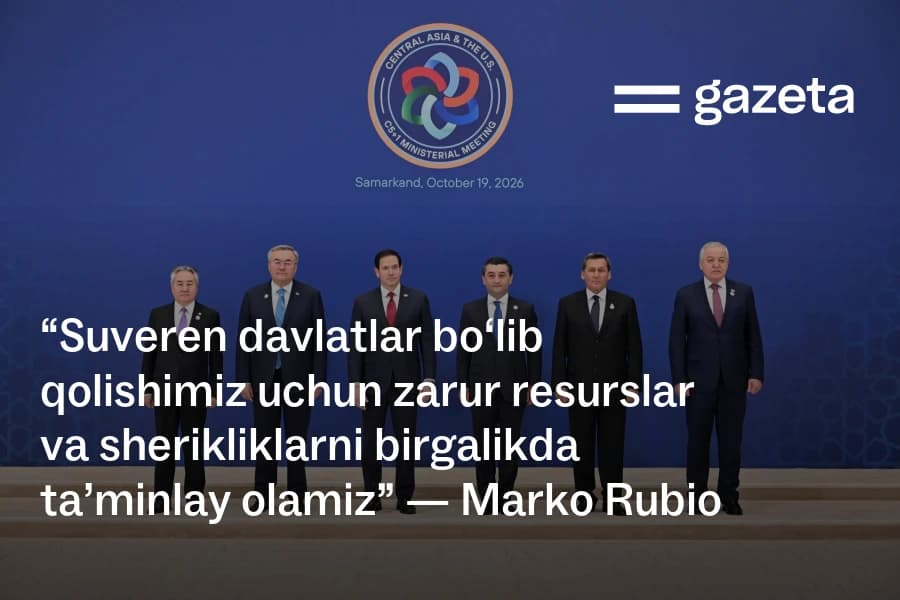
On China's growing economic influence in Central Asia, Rubio said US engagement is competition, not an attempt to force governments in the region to choose sides. “We did not come here to say: stop talking to someone else or working with another country,” he stated, calling Uzbekistan open to economic relations with various partners and noting its economic growth. On Monday, Rubio toured Registan Square together with the head of the presidential administration of Uzbekistan, Saida Mirziyoyeva, calling the city a centuries-old crossroads of trade. His program includes talks with Uzbek Foreign Minister Bakhtiyor Saidov, a document-signing ceremony, a meeting with Kazakh Foreign Minister Mukhtar Tleuberdi, and a C5+1 ministerial meeting with Uzbekistan, Kazakhstan, Kyrgyzstan, Tajikistan, and Turkmenistan. Meetings with President Shavkat Mirziyoyev and events of the US–Uzbekistan Business and Investment Council, co-chaired by Saida Mirziyoyeva and US special envoy Sergio Gor, are also planned. The visit follows last year's C5+1 summit at the White House, where commercial agreements and commitments worth more than $25 billion (about €22 billion), at various stages of implementation, were announced.
Dispute over intelligence sharing with Ukraine
The visit also gave Rubio occasion to comment on tensions between Washington and Kyiv. Refuting claims by the Ukrainian side about a brief suspension of intelligence sharing, which had been used to warn of Russian missile strikes, he stated: “There was no pause.” Ukrainian President Volodymyr Zelensky said on Sunday that intelligence sharing had resumed after a three-day suspension. These accounts remain contradictory. Rubio called on Russia and Ukraine to focus on ending the war, now in its fifth year: “What he should focus on, and what we want to focus on, is ending this war.” Trump the day before criticized Zelensky, accusing him of lacking the will to end the conflict and blaming Ukrainian strikes on Russian oil refineries for disruptions in the global diesel market. Trump also defended the temporary easing of some sanctions on Russian energy exports, arguing it could help diplomacy. Rubio acknowledged that US mediation efforts have not advanced as much as Washington would like, but said the administration will continue to look for opportunities for talks.