The key facts
- Croatia sent the EU a list of eight grievances against Montenegro, most linked to the Balkan wars of the 1990s
- Montenegro passed laws on protecting historical sites and banning the naming of sports venues after people who died less than 40 years ago
- Germany is pressuring Croatia to reach a swift settlement; Chancellor Merz said all issues are solvable
Zagreb's list of grievances
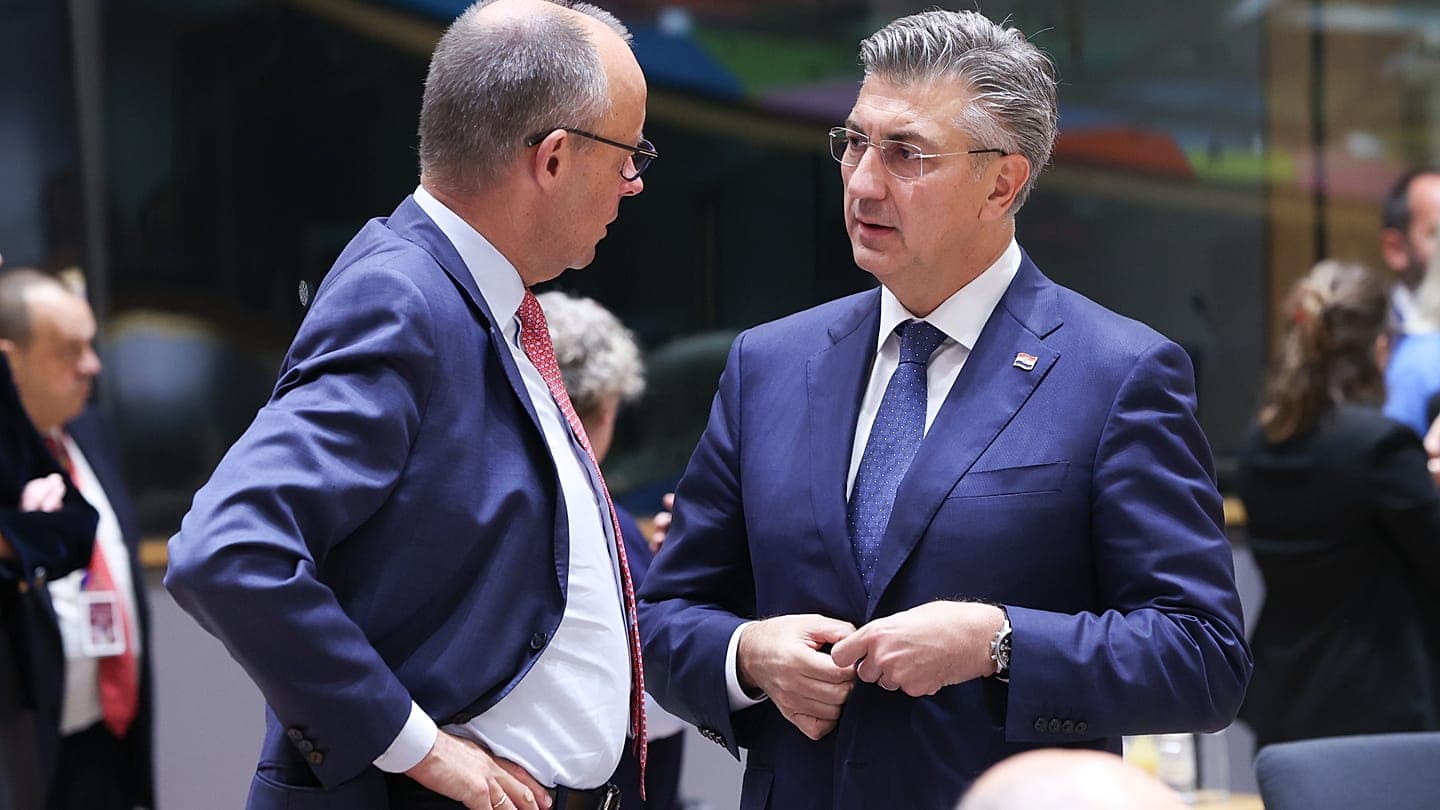
Montenegro has taken steps to resolve a series of disputes with Croatia that threaten its goal of becoming the EU's 28th member by 2028. Last week Zagreb circulated to other EU countries a list of eight grievances that must be settled before Montenegro joins the bloc. Most of them relate to the Balkan wars of the 1990s. Croatian Prime Minister Andrej Plenković said on the sidelines of the European Council that the issues had been 'signalled to Montenegrin neighbours for years' and that over the past two years there had been 'no progress whatsoever', adding that Croatia had been 'extremely constructive' in the accession negotiations.
Podgorica's legislative measures
Last week Montenegro's parliament passed a law on the protection of historical sites — a step aimed at meeting Croatia's demand to preserve the memorial plaque commemorating the Croatian victims of the Morinj detention camp, which was operated by the Yugoslav People's Army (JNA). Another grievance concerned the municipal swimming pool in Kotor, named after water polo player Zoran Gopčević, who, according to claims, was a shift commander of the guards at Morinj. Montenegro passed a second law banning the naming of sports venues after people who died less than 40 years ago; the law is retroactive and will require Gopčević's name, who died in 2000, to be removed from the pool.
Victims' remains and compensation
More contentious is Zagreb's demand for help in finding the remains of 14 victims of the wars of the breakup of Yugoslavia. These Croatian citizens did not die on the territory of Montenegro, and the archive with potentially relevant information is located in Belgrade. Both countries have approached Serbia for access to the archive, but Zagreb wants information that can be obtained even without it, as there are conflicting accounts of where the victims were taken and where they might be found. Croatia is also seeking compensation for Croatian families illegally deprived of their property: the parties have agreed on an amount, but negotiations on the wording of the agreement continue.
The parties' positions and the border dispute
For Zagreb, Montenegro's recent steps are an encouraging start, but the measures must be fully implemented before the disputes can be considered settled: Croatia wants to avoid unresolved issues at the ratification of the accession treaty. The Croatian government is also under domestic pressure to demonstrate that it is defending national interests. This sensitivity surfaced at last week's EU summit, where Croatia insisted on removing from the concluding conclusions any mention of plans to temporarily close all of Montenegro's negotiating chapters by the end of this year. The border issue also remains unresolved: Croatia wants Montenegro to abandon arbitration over the land border, where only about 200 metres remain in dispute, and to focus on the maritime border. In the view of one EU diplomat, the border dispute should not block enlargement — Croatia itself still has an open dispute with Slovenia, which did not prevent its accession in 2013. According to the diplomat, Croatia has always kept bilateral disputes on a separate track, while Montenegro has pursued restrained work through bilateral dialogue; the diplomat added that condemnation over parliament speaker Andrija Mandić's condolences to the son of war criminal Ratko Mladić could have been stronger from across the entire political spectrum.
Germany's position
Germany has also intervened in the dispute, urging Croatia to reach a swift settlement so as not to jeopardise Montenegro's accession. Berlin fears that blocking the process with bilateral grievances could have broader consequences for other candidates. 'Montenegro has fulfilled all the requirements. Meetings on preparing the final treaty are under way. There remain a few small bilateral issues, which Mr Plenković has also presented, but all of them can be resolved,' German Chancellor Friedrich Merz said at a press conference following the European Council.