The key facts
- Around 550,000 people took to the streets in protests against fuel prices, the cost of living, and the state of public services; the protests escalated into riots and looting.
- About 2,400 people were detained (data from the French Interior Ministry), around 1,000 police officers were injured, seven of them seriously.
- Macron called for calm, held a crisis meeting, and promised 'full transparency' regarding police actions.
Macron's Address and the Scale of the Protests
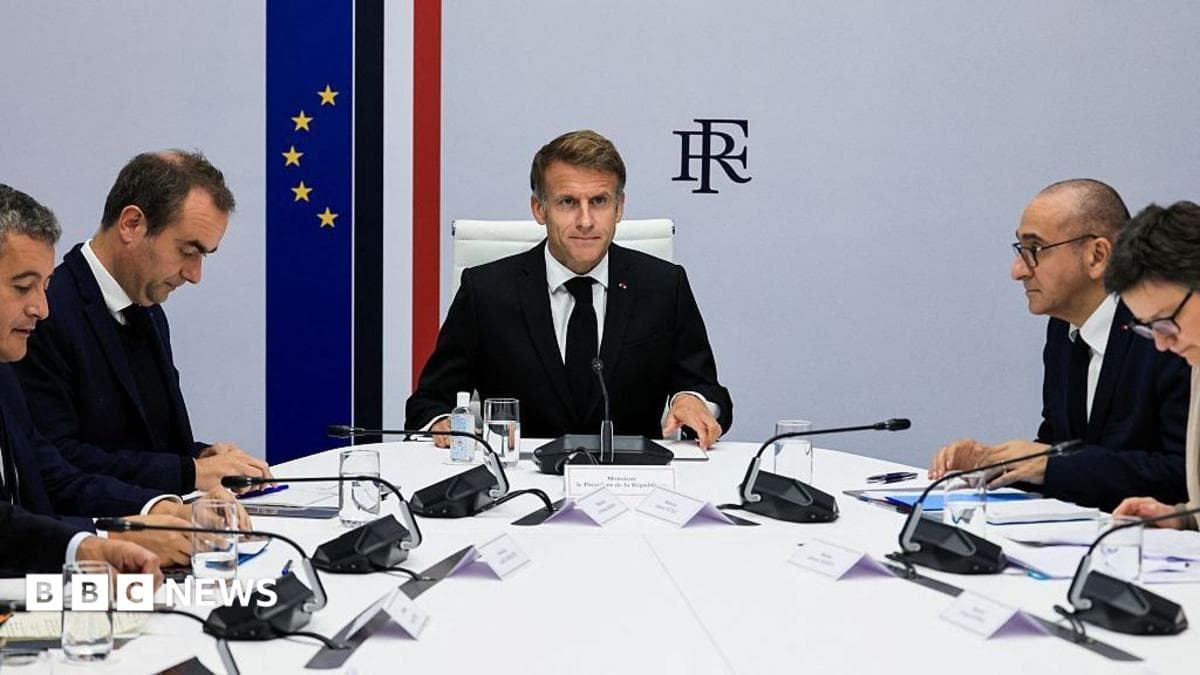
French President Emmanuel Macron on Sunday, October 18, 2026, delivered an address to the nation from the Elysee Palace after Saturday's mass protests escalated into riots and looting. He called for 'calm and order,' warned participants not to 'escalate' the situation, and said: 'We all feel anger and shame.' According to him, 'nothing justifies' 'unbridled' violence, and those responsible will face justice. Earlier the same day, Macron held an interdepartmental crisis meeting at the Elysee Palace.
Causes and Number of Participants
According to the BBC, around 550,000 people took to the streets in mostly peaceful protests against rising fuel prices, the cost of living, and the deteriorating state of public services, including schools. Macron stressed the need to distinguish between the 'legitimate demands' of the protesters and the actions of 'those who destroyed, smashed and looted.'
Riots and Damage
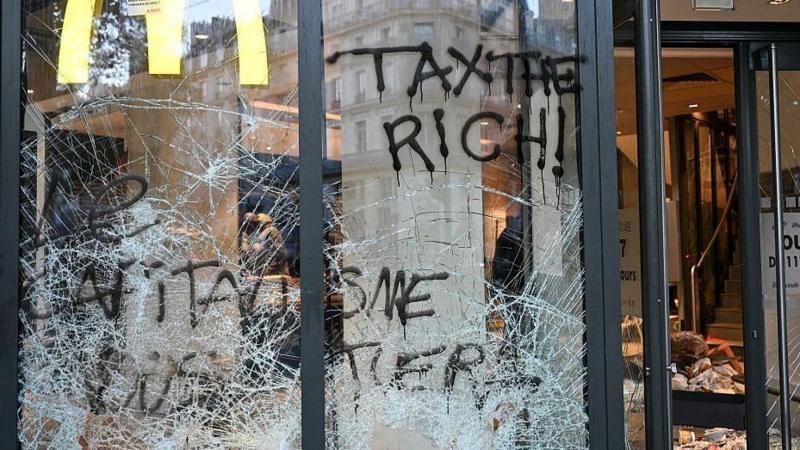
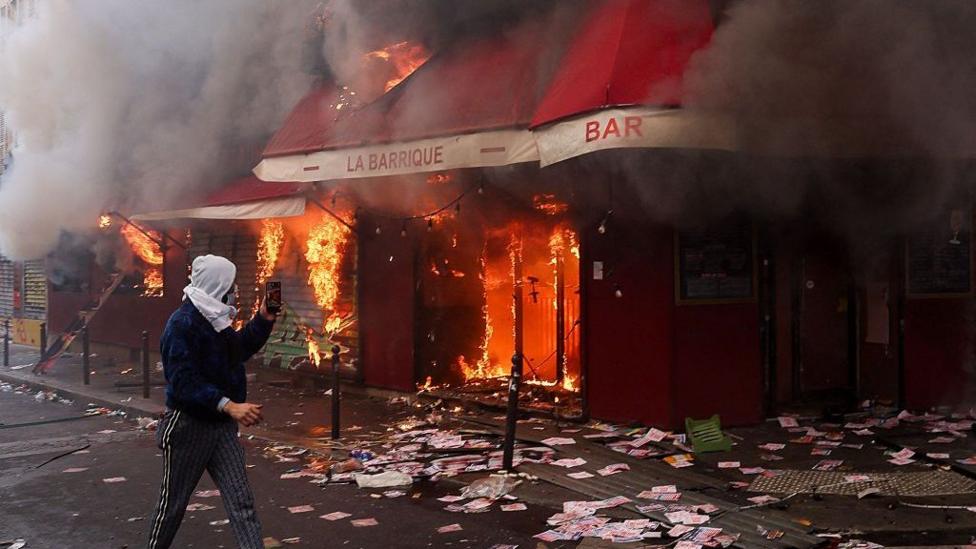
Groups of rioters, some dressed in black and wearing masks and balaclavas, operated in Paris, Marseille and other cities: cars and buildings were set on fire. In Limoges, a 19th-century town hall, damaged by arson on Saturday, was virtually destroyed by fire — the clock tower and roof collapsed. Local residents expressed outrage at the ruins: one BBC interviewee called the damage to monuments 'selfishness,' while another said restoration would take a long time. Looting affected Paris, Marseille, Lille and other areas.
Continuation of the Riots on Sunday
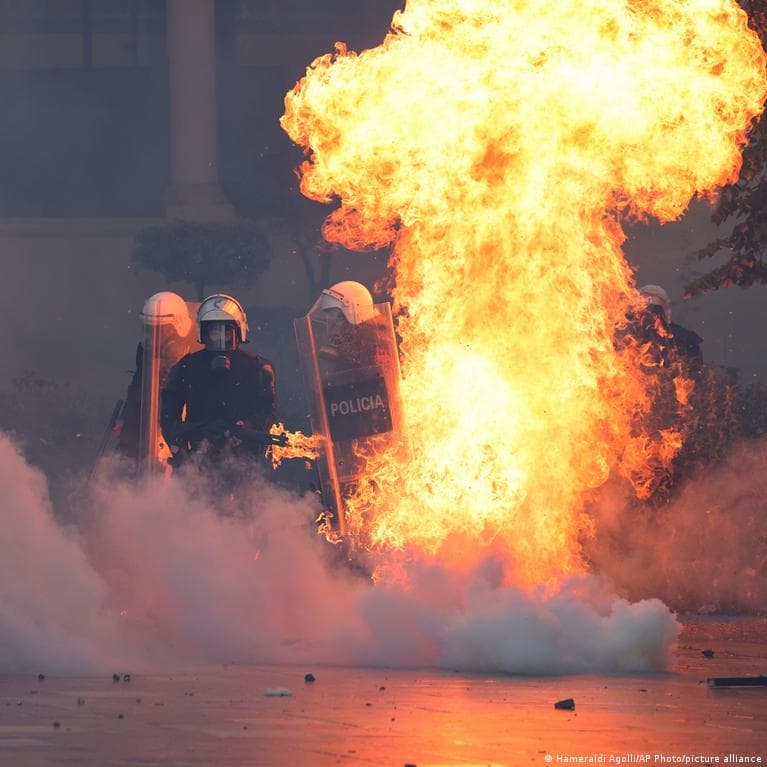
On Sunday, in certain districts of Paris and Lyon, looting and clashes with police continued, albeit on a smaller scale. According to the AFP news agency, in Paris hundreds of people were targeted with tear gas and stun grenades, and bottles and stones were again thrown at police. On Sunday morning, traders in Paris were clearing away broken glass, and garbage trucks were clearing the streets.
Authorities' Actions and Police Losses
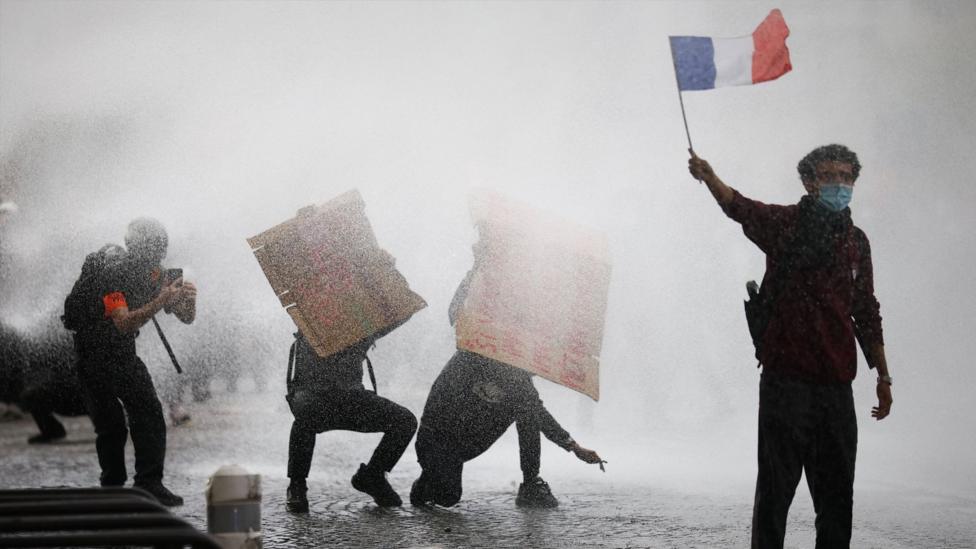
The French Interior Ministry reported the detention of about 2,400 people and approximately 1,000 police officers injured on Saturday, seven of them seriously. Over the weekend, tear gas and water cannons were used against crowds, and in several places police with batons dispersed people. Macron said that prefects and mayors would prepare measures to protect shops and public buildings, and also promised 'full transparency' in assessing police actions during the protests.
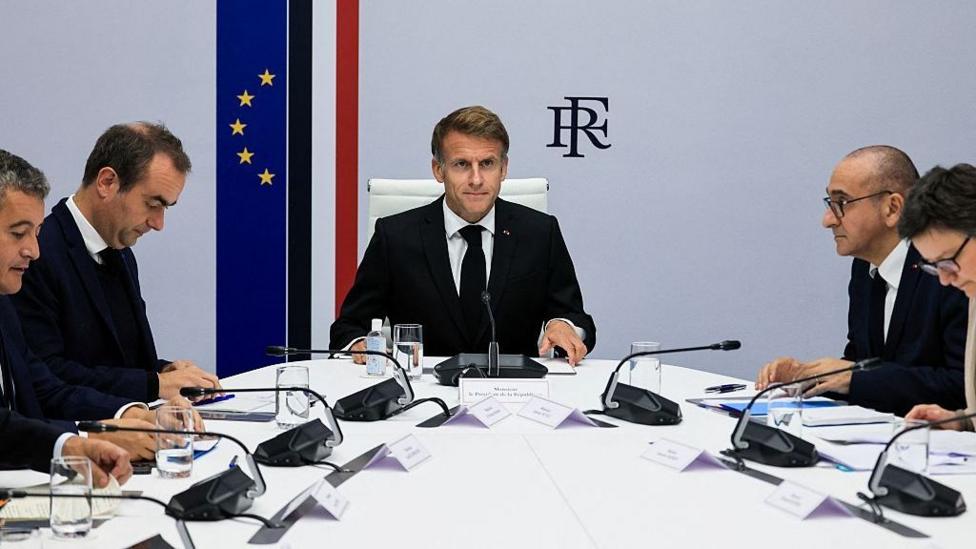 Image source, Getty Images
French President Macron (centre) chaired an inter-ministerial crisis meeting at the Élysée Presidential Palace, in Paris, on Sunday
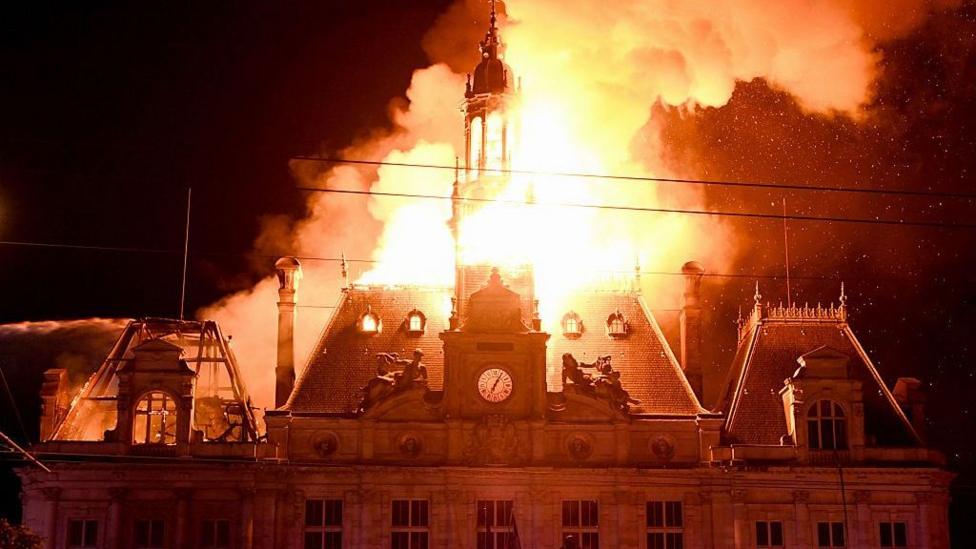 Image source, Getty Images
Local officials said the Limoges town hall was "largely lost" after fire caused part of the building to collapse
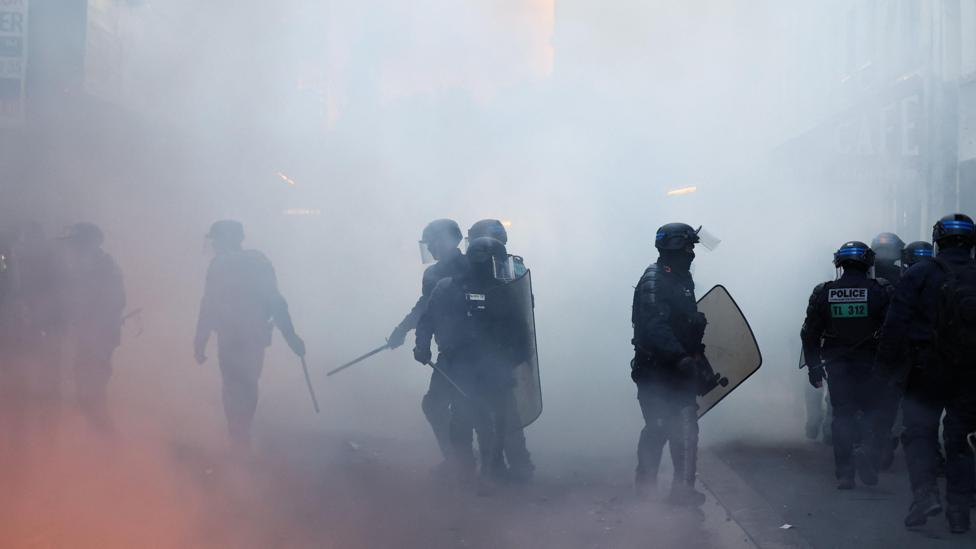 Image source, Reuters
Riot police were present on the streets of the capital again on Sunday
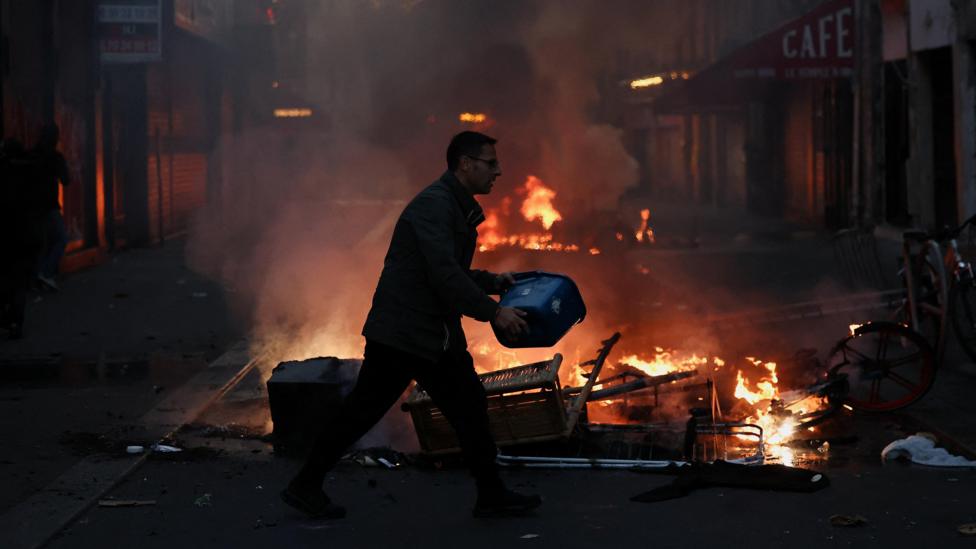 Image source, Reuters
A man tries to extinguish a fire in Paris on Sunday