The key facts
- Student protests continue for a sixth day, demanding the resignation of PM Edi Rama
- Rama refused to resign and called the protests 'the work of a foreign hand'
- The European Commission condemned the violence and called for calm amid Albania's aspiration to join the EU by 2030
Sixth day of protests in Tirana
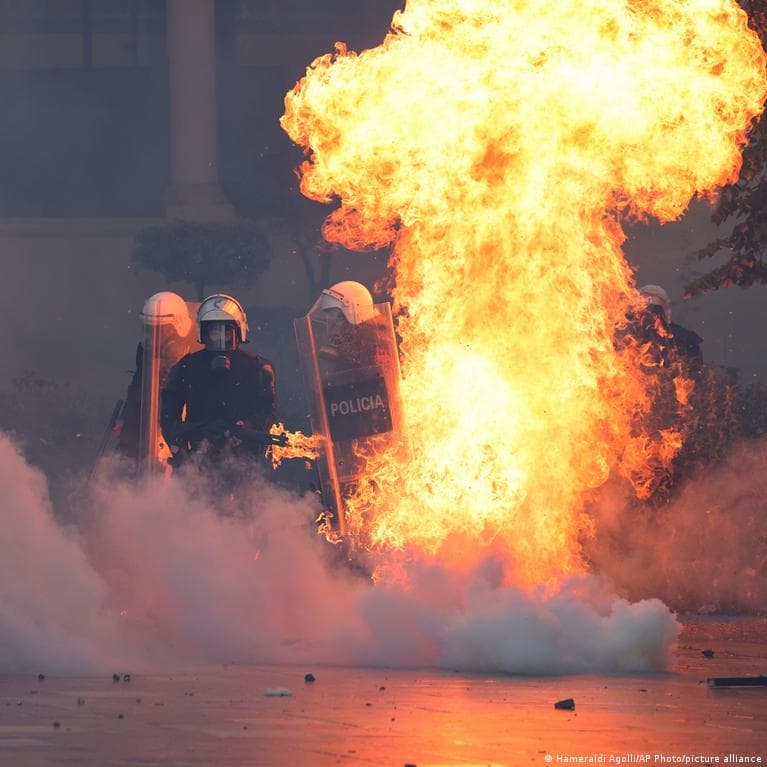
Student protests in Albania have continued for the sixth consecutive day. On Sunday, hundreds of people again gathered outside the Ministry of Education building in Tirana demanding the resignation of Prime Minister Edi Rama. Demonstrators threw stones at police, who responded with tear gas, water cannons and rubber bullets. According to Deutsche Welle, earlier during the clashes protesters threw Molotov cocktails, stones and fireworks. The actions, sparked by discontent over alleged government corruption, unemployment and low quality of education, spread across central Tirana and over the past week spread to other cities.
The Prime Minister's reaction
Rama said in a Facebook live broadcast that the protests are not challenging him personally, the government or the party that won the elections, but are 'challenging the path, the mission.' He called on Albanians to clearly decide what they want, including EU accession. The Prime Minister rejected the possibility of resignation, noting that governments change through elections, and called the protests 'the work of a foreign hand.'
Brussels' position
The protests are taking place at a difficult moment for Albania: the country is part of a group of Balkan states seeking to join the EU by 2030. Amid the violent clashes, calls for calm came from Brussels. The European Commission on Sunday condemned the use of violence in Tirana and other cities and added that it welcomes the commitment of the Albanian authorities to protect the right to protest.