The key facts
- Lavrov stated that Russia will fulfill economic agreements with Iran despite the 'difficult situation'
- Trade turnover grew by 21% last year and by more than 10% in the first eight months of the current year
- Tensions in the Persian Gulf region, the Strait of Hormuz, and the Russian proposal for collective security were discussed
Statement in Tehran
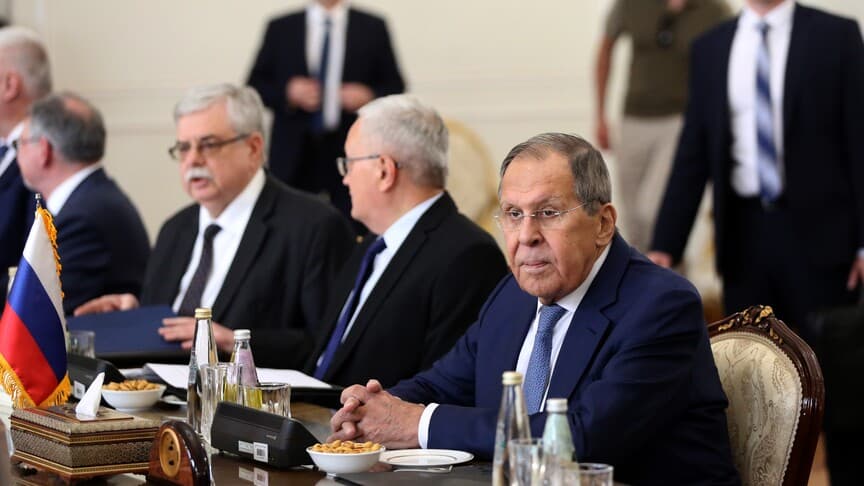
Russian Foreign Minister Sergey Lavrov said on Monday at a joint press conference in Tehran with his Iranian counterpart Abbas Araghchi that Moscow intends to fulfill economic and investment agreements with Iran despite the 'difficult situation.' According to him, Russian-Iranian cooperation is developing dynamically, based on the treaty on comprehensive strategic partnership, which entered into force last year.
Economic indicators and projects
Lavrov reported that bilateral trade turnover grew by 21% last year and by more than 10% in the first eight months of the current year. He also noted that the free trade agreement between Iran and the Eurasian Economic Union, in effect since May 2025, strengthens economic ties. According to him, Russian specialists are gradually returning to the Iranian Bushehr nuclear power plant, Russian contractors continue engineering work on the planned Rasht—Astara railway, and 'significant prospects' are opening up in the field of hydrocarbon extraction and redistribution.
Regional security
The diplomats discussed tensions in the Persian Gulf region and around the Strait of Hormuz. Lavrov welcomed Tehran's commitment to diplomacy and called for a return to the pre-crisis situation, including the restoration of maritime communication and guarantees against new aggression. He repeated the Russian proposal for collective security in the Gulf, envisaging cooperation among littoral states, including the six members of the Gulf Cooperation Council and Iran, with possible participation of permanent members of the UN Security Council, the League of Arab States, and the Organisation of Islamic Cooperation. Lavrov also welcomed the Mecca agreement on joint defense, signed in August by Turkey, Saudi Arabia, and Pakistan, and stated that Russia respects Iran's decision if it considers cooperation with this grouping useful for regional peace and development.
Ukraine and energy
Touching on the war in Ukraine, Lavrov stated that Russia has never deliberately attacked civilian infrastructure, except, according to him, for facilities that directly supplied the Ukrainian armed forces. He also accused European countries and the administration of former US President Joe Biden of undermining the stability of the global energy market by refusing Russian energy supplies. According to Lavrov, Moscow is not interested in volatile energy prices, since stability is necessary for long-term economic planning.