The key facts
- A court in Mombasa found Mackenzie and 28 defendants guilty of murdering 190 children and one adult
- The total death toll of the Shakahola tragedy exceeds 400 people; in 2024 the human rights commission cited the figure of 429
- The sentence will be handed down on November 6; Mackenzie is also charged with manslaughter and terrorism in separate cases
Mombasa court verdict
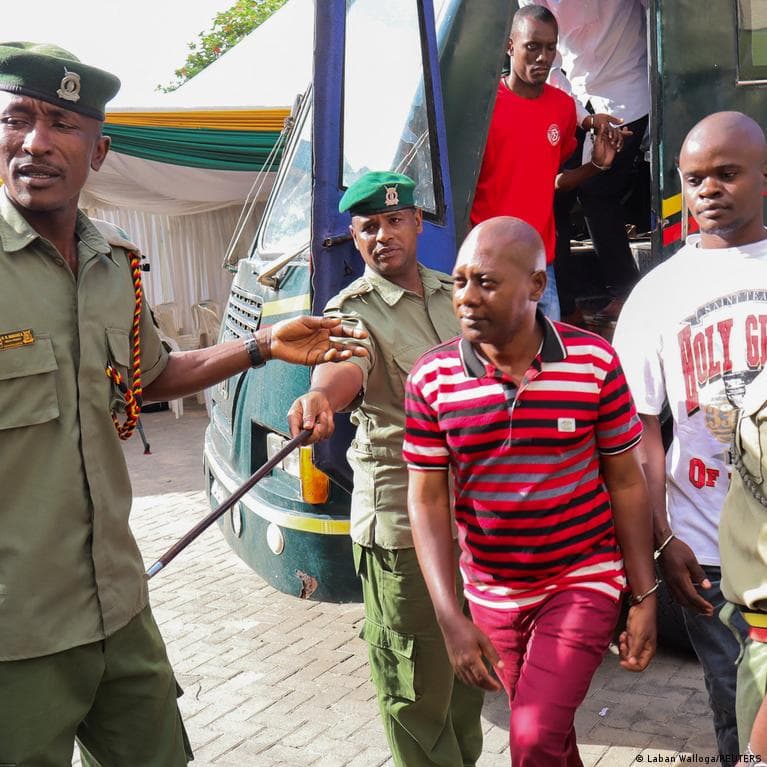
On October 19, 2026, the High Court in Mombasa found cult leader Paul Mackenzie and 28 other defendants guilty of murder. Judge Diana Kavedza-Mochache stated that the prosecution had proven the guilt of all 29 accused in the murder of 190 children and one adult under Article 203 of the Kenyan Penal Code; the conviction was entered under Article 322 of the Criminal Procedure Code. According to Deutsche Welle, the hearing lasted more than eight hours. The sentence will be handed down on November 6.
Rejected defence line
The judge rejected the defence's argument that the victims had voluntarily starved themselves to death. According to Anadolu, the judge noted that all the victims were under 16 years old. The prosecution argued that the deaths were the result of a coordinated campaign, not a voluntary religious fast. The defendants denied the murder charges.
Circumstances of the case
Mackenzie founded the Good News International Church in 2003 and, according to the investigation, urged followers to starve themselves to death in order to 'meet Jesus'. The prosecution stated that he 'initiated and directed' the extreme fasting on his 800-acre (325-hectare) farm in the Shakahola forest, and spoke of a 'structured hierarchy of death': children were to die first, followed by teenagers, women and men. According to autopsies and police reports, the children mostly died of starvation, but also from asphyxiation, neck compression and traumatic brain injuries. The court also heard that in a number of cases children were isolated and deprived of food in front of their parents.
Course of the investigation
Mackenzie was arrested in April 2023 after a human rights group appealed to the authorities; some of his followers were rescued. The subsequent police operation uncovered hundreds of shallow mass graves in the Shakahola forest near the resort town of Malindi. Kenyan media called what happened the 'Shakahola forest massacre'. The total death toll, according to Kenyan authorities, exceeds 400; the Kenya National Commission on Human Rights cited the figure of 429 in 2024, and some victims remain unidentified. The rising death toll forced excavations to be suspended due to a lack of space in local morgues. In January 2026, Mackenzie was charged in connection with another 52 bodies found in a nearby village.
Reaction and previous arrests
Mackenzie also denies charges of manslaughter and terrorism in separate cases. In Kenya there are calls to tighten the regulation of religious organizations after it emerged that he had previously been arrested twice but released: in 2017 on charges of 'radicalization' (acquitted) and in 2019 in connection with the deaths of two children in Shakahola (released on bail). Relatives of the victims were present in court. 'For me this is a very, very important day,' 62-year-old Francis Wanje, who lost eight relatives in Shakahola, including a daughter and two grandchildren, told AFP, also expressing outrage at the authorities' inaction in the early stages. The tragedy raised questions about the regulation of religious organizations, child protection and the accountability of state institutions.