The key facts
- Daedalus: 85.69 petaflops, 31st place in the world, 23rd in Green500 (June 2026), budget €58.9 million
- Business services via Pharos AI Factory from March 2027; startups and SMEs — free of charge within EU state aid rules
- A second supercomputer is planned at the University of Western Macedonia (Kozani), tender worth €21.57 million
Launch in Lavrio
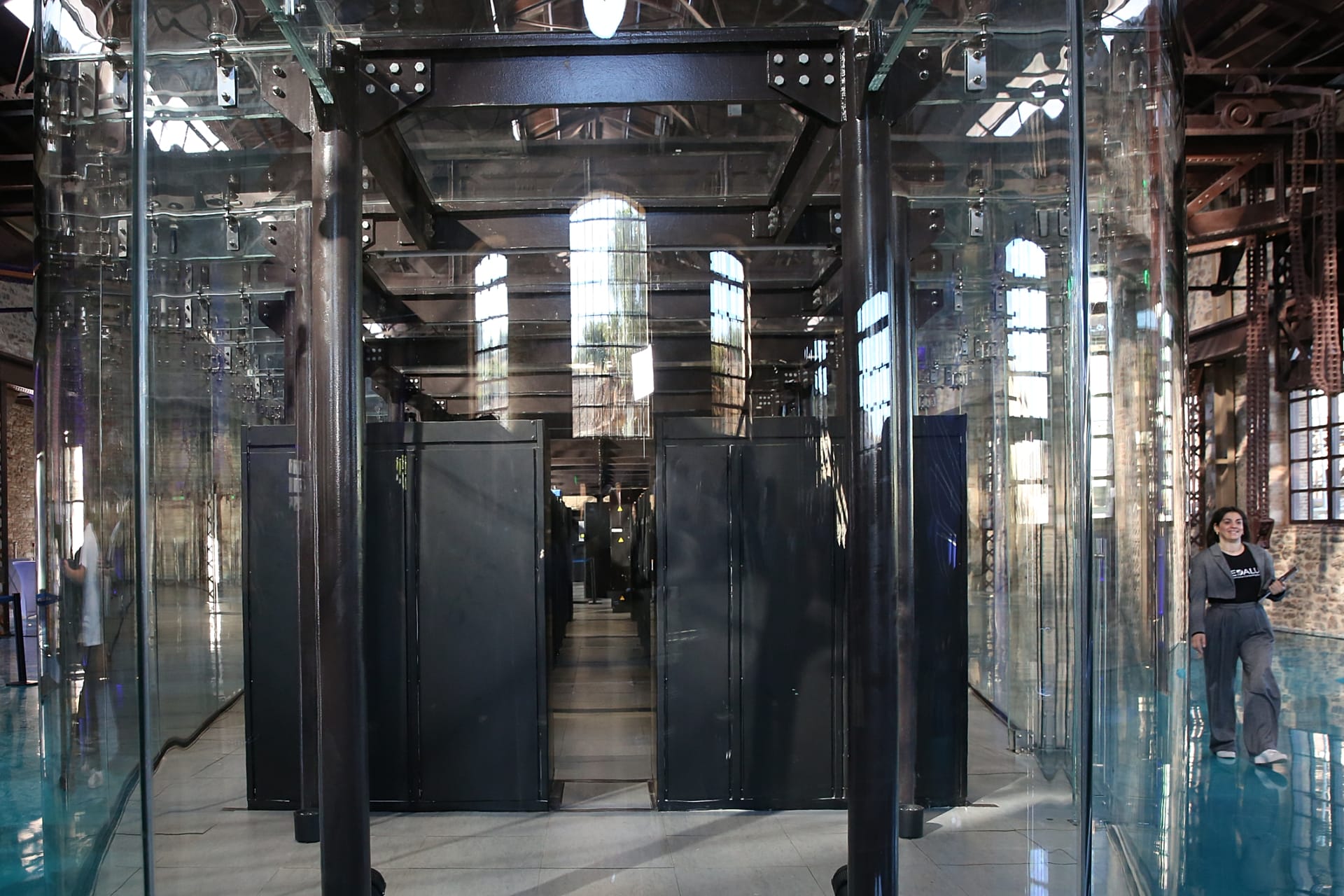
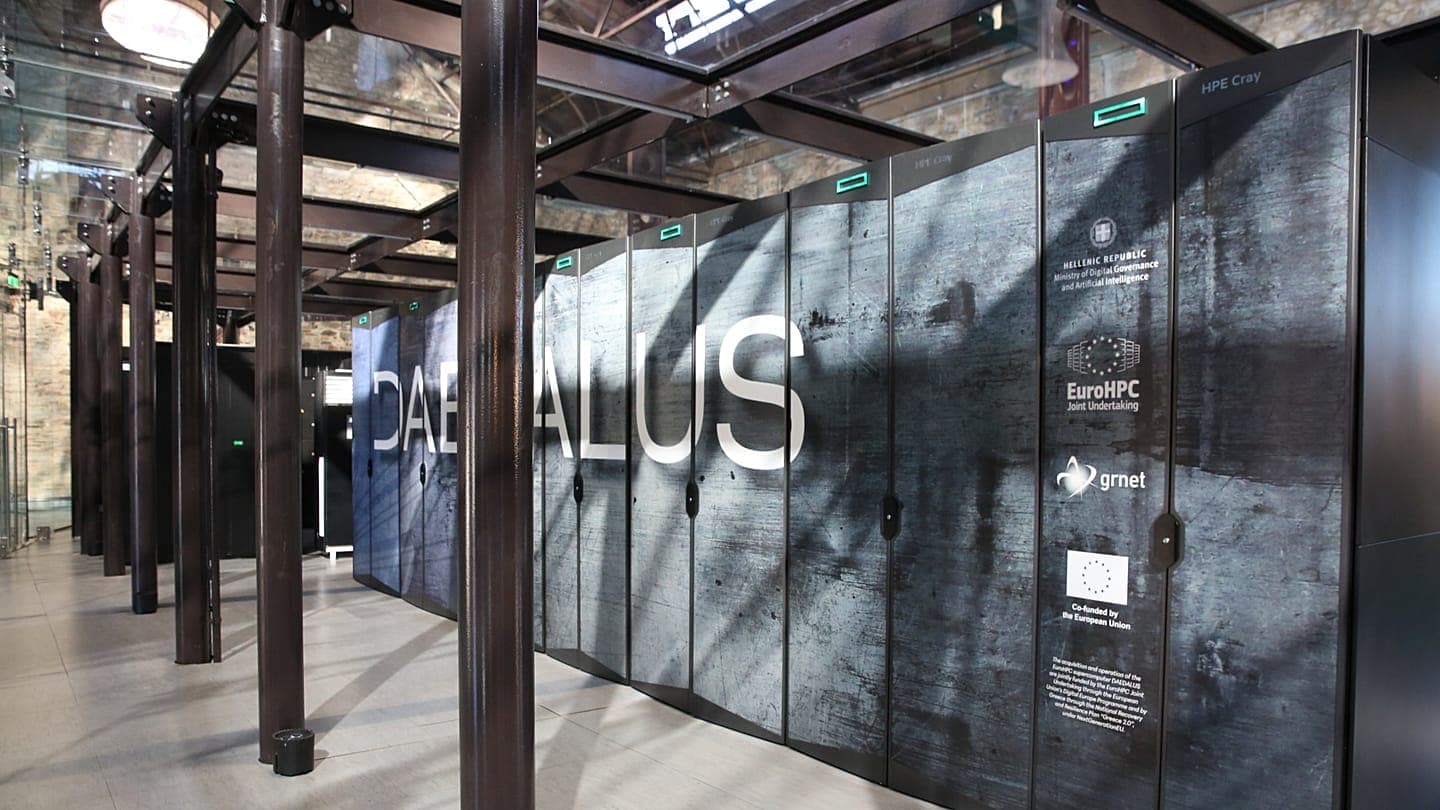
Greece has commissioned Daedalus — the most powerful supercomputer in the country's history. The system is installed in the historic building of the former power plant of the Lavrio Technology and Culture Park, which is overseen by the National Technical University of Athens. According to available data, with a performance of 85.69 petaflops (about 85.69 quadrillion floating-point operations per second), the system ranks 31st in the world. The investment amounted to €58.9 million, with funding from the Recovery and Resilience Facility and the EuroHPC joint undertaking.
Technology and operators
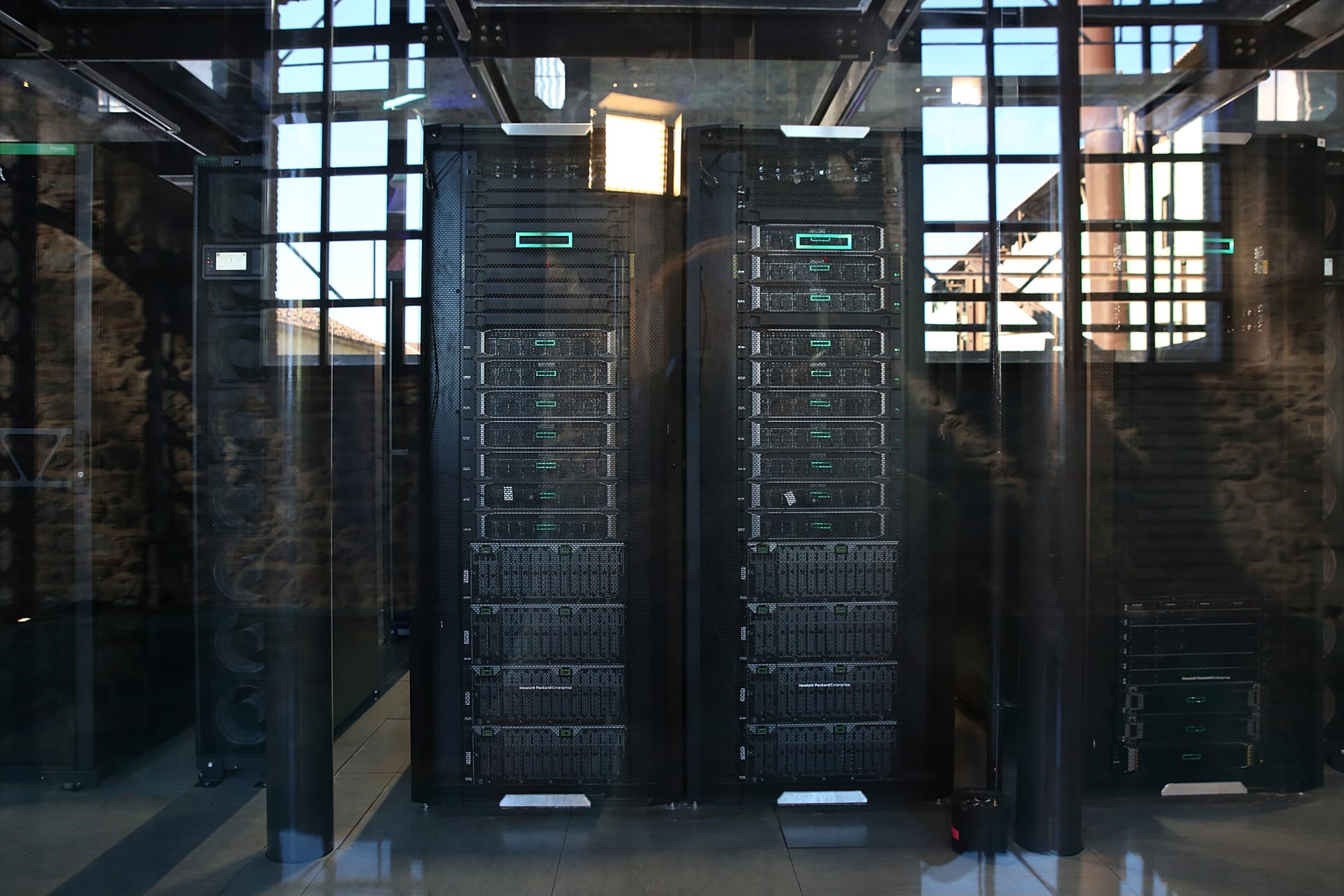
The system is built on Nvidia Grace Hopper GH200 technology and uses liquid cooling to manage thermal loads. Hewlett Packard Enterprise carried out the supply and installation of the computing equipment for €41 million, and Mainsys performed the electrical installation work and data center configuration for €17.9 million (the amounts include VAT). Management and technical operation, as well as project delivery, are handled by the organization EDYTE (GRNET).
Significance for the country
Daedalus will allow universities, research centers, companies, government agencies and medical organizations to train advanced AI models, process big data and perform complex computations on infrastructure within Greece. Particular emphasis is placed on the ability to process sensitive data on the country's territory in compliance with security and personal data protection requirements — this is important for medical research and public administration. The publication stresses that the system is not intended to directly rival the largest European installations (Europe has exascale systems with capacities exceeding 1000 petaflops); its value lies in access to computing resources, support for specialized applications and integration into the European AI ecosystem. According to the Green500 ranking for June 2026, Daedalus ranks 23rd in the world for energy efficiency.
Pharos AI Factory and business access
The link to the business community will be Pharos AI Factory — the Greek 'AI factory', which is among the first seven similar EU initiatives. According to current plans, the broad provision of services will begin in March 2027 after technical testing and configuration. Startups and SMEs will be able to use the capacity free of charge — within the limits set by EU state aid rules; for large companies, payment based on usage time is being considered. The final access terms, services and pricing policy have not yet been approved. The service package includes support for AI implementation, commercialization assistance, access to collaboration networks, acceleration programs, secure testing environments, production infrastructure, AI models and open data. The company Hellenic AI Factory S.A. has been established for commercial operation: 70% owned by the Superfund and 30% by the Ministry of Digital Governance and AI. On November 10, a training program on building AI agents is scheduled jointly with Endeavor Greece and Nvidia — for 45 selected participants.
Second supercomputer in Kozani
In parallel, a second supercomputer is being prepared at the University of Western Macedonia in Kozani. The EDYTE board approved the launch of a public consultation on a tender for the supply and installation of computing equipment, storage systems and software with a budget of €21.57 million including VAT — the amount concerns only this sub-project; a revision of the budget and timeline is expected through an amendment to the inclusion decision. The system is to operate in a 'green' data center within the RE-Cloud network, with an emphasis on AI, cloud services and the analysis of sensitive data. An IT infrastructure with a capacity of 1.2–1.5 MW and a photovoltaic installation of more than 2 MWp are planned. Funding comes from the just transition program, and the contract execution period is 12 months from the date of signing.