The key facts
- On Saturday, more than 500,000 people protested against the cost of living; the riots led to the looting of around 1,500 shops
- Interior Ministry: about 1,000 police officers were injured, seven of them seriously
- Macron called for unity in a televised address; opponents criticize the lack of concrete measures; new protests announced for November 5
Crisis Meeting After the Worst Riots
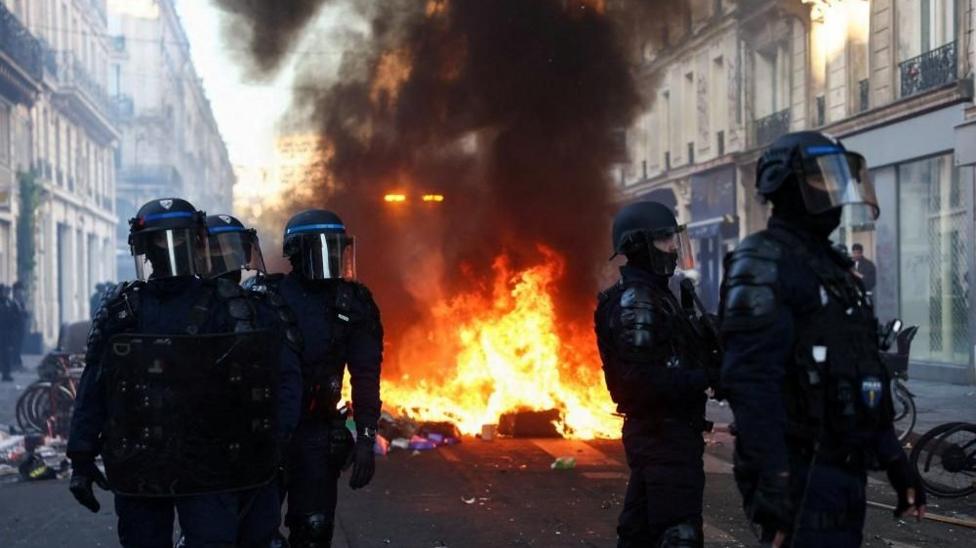
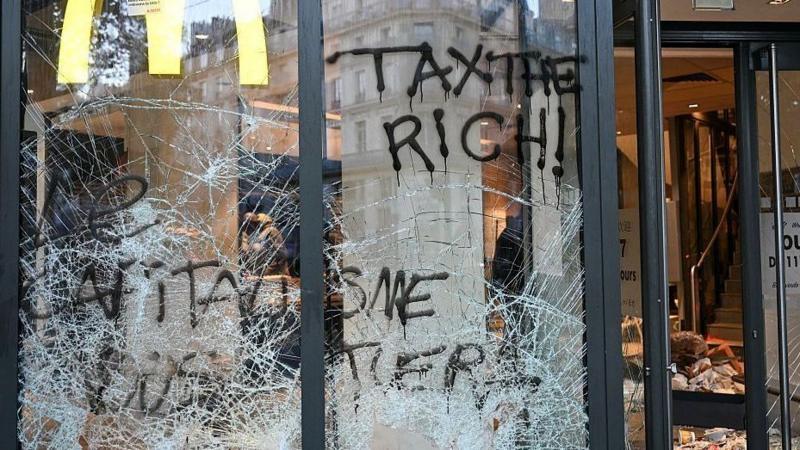
French Prime Minister Sébastien Lecornu is holding an emergency cabinet meeting on Monday to assess the aftermath of the weekend, during which, according to the BBC, the country experienced one of the worst scenarios of public disorder in modern French history. On Saturday, more than half a million mostly peaceful demonstrators took to the streets against the rising cost of living and the deterioration of public services, including education. However, after the appearance of groups of activists in black and vandals, the protests escalated into riots: an estimated 1,500 shops and businesses were looted and destroyed.
Injured Police Officers and the Authorities' Response
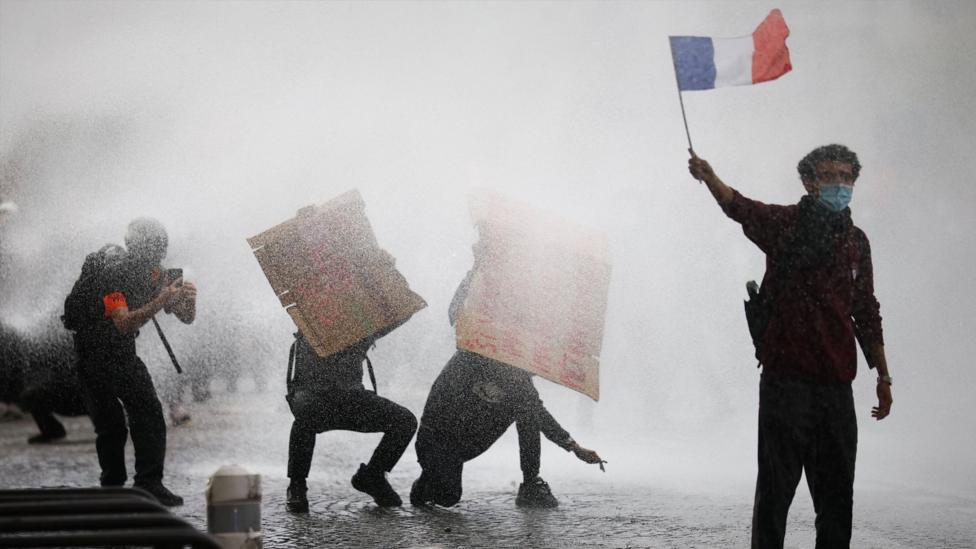
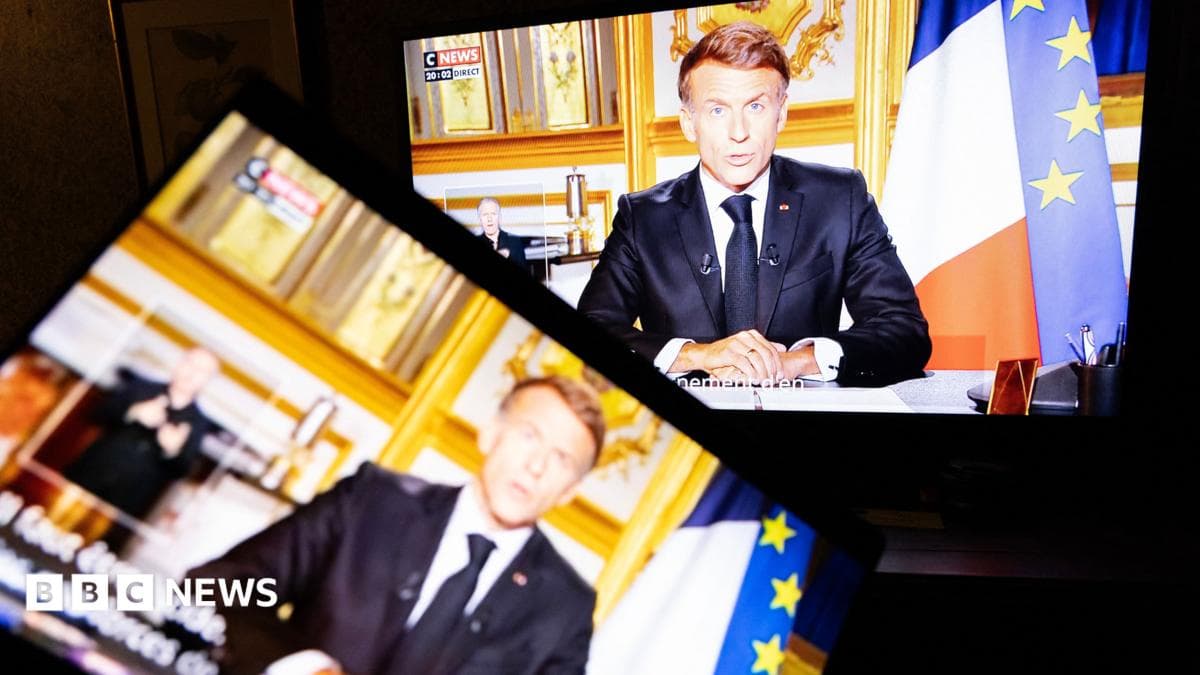
Police used tear gas and water cannons; in several places, officers were seen beating people with batons. According to the Interior Ministry, about 1,000 police officers were injured on Saturday, seven of them seriously. There were rumors that President Emmanuel Macron might impose a curfew or a state of emergency, but instead, on Sunday, he delivered a televised address, calling for national unity and promising to punish those responsible. The speech was criticized on social media and by political opponents for its lack of specifics: it is unclear how riot instigators will be punished, how cities will be protected, how damage to businesses will be compensated, and when dialogue with students and teachers will begin.
Mutual Accusations and Political Crisis
CGT union General Secretary Sophie Binet accused Macron of ignoring the problems of students, the cost of living, and the quality of public services. Macron and the Prime Minister blamed radical left groups and delinquents; left-wing leader Jean-Luc Mélenchon spoke of the government's 'incompetence,' while Marine Le Pen, in a video address, accused 'Macron's exhausted and disoriented administration.' Speaker of the lower house of parliament Yaël Braun-Pivet announced her intention to open an investigation into the events. Many believe the authorities were poorly prepared for the protests, which had been announced in advance.
Context: Parliamentary Paralysis and Elections
Macron is seen by many as a 'lame duck': presidential elections will be held in six months, in which Le Pen and Mélenchon are competing, which heightens tensions. Parliament is paralyzed and divided among three blocs. Financial problems are adding to the pressure: investors are pushing the country to control its growing public debt, but the government fears that cutting services or social spending will bring even more people onto the streets. Residents express frustration that politicians are engaged in mutual accusations; a teacher named Édouard told the BBC that politicians are using the situation as a 'political football' ahead of the elections.
What's Next
The authorities are hoping for a respite: students begin their holidays on Monday. But for November 5, trade unions, together with the 'yellow vests' movement, have announced large-scale protests. According to a BBC correspondent, France is 'holding its breath.'
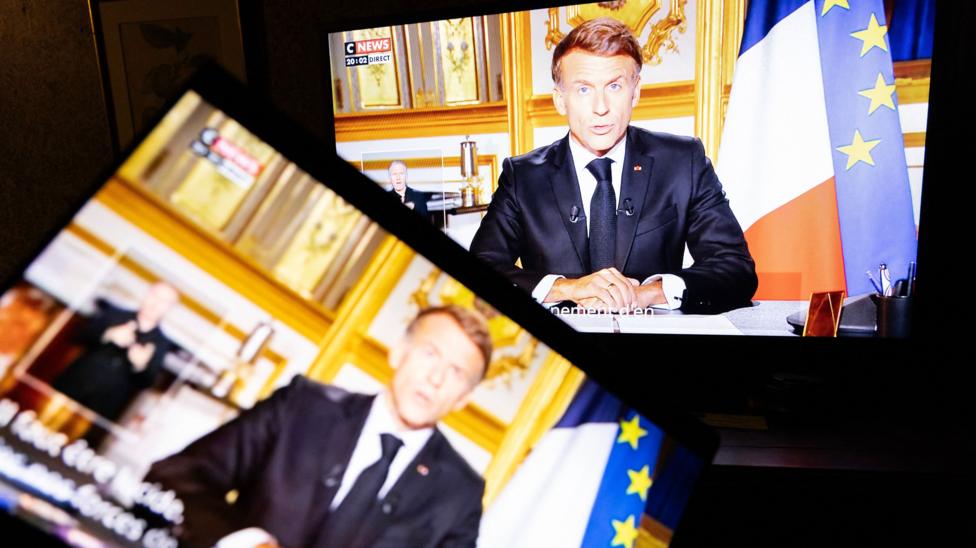 Image source, AFP via Getty Images
President Emmanuel Macron urged calm in his national address following widespread looting and violence
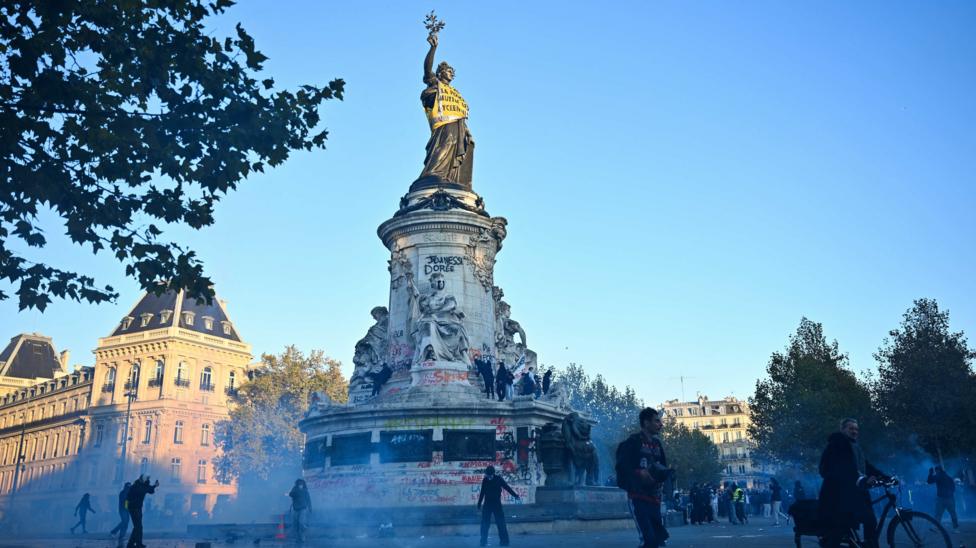 Image source, AFP via Getty Images
Vandals defaced Statue de la Republique in central Paris over the weekend