The key facts
- More than a million children were referred to mental health services in 2024–25; 55% fail to reach a good level in English and maths at GCSE
- The spread is huge: referral for psychiatric assessment ranges from 6 days in Leicester to 118 in Hampshire; good GCSE grades — 70% in Richmond upon Thames versus 31% in Knowsley
- De Souza proposes minimum standards, a 'children's emergency fund' and deputy mayors for children; Prime Minister Andy Burnham promised investment in young people
'State of emergency' in children's services
Children's Commissioner for England Dame Rachel de Souza published the Childhood Lottery report, analysing around a hundred indicators — healthcare, social care, education, safety and leisure. She concluded that a 'postcode lottery' has led to a 'litany of failures' in children's circumstances, and that maintaining the status quo cannot be regarded 'as anything less than a national emergency'. The Commissioner called on Prime Minister Andy Burnham to give large local authorities and mayors a greater role in education, healthcare, youth services and policing.
Best and worst areas
The hardest places to grow up were named as Middlesbrough, Hounslow, Bradford, Nottingham, Halton, Peterborough, Leicester, Liverpool, Sunderland and Medway. The least difficult were Cheshire East, Merton, Surrey, Richmond upon Thames, Hertfordshire, Cheshire West and Chester, Haringey, Leicestershire, Central Bedfordshire and Wokingham.
Striking contrasts
Referral for a mental health assessment took 6 days in Leicester versus 118 days in Hampshire and the Isle of Wight. 70% of children in Richmond upon Thames achieved good grades in English and maths at GCSE, versus 31% in Knowsley. 6.7% of children in Bedford felt unsafe, versus 24.9% in Croydon. In four councils, spending on youth services per teenager was zero. 86% of children in Redcar and Cleveland saw a dentist in a year, versus 39% in Hackney — one of 25 areas where fewer than half of children saw a dentist.
Poverty is not the only factor
The report found that deprivation alone does not explain the differences: some poor areas showed high results, while relatively affluent ones showed low results. Haringey in north London, despite high deprivation, received a high rating for its services, whereas Cambridge, one of the least deprived areas, ranked low.
Key figures and recommendations
Among the report's findings: more than a million children were referred to mental health services in 2024–25; 55% of children fail to reach a good level in English and maths at GCSE; a million 16–24-year-olds in the UK are neither working nor studying; 12% of children do not feel safe in their area. De Souza recommended introducing minimum standards for education, healthcare, policing and youth services, creating a 'children's emergency fund', and requiring 'strategic authorities' (including mayoral areas) and large councils to appoint a deputy mayor for children who would assess the impact of every policy. She had previously resisted reducing the problems to funding, but said that 'the scale of the failures is too great'.
Government response
In a separate article for The Times, Prime Minister Andy Burnham on Monday promised greater investment in 'the success of our young people' and said the government can no longer support their 'failure through the benefits system'. Burnham had previously called the youth employment and training crisis a 'moral failure'.
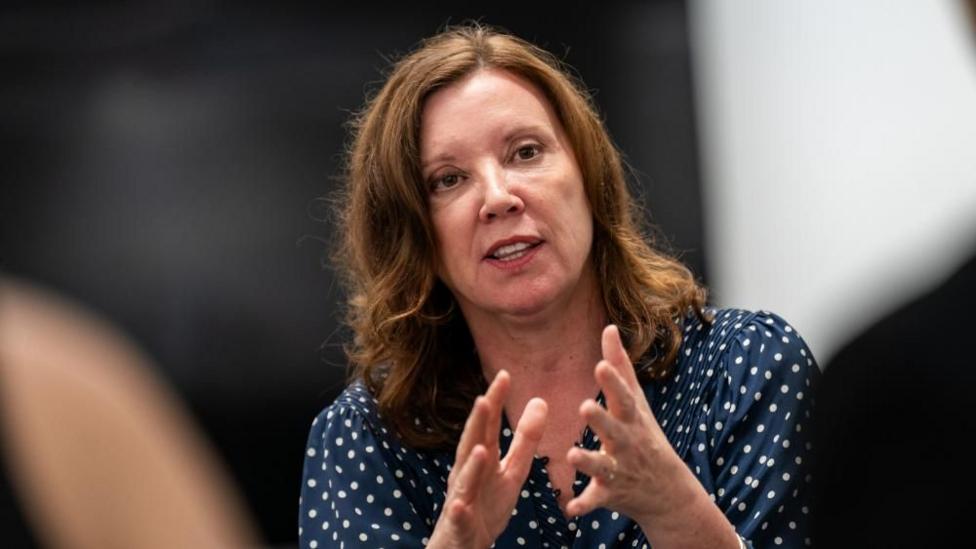 Image source, PA Media
Dame Rachel de Souza's landmark report examines the challenges faced by children across England