The key facts
- Paris -1.1%, Milan -1.6%, London and Frankfurt also declined; Nasdaq +1.7% on tech sector rebound
- Nearly 2,400 people arrested in France on Saturday, about 1,000 police officers injured — Interior Ministry
- Jakarta index fell more than 5% to a six-year low after MSCI's statement
Europe under pressure from unrest
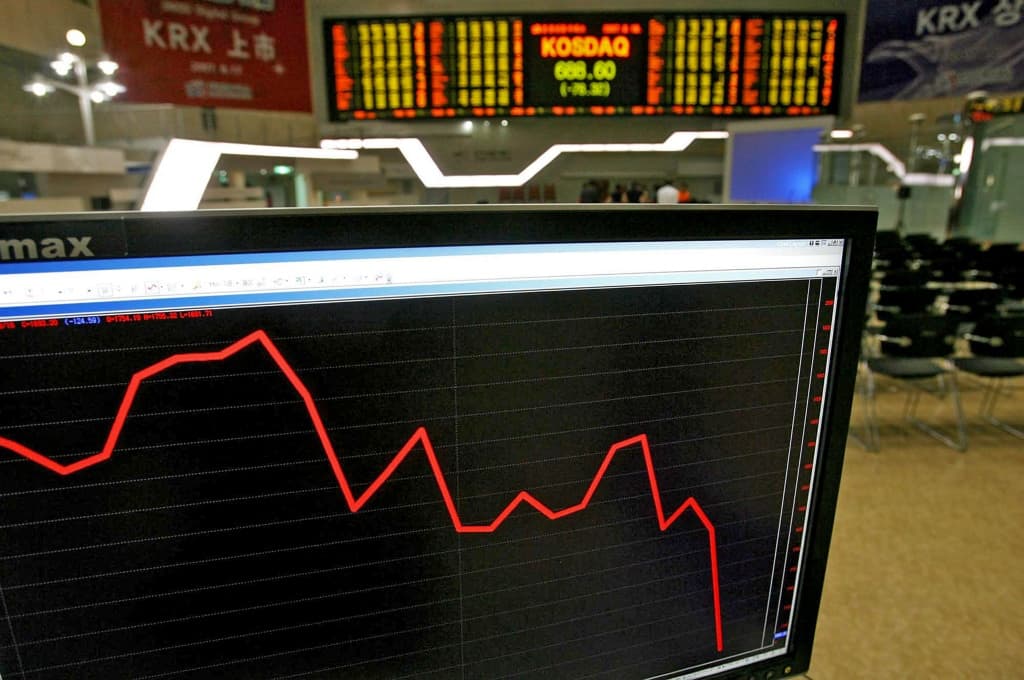
European stock markets declined on Monday, with Paris and Milan leading the losses. According to AFP, the escalation of violence in France and street clashes in Italy's financial capital heightened investor concerns about high levels of public debt. Most sectors fell, and selling of bonds and the euro also continued. The CAC 40 closed at 7,868.05 points (-1.1%), Milan's FTSE MIB at 49,086.27 (-1.6%), London's FTSE 100 at 10,764.69 (-1.1%), and Frankfurt's DAX at 25,319.77 (-1.2%). Patrick Mannelli of Tickmill Group noted that markets reacted alarmingly to scenes of civil unrest in several countries, including an address by French President Emmanuel Macron, who acknowledged the 'anger and shame' after one of the worst days of unrest in the country in recent years.
Riots in France and the authorities' response
On Sunday, Macron condemned the 'unbridled' violence that erupted during demonstrations over the cost of living across the country, while police in Paris confronted protesters and looters. According to France's Interior Ministry, nearly 2,400 people were arrested during Saturday's unrest, and about 1,000 police officers were injured — one of the worst episodes of urban violence in France in recent years. The situation is unfolding against the backdrop of lawmakers' disputes over the 2027 budget plan, which provides for billions of euros in spending cuts but maintains the country's extremely high debt level. In Italy, Prime Minister Giorgia Meloni held a security meeting on Monday in connection with the violence in Milan, which recalled scenes of chaos and looting in Paris.
Tech sector rebound on Wall Street
On Wall Street, technology stocks led a recovery: the Nasdaq Composite rose 1.7% to 26,583.92 points, the S&P 500 gained 0.9% to 7,725.76, and the Dow Jones added 0.2% to 52,113.84. Briefing.com analyst Patrick O'Hare noted that the past week was difficult for trading in the semiconductor and AI sectors: sentiment was weighed down by concerns about rising investment spending and questions about the return on huge investments, with investors dumping the shares and bonds of a company providing computing power to AI firms. At the same time, he said, 'buy-the-dip' demand for these stocks persists. Neil Wilson, investment strategist at Saxo UK, pointed out that the outcome of the recovery may depend on tech companies' earnings reports: more companies are publishing third-quarter results this week, with Meta in focus as the first of the five major 'hyperscalers'.
Oil and currencies
Oil prices retreated on Monday on signs that supplies continue to leave the Middle East despite Iran's control over the Strait of Hormuz and ongoing attacks by Yemen's Houthis on key Saudi oil fields. According to analysts, futures were also pressured by US President Donald Trump's decision to cancel a new package of energy sanctions against Russia. Brent fell 1.4% to $108.36 per barrel, WTI dropped 0.7% to $100.70. The euro declined against the dollar to $1.1222, the pound fell to $1.3316, and the dollar strengthened against the yen to 158.42.
Indonesia market crash
The Jakarta stock market fell more than 5% on Monday, compounding Friday's plunge of more than 11%, and closed at its lowest level in six years. The trigger was index provider MSCI's statement that maintaining the country's emerging market status was 'no longer advisable,' which raised fears of foreign investment outflows. In Asia, the Shanghai Composite rose 0.4% to 3,730.92, Tokyo's Nikkei 225 fell 0.6% to 64,916.70; the Hong Kong exchange was closed for a holiday.