
The key facts
- Tashkent: AQI 151–153 (according to different versions of the publication), 13th place in the world for air pollution
- PM2.5 exceeds the WHO standard by 11.6 times; in Samarkand the AQI is 105
- Automatic air monitoring stations have been launched near the airports of Samarkand and Fergana
'Red' pollution level in Tashkent
On October 19, 2026, air quality in Tashkent reached the 'red' level, considered harmful to health. According to the monitoring station as of 09:00, the air quality index (AQI) was 151 according to the Russian-language version of Daryo.uz and 153 according to the Uzbek-language version of the same publication. With this figure, Tashkent ranked 13th in the ranking of major world cities with the most polluted air (IQAir data).
Situation in Samarkand
A significant deterioration in air quality was also recorded in Samarkand: the AQI reached 105. This level poses a danger to people with respiratory diseases, children, and the elderly.
Exceeding the PM2.5 standard
The concentration of fine particulate matter PM2.5 in the air turned out to be 11.6 times higher than the annual average level recommended by the World Health Organization (WHO).
Recommendations from the publication
Daryo.uz provides recommendations for protecting health: avoid physical activity and outdoor sports, keep windows closed, wear a protective mask when going outside, and use air purifiers indoors.
Monitoring near airports
It was previously reported that an automatic atmospheric air quality monitoring system is being introduced near the airports of Uzbekistan, aimed at continuous monitoring of the environmental situation. The first stations were configured and put into operation on October 9 at Samarkand Airport and on October 15 at Fergana Airport. In the future, such equipment is planned to be installed near all international airports in the country.
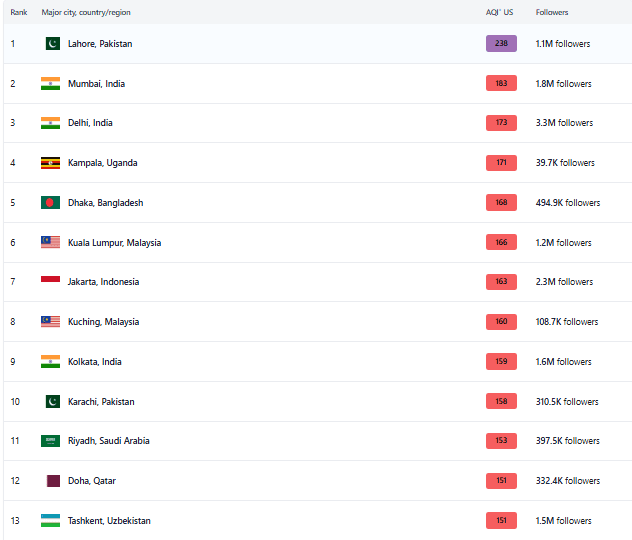
Фото: “IQAIR”