The key facts
- More than 1,800 detained, over 500 injured police officers, gendarmes and firefighters — figures from Interior Minister Laurent Nuñez
- According to the Interior Ministry, 550,000 people took to the streets (110,000 in Paris); organisers put the figure at 800,000
- The historic town hall in Limoges burned down; riots in Paris, Marseille, Lille, Lyon and other cities; Macron to speak at 8:00 pm
Scale of the riots and detentions
French Interior Minister Laurent Nuñez said on Sunday that around 1,800 people were detained during and after nationwide protests against the cost of life involving 'yellow vest' collectives. According to him, more than 500 police officers, gendarmes and firefighters were injured; the casualty figures remain preliminary. The Paris police reported 855 detentions, calling this figure a record; the prosecutor's office separately reported 720 detained, of whom 517 remained in custody, including 171 minors (DW data). Both figures are being clarified. Most detentions in the capital are linked to suspicion of selling stolen goods, participation in a group with the aim of committing violence, and vandalism.
Number of participants
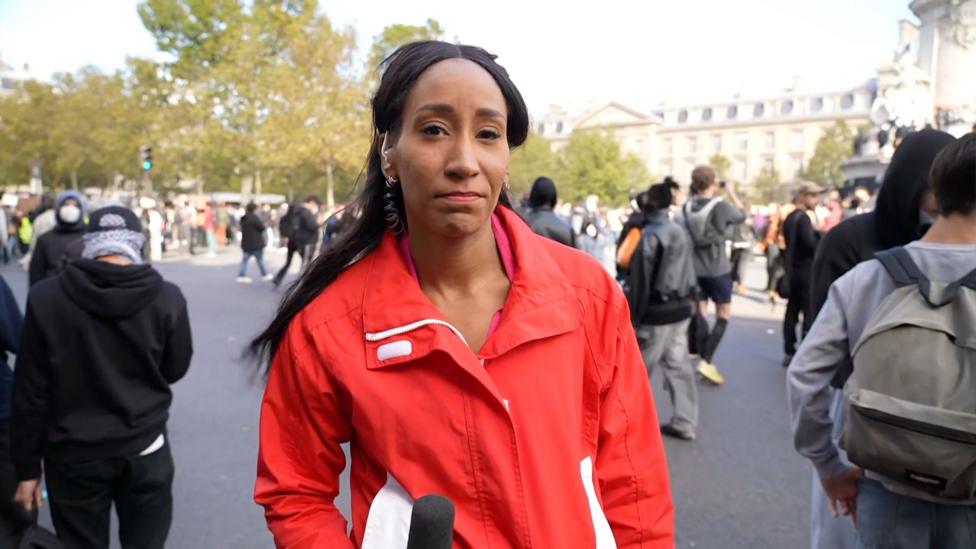
According to the Interior Ministry, 550,000 people took part in Saturday's demonstrations across the country, including 110,000 in Paris. Organisers estimated attendance at about 800,000. The CGT union also gave a higher national figure — 800,000. The action united 'yellow vests', trade unions, students and farmers; the demands concerned fuel prices, the cost of living, low wages, farmers' and firefighters' problems, as well as the state of schools — teacher shortages, overcrowded classrooms and dilapidated buildings. The main march in Paris passed without major incidents, but violence erupted on the fringes of demonstrations in a number of cities.
Riots, arson and looting
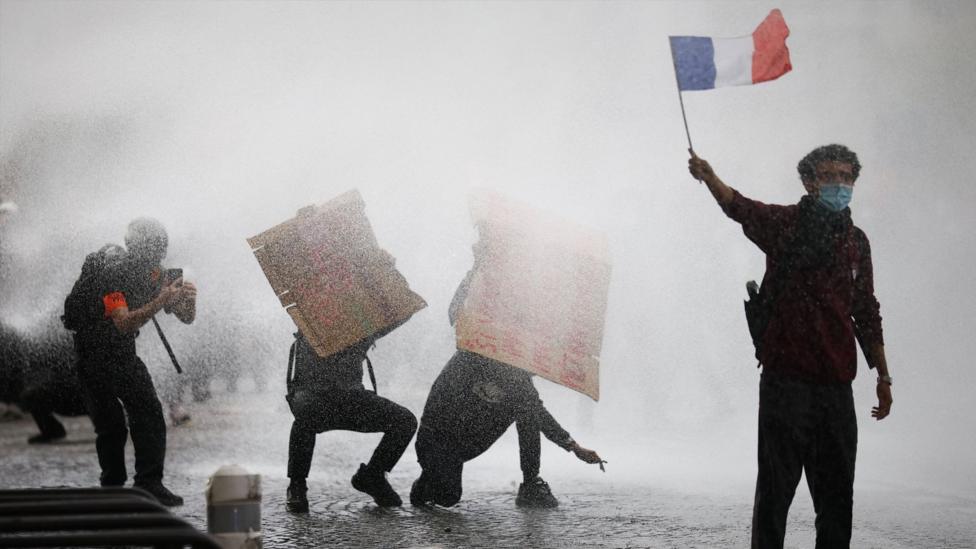
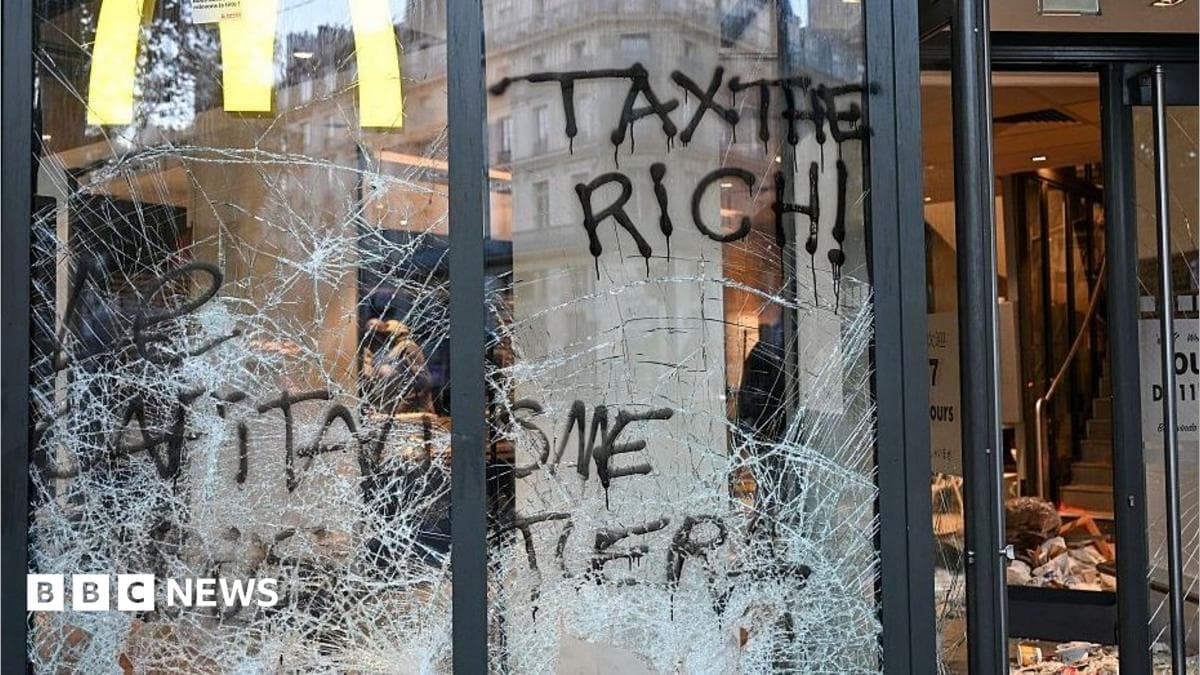
In Paris, Marseille, Lille and other cities there were mass lootings; cars and buildings burned, police used tear gas, water cannons and batons. In Marseille, protesters used a metal fence as a battering ram to break into the city hall. In Lille, according to police, a McDonald's was set on fire, and an Apple store was broken into and looted. In Limoges, a fire destroyed a significant part of the historic town hall; the prefect of the Haute-Vienne department, Maurice Barat, said that a 'wild horde' had 'deliberately' set fire to the 143-year-old building, and local authorities called the town hall 'largely lost'. The mayor of Lyon, Grégoire Doucet, called the arson of the city's tourist office a 'tragedy'; according to local police, 'hostile individuals' hindered firefighters from extinguishing the fire. The mayor of Limoges, Guillaume Guérin, told the LCI channel: 'There are no words to condemn what happened, it is so terrible. The country is in chaos.' In Paris, the shop windows of Ralph Lauren, Gucci and Versace were damaged; the retail federation reported damage to about 1,500 shops. Carrefour CEO Alexandre Bompard said that more than 50 stores of the chain were damaged, with the damage estimated at several million euros.
Casualties
A demonstrator died after losing consciousness on the Boulevard Magenta in Paris; police reported cardiac and respiratory arrest. According to Le Parisien and Le Figaro, a 17-year-old teenager lost an arm from a grenade fired by police in Saint-Étienne; the city's mayor, Régis Juanico, called it a tragedy that 'should not have happened'. The total number of injured demonstrators was not specified.
Political reactions
Prime Minister Sébastien Lecornu blamed the violence on the 'far left' and, according to DW, called it a 'highly organised violent far-left group'; he stated there were 150 injured police officers (the figure differs from the Interior Ministry's data on more than 500 injured law enforcement officers and firefighters). On Sunday at 7:00 pm he will hold an interdepartmental crisis meeting on the economic consequences, insurance and judicial matters, and will also meet with the mayors of Paris, Marseille and Lyon, who demanded explanations regarding police resources and procedures. President Emmanuel Macron wrote on X that 'there is no place for violence in our Republic', promised to hold those responsible accountable and, according to the Élysée Palace, will address the nation at 8:00 pm local time. Nuñez said that 'several thousand far-left activists' deliberately attacked public buildings and the police, and were then joined by 'offenders' who looted shops. Green politician Marine Tondelier demanded Nuñez's resignation. Far-right candidate Marine Le Pen accused Jean-Luc Mélenchon's party of 'legitimising violence'; Mélenchon himself, who supported the protests, urged demonstrators to stay away from looting, calling it 'contrary to our methods'. Speaker of the National Assembly Yaël Braun-Pivet, according to BFMTV, is considering creating a parliamentary investigative commission and will meet with faction leaders on Tuesday.
Context
The riots have heightened tensions ahead of the 2027 presidential elections amid discontent over the cost of living and strict government spending restrictions due to high debt and budget deficit. Online calls to revive the 'yellow vest' movement have intensified authorities' fears that student protests, ongoing since the end of last month, could escalate into a wider uprising. The 'yellow vest' movement began in 2018 over plans to raise fuel taxes and grew into months of nationwide protests against the cost of living and inequality, some of which were accompanied by clashes with police.
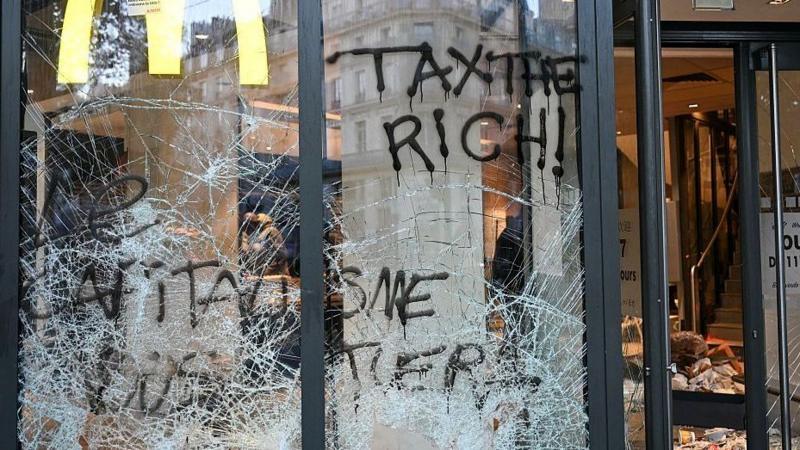 Image source, Getty Images
A vandalised shopfront in Paris in the aftermath of protests
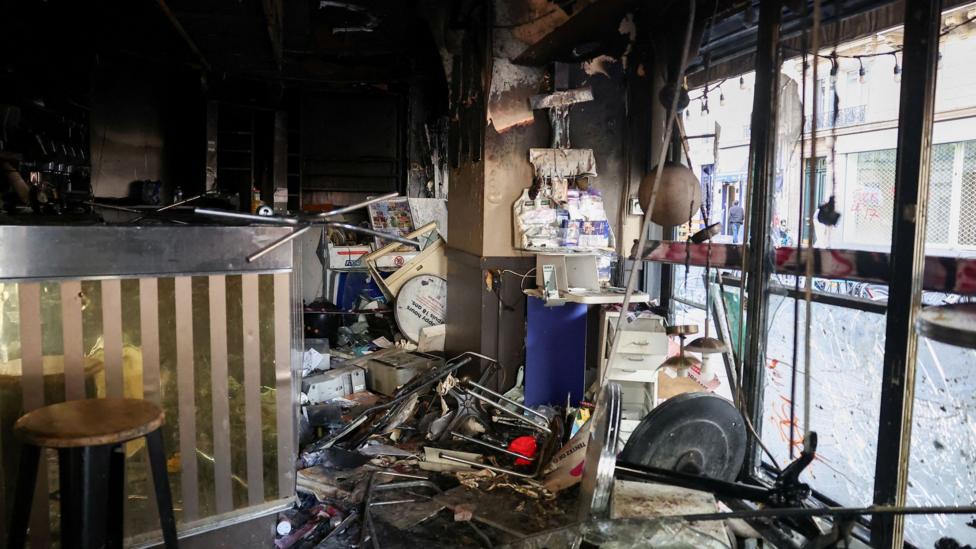 Image source, Reuters
The destroyed interior of a restaurant in the capital on Sunday morning
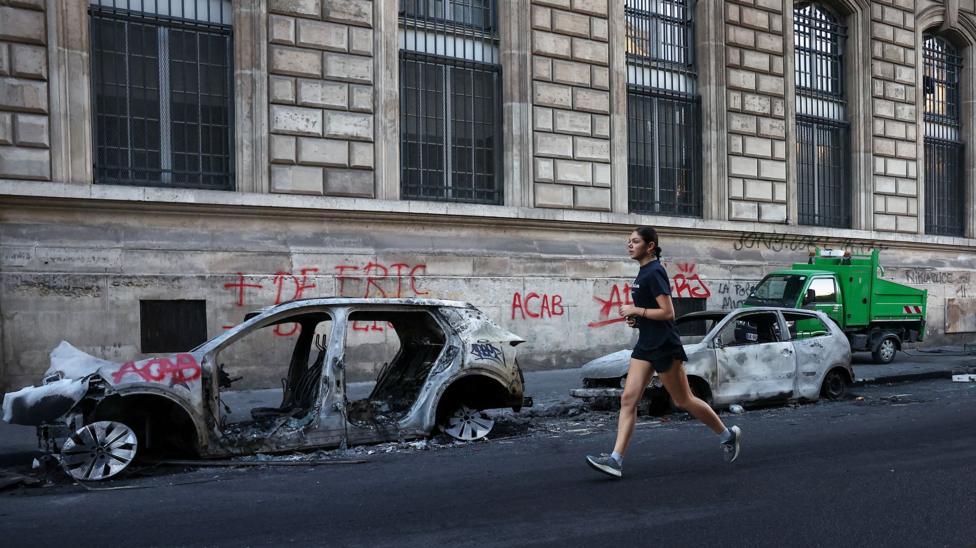 Image source, Reuters
A woman jogs past burnt out vehicles in Paris, near the Place de la République