The key facts
- The building of the Navoi Museum of Literature was transferred to the Youth Theatre under a closed Cabinet of Ministers resolution dated 29 September 2026
- Part of the collections has been transferred to the Center of Islamic Civilization, and the rest is planned to be moved to the Institute of Anthropology
- Staff sent an appeal to the president; the cultural heritage agency stated that the wall paintings will remain in place, and 4.6 billion soums has been allocated for facade repairs
Transfer of the building to the theatre
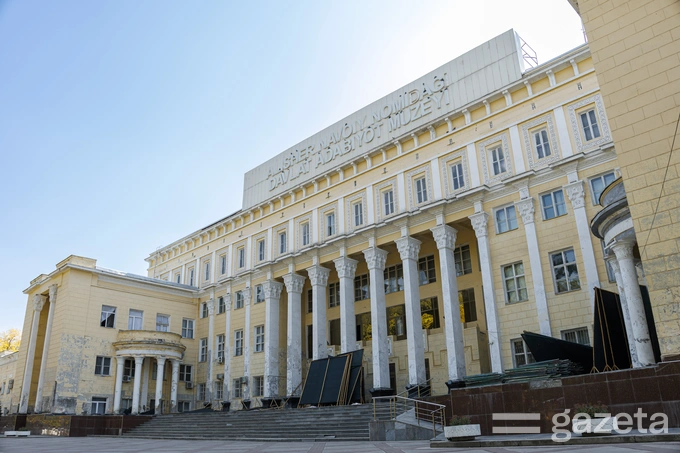
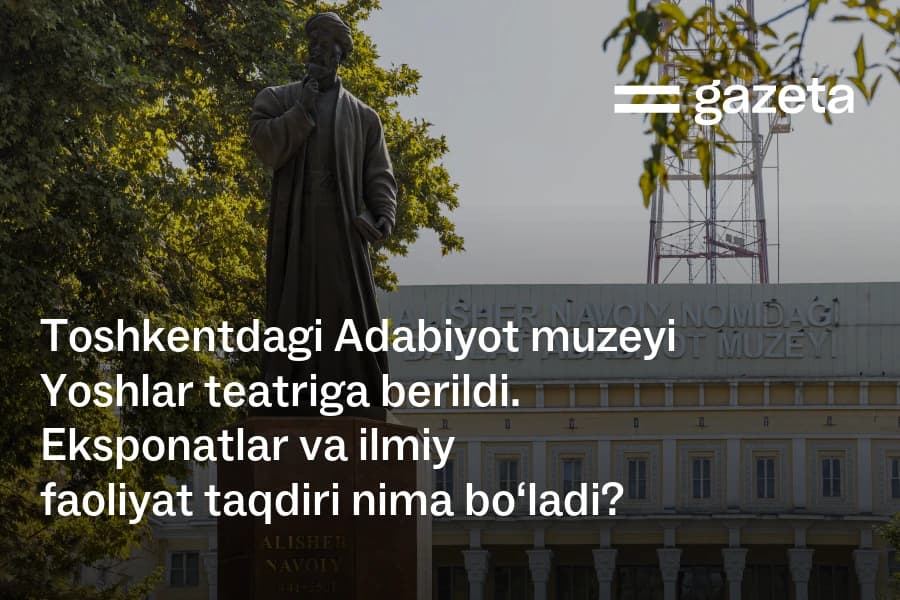
The building of the State Museum of Literature named after Alisher Navoi in the center of Tashkent has been transferred free of charge to the nearby Uzbek State Youth Theatre under operational management. This is provided for by a closed Cabinet of Ministers resolution dated 29 September 2026. The document also provides for the construction of a new building for the museum in Yangi Tashkent, but it has not yet been built, and part of the collections has already been moved to another institution. The transfer of the museum has sparked heated discussions on social media.
History and scientific significance of the museum
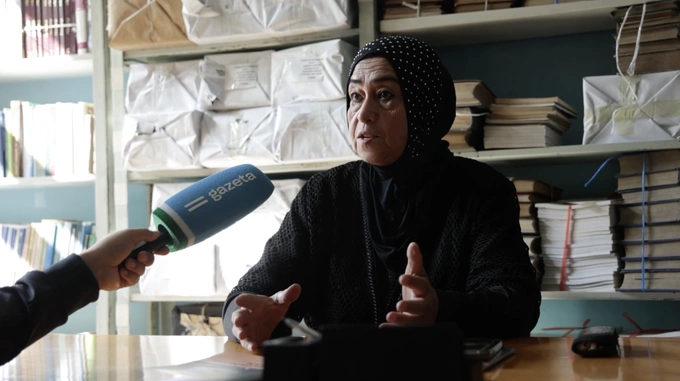
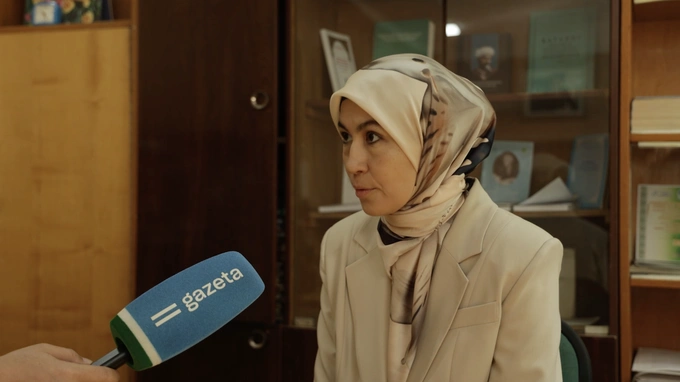
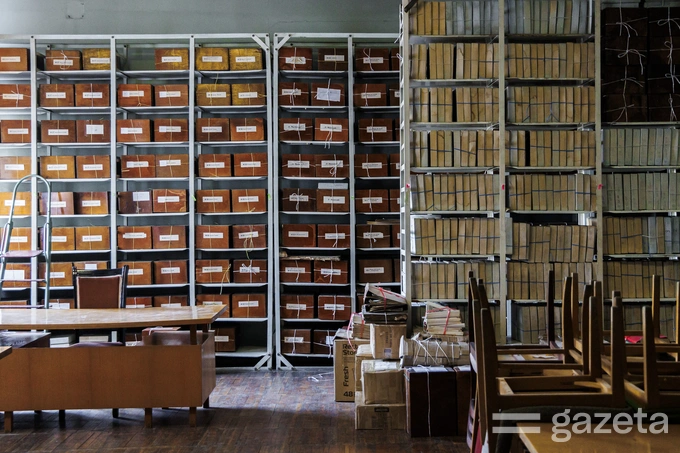
According to researcher Ma'mura Rashidova, the museum was established in 1941 for the 550th anniversary of Alisher Navoi at the Institute of Language and Literature of the Academy of Sciences. In 1968, for the poet's 525th anniversary, the museum moved to its current building, which itself has historical significance and is protected as a cultural heritage site. Rashidova has worked at the museum for 51 years. She emphasizes that the museum is not just an exhibition hall but a research institution studying the history of Uzbek literature from primary sources: manuscripts are studied here and texts of works are verified. Scholar Khamid Suleymanov played a special role in the museum's history; together with his students he studied manuscripts abroad and brought back originals, photocopies and copies, and also collected the personal archives of poets and writers. In 1978, based on the manuscripts collected at the museum, the Institute of Manuscripts was established with six research departments; after Suleymanov's death, the work was continued by academician Aziz Kayumov. The Institute operated for 20 years. In Rashidova's opinion, when relocating the museum it is necessary to clearly define how its research activities will continue, since a scientific school and traditions have been established at the institution.
Exhibits and wall artworks
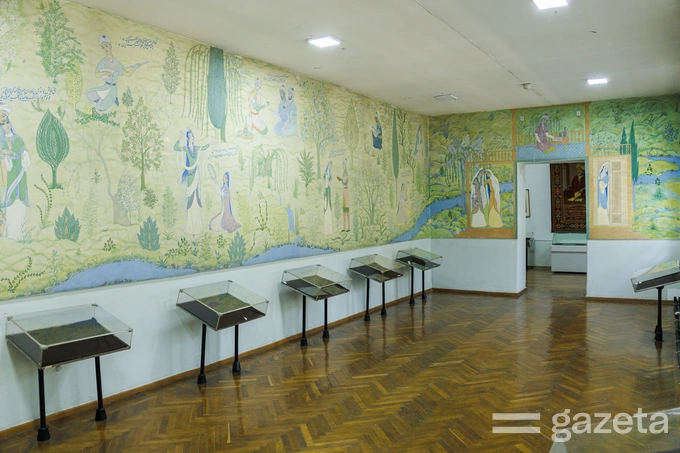
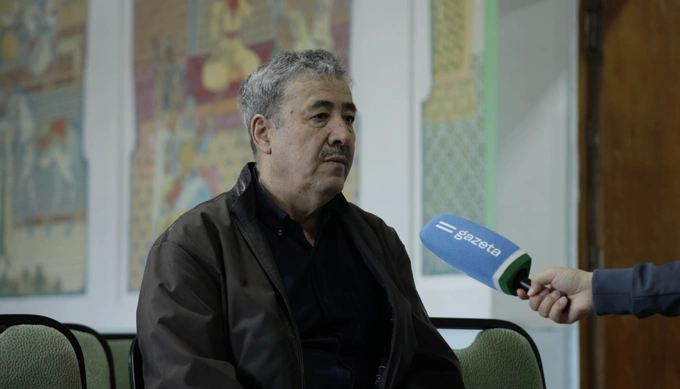
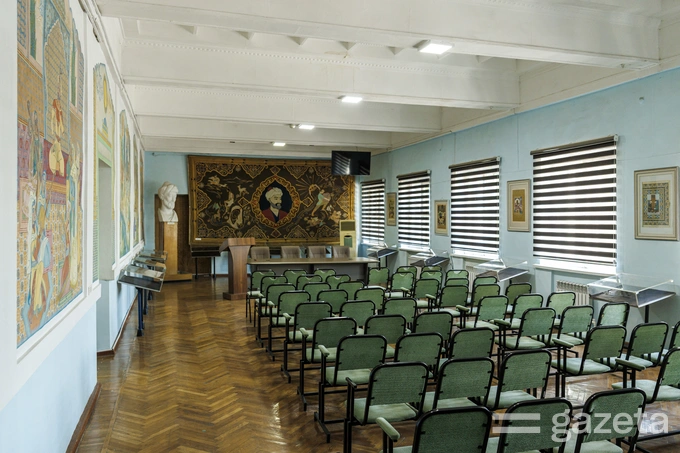
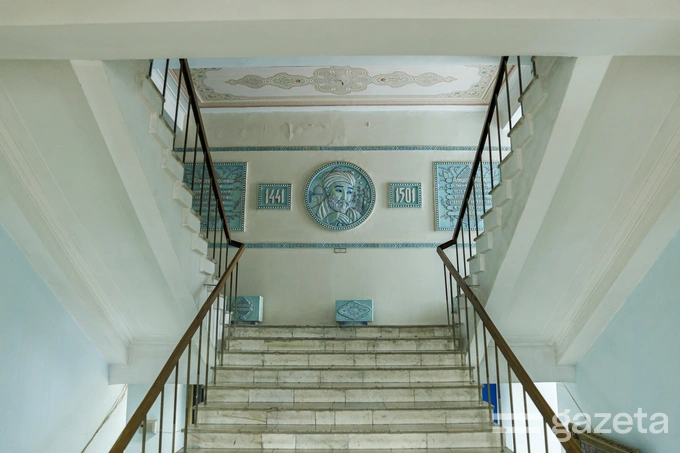
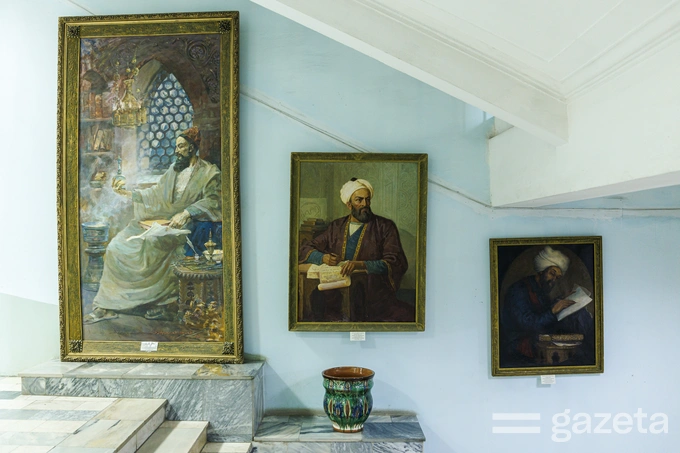
The museum's chief curator Abdurasul Eshonboboev reported that the exhibition contains more than 1,500 exhibits: oil paintings, ceramic items, editions of Navoi's works from various years, photocopies of his divans kept abroad, and other rare items. The exhibitions cover different periods of Uzbek literature: halls dedicated to Navoi, the 'Khamsa' exhibition, materials about Babur and classical literature, as well as literary processes of the 20th century and the present. The 'Khamsa' hall features wall paintings by Temur Sa'dullayev dedicated to Navoi's five poems; there are also wall works by the renowned artist Chingiz Akhmarov based on Navoi's lyrics, with beyts from ghazals written by the poet and calligrapher Charkhiy domla. The museum also displays busts of Navoi, Babur, Maksud Sheikhzade, Aybek and Gafur Gulyam, as well as sculptures dedicated to Agahi, Komil Khorezmi and others. Eshonboboev notes that when discussing the relocation, the fate of the wall artworks, which are inseparably linked to the building, must be taken into account: their transfer may prove impossible, and the question of preserving them in place when the building is transferred remains open. In addition, the collections hold about 3,000 manuscripts and lithographed books, most of which are lithographic editions.
Appeal to the president and uncertainty
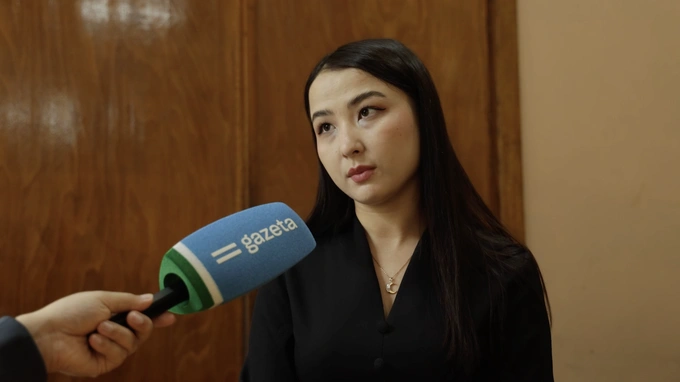
Shafoat Khasanova, head of the department of rare manuscripts, who has worked at the museum for 22 years, reported that the relocation is already affecting research work: inventory and preparation of the collections for relocation have begun. Part of the manuscripts has been transferred to the Center of Islamic Civilization, and the rest is planned to be moved to the building of the Institute of Anthropology. As a result, researchers' access to the sources is limited. According to her, the museum staff sent a letter to the president regarding the institution's future; the appeal was forwarded to the Academy of Sciences, whose representatives came and talked with the staff. They were told that the museum would not be closed and work could continue, but did not answer where and under what conditions. Then a closed resolution was issued on the free transfer of the building to the theatre after the museum's relocation and renovation. Khasanova notes that construction of the Navoi center in Yangi Tashkent is at an early stage and, in her assessment, completion of the new building will take at least four to five years or more. Senior researcher Nurafshon Oripova opposes moving the museum before the new building is ready: according to her, almost 85 years ago, despite difficult times, extensive work was carried out to name this street after Navoi and erect a monument to the poet, and today the museum should be preserved as a sign of respect for Navoi and Uzbek literature. The staff are not against creating a Navoi center in Yangi Tashkent, but demand that the museum's work not be suspended until the new building is put into operation.
Position of the Cultural Heritage Agency
The Cultural Heritage Agency commented on the situation on social media. According to its data, the museum building at 69 Alisher Navoi Street, Shaykhantakhur district, was included in the national list of immovable property objects of material cultural heritage by Cabinet of Ministers resolution No. 846 dated 4 October 2019 and placed under state protection. The agency noted that the building was historically and architecturally built as the Russian Theatre for Young Spectators, and the State Youth Theatre has long operated on part of this territory. The agency explained the transfer of the building by the desire to preserve the complex as a unified cultural and theatrical space and by the needs of the expanding theatre. Although the building is included in the heritage list, it was not on the agency's balance sheet but within the Academy of Sciences system; at the proposal of the balance holder, it was transferred to the theatre for free use by a government resolution. The agency stated that a change of user does not affect the heritage status of the site and does not cancel the obligations associated with it, which now fall on the theatre. It is impossible to move the wall paintings and unique artworks from the inner halls; the agency will preserve them in place in their original form. The interior renovation project will be considered at the second stage only on condition of conservation and restoration of the paintings. The remaining unique exhibits are planned to be temporarily moved to the Center of Islamic Civilization and the Institute of Anthropology of the Academy of Sciences until the new building in Yangi Tashkent is put into operation. 4.6 billion soums is planned to be allocated for facade repairs; the work is promised to be carried out in two stages and without violations of the law.
Context
In April, the head of the presidential administration of Uzbekistan, Saida Mirziyoyeva, visited several cultural sites, including the Navoi Museum of Literature, where the digitization of rare manuscripts was discussed, and said she was taking the situation with cultural sites under her control. The project of a new building for the museum has been discussed for several years: in 2021, the president was offered to build the museum next to the Writers' Alley in the National Garden. Later the concept changed: in September 2024, a project for a complex in Yangi Tashkent was presented to the head of state, including the international research center named after Alisher Navoi, the Museum of Literature and the National Maqom Center. It was designed by the world-famous firm Zaha Hadid Architects.