The key facts
- IMF: global trade growth in 2023–2025 was 8.3%, without AI products about 4.6% (Silvana Tenreyro)
- IMF projects a 0.4% decline in global GDP by 2028 if AI investment falls
- IMF chief Georgieva: money flowing out of AI could create financial stability risks; Moody's warns of the impact of a prolonged war in the Middle East
AI as a driver of global growth
The artificial intelligence boom has become a key driver of global economic growth, but at the same time carries risks if investment in the technology weakens — that was the assessment given this week by experts and policymakers at the annual IMF and World Bank meetings in Bangkok. According to the IMF, spending on data centers and microchips helped cushion the economic shock from rising global energy prices caused by the war in the Middle East. The fund's chief economist, Silvana Tenreyro, noted that global trade grew by 8.3% between 2023 and 2025 — without AI products, the figure would have been closer to 4.6%.
'This is only the beginning'
'It is everywhere in the global economy,' Bank of Canada Governor Tiff Macklem said about AI on Friday. 'You see it in GDP. You see it in the stock market. You see it in the bond market... So it is here, and this is only the beginning.' Fed Chair Kevin Warsh called AI 'the most significant change' in the global economy in his lifetime and noted its 'enormous benefits,' but warned that the road ahead would be 'bumpy' — both in understanding the technology and because of uncertainty about the future market structure.
Risks of slowing investment
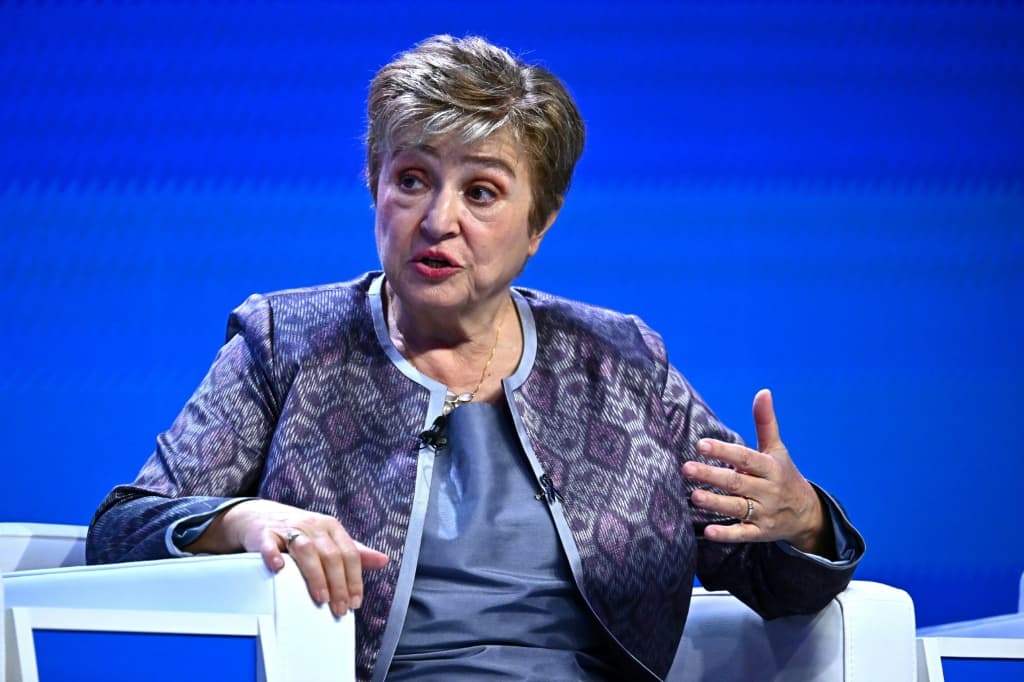
IMF chief Kristalina Georgieva also acknowledged the AI boom's contribution to global growth, but told AFP that a slowdown in the sector 'will be felt around the world.' 'If there is a loss of confidence and money leaves AI, this could lead to financial stability risks,' she said. An IMF report published this week projects that a decline in AI investment could reduce global GDP by 0.4% by 2028. 'Weaker or less resilient AI investment and profitability could become a shock that triggers a market correction,' the report says.
The Middle East war and regulation
Moody's Analytics economists warned that a prolongation of the Middle East conflict could 'puncture' the AI boom: rising energy prices and tighter financial conditions could increase operating costs and interest rates, deepening doubts about the 'long-term profitability and viability of AI business models.' 'A protracted conflict would put serious strain on the economics of AI investment,' the group said. Regulatory uncertainty also clouds the technology's prospects: US President Donald Trump has called for more limited government regulation, while part of the industry advocates legislation to reduce risks. On Friday, Georgieva apparently linked regulation to future investment: 'If there are no safeguards, the risks could outweigh the opportunities,' she said in Bangkok.