The key facts
- Zelensky received an invitation to Budapest for 23 October; the visit is not officially confirmed
- Ukraine adopted a law on the education of national minorities; Hungary withdrew its objections, the EU opened 4 of 6 negotiation clusters
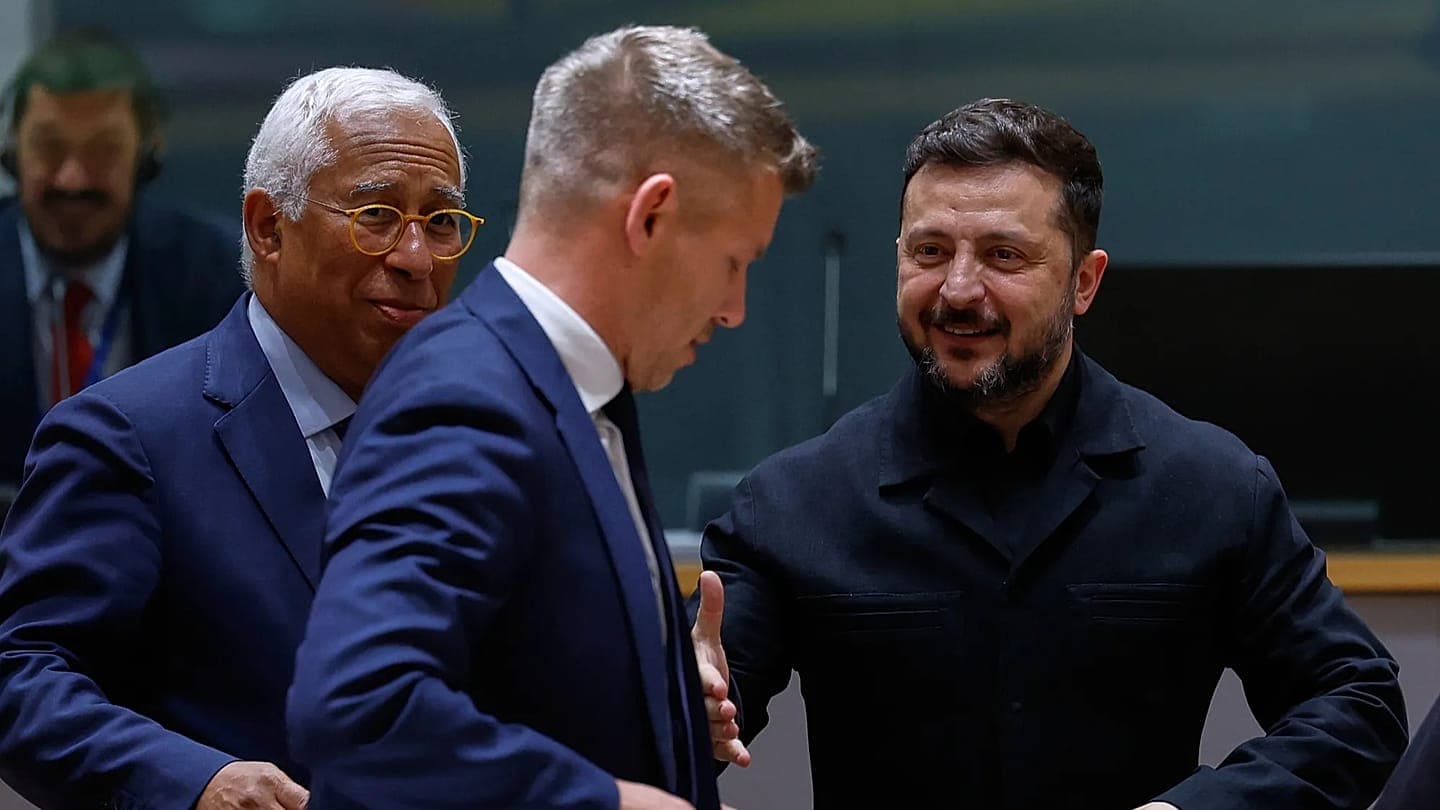
- The first bilateral meeting between Zelensky and the Hungarian prime minister is set for Friday in Brussels; a meeting in Berehove is also being discussed
Invitation to Budapest
Volodymyr Zelensky, according to Deputy Head of the Office of the President of Ukraine Ihor Zhovkva, received an invitation to visit Budapest on 23 October for the events marking the 70th anniversary of the Hungarian Revolution. In an exclusive interview with Euronews, he confirmed the fact of the invitation but stressed that the visit has not yet been officially confirmed: “The President of Ukraine received an invitation to take part. We will see how it goes.” The visit would be part of a reset of Kyiv–Budapest relations after years of disputes that hindered Ukraine's EU accession.
Meeting in Brussels
On Friday morning, on the sidelines of the EU summit in Brussels, the first official bilateral meeting between Zelensky and the Prime Minister of Hungary is scheduled — after months of discussions about the time and place. Kyiv sees it as a chance to turn the warming into concrete progress. “We have high hopes for this,” Zhovkva said, adding that Kyiv is grateful to Hungary for its support of the EU accession negotiations. European integration will be the central topic, but Kyiv wants to expand the agenda beyond the membership question. “Indeed, the time has come to sit down at the negotiating table,” he noted.
Minorities law and EU clusters
The diplomatic shift was preceded by a step by Kyiv: on Monday, the Verkhovna Rada adopted a law expanding the educational rights of national minorities, which Zelensky then signed. This removed a long-standing source of tension over the rights of ethnic Hungarians in the Zakarpattia region. Under the previous Hungarian government, this dispute was one of the main obstacles to Ukraine's EU accession: Budapest blocked negotiations with a veto. The current government is demonstrating a more constructive approach, although it continues to insist that Kyiv fulfill its obligations on minority rights. The day after the law was adopted, the EU opened two additional negotiation clusters after Hungary withdrew its objections — four out of six in total. “We are confident that Hungary's position will remain just as constructive,” Zhovkva said.
Possible meeting in Berehove
Kyiv expressed its readiness to host the Hungarian prime minister in the Ukrainian capital: “He has always been a welcome guest in Kyiv,” Zhovkva said, adding that other locations are also possible. Earlier, a meeting in Berehove — a Transcarpathian city with a significant Hungarian community — was discussed. Speaking in Brussels on Thursday, the prime minister called the Ukrainian law on the education of minorities a “historic breakthrough” and an opportunity to take bilateral relations to a new level, and also mentioned the possibility of a meeting in Berehove later this autumn.
Who will attend the commemoration
Other European leaders are also expected at the commemorative events on 23 October: according to the Hungarian prime minister, French President Emmanuel Macron has confirmed his participation; European Council President António Costa, according to his spokesperson, will most likely also come. Invitations have been sent to European Commission President Ursula von der Leyen and European Parliament President Roberta Metsola, but their participation has not been confirmed. Euronews contacted the Hungarian government for comment but received no response.
Historical context
On 23 October 1956, Hungarian students took to the streets in protest against Soviet occupation; the demonstrations grew into a popular uprising that was suppressed by the Red Army. Zelensky's presence at the commemoration could be a symbolic step and draw parallels with Ukraine's defense against the Russian invasion, as well as give European leaders an opportunity to express support for the current Hungarian prime minister, who displaced Viktor Orbán and is working to improve Hungary's relations with the EU. We note a discrepancy between sources: the English-language version of Euronews names Péter Magyar as Hungary's prime minister, whereas the Russian-language version in one place names Viktor Orbán as prime minister, although it later also describes a change of power in the country.


