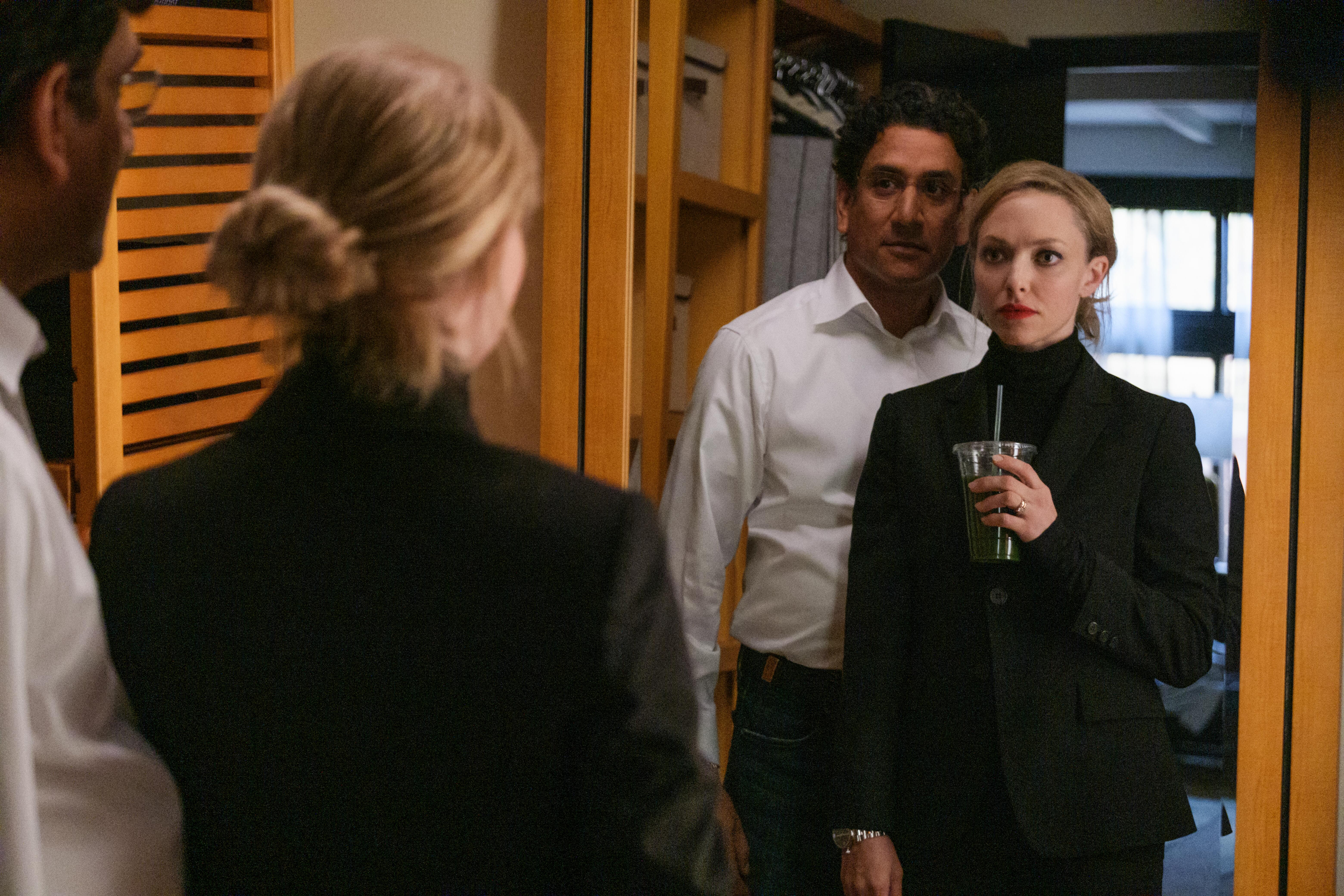
The key facts
- Holmes and her husband Billy Evans approached A24 a month before the start of her 11-year sentence
- Fielder and Oppenheim explore whether Holmes sincerely considers herself innocent
- Evans created an AI avatar of his wife that “has dinner” with the children; Amanda Seyfried participates as the actress from “The Dropout”
Origins of the Project
A month before former Theranos CEO Elizabeth Holmes was due to report in 2023 to begin serving an 11-year sentence for fraud, she and her husband, hotel-business heir Billy Evans, approached the studio A24. They proposed sending a film crew to document her final days of freedom and to try to justify herself in the eyes of the public. Director Lance Oppenheim and comedian Nathan Fielder, known for playing on the border between fact and fiction, joined the project. The result is the documentary “You Can See Everything,” which TechCrunch reviewed.
Fielder and Holmes: Parallel Personas
Fielder, the creator of the satirical show “Nathan for You,” teases Holmes at the beginning of the film: he made a show about a business con, while she got into trouble over a real con. Holmes replies that she sees no connection and considers the situations different. The reviewer notes that both are known for blurred public personas: viewers have spent years unable to tell when Fielder is acting and when he is being himself — and likewise cannot tell whether Holmes sincerely believes in her own innocence. At trial, listening to testimony from investors who lost hundreds of millions of dollars, whistleblowers, and patients, she did not flinch. “The world believes in a reality about me that does not match the truth. I know I did not commit any crime,” she tells Fielder.
Dispute Over the New York Times Quote
At the start of filming, The New York Times published a profile of Holmes that was criticized for allowing her to appear as an innocent mother deprived of the chance to watch her children grow up. Nevertheless, Holmes and Evans were furious about the article. In an interview with the reporter, Holmes said she was not offended by Amanda Seyfried’s role in the Hulu miniseries “The Dropout,” because “they are not playing me, they are playing a character I created.” The couple insists the quote was taken out of context and claim they have proof: allegedly Holmes said “they are playing a character they created.” Fielder repeatedly asked Evans to show this proof, but he never did.
Seyfried, the Avatar, and Prison Visits
When Holmes ended up in prison, Fielder tried to make sense of the footage and brought in Seyfried — the actress who played Holmes in “The Dropout.” He showed her a clip in which he watched the series together with Holmes herself: in a scene with Sunny Balwani, Holmes’s former partner (also now an inmate), she turned away and cried. A separate thread of the film is Evans, who created a realistic AI avatar of his wife on a large vertical screen that he rolls up to the dinner table so that it can “have dinner” with him and the children. The reviewer notes that everyone in the film plays to the camera to one degree or another, and that Evans’s behavior is so off-putting that he may be deliberately playing the villain to elicit sympathy for his wife.
Reconstructing Conversations
Fielder is forbidden from bringing recording devices into the prison, so he reconstructed a script of their conversations from memory, trying to convey Holmes’s wording precisely. With Seyfried, he rehearsed reading this script, editing the text. In the role of Holmes, Seyfried says: “People think Amanda’s show is a documentary. I am treated worse in prison because of how she portrayed me.” Then the actress steps out of the role: “I didn’t do this. She did this to herself.” The TechCrunch review contains spoilers for the film.