The key facts
- Guterres: fossil fuel subsidies are 'subsidising suicide'; call to redirect funds to people and the planet
- The world is behind the 30×30 target: even if all pledges are fulfilled, only 27% of land and 12% of oceans will be protected
- According to Global Witness, Turkey and Australia — COP31 hosts — are expanding oil and gas extraction
UN appeal ahead of the biodiversity summit
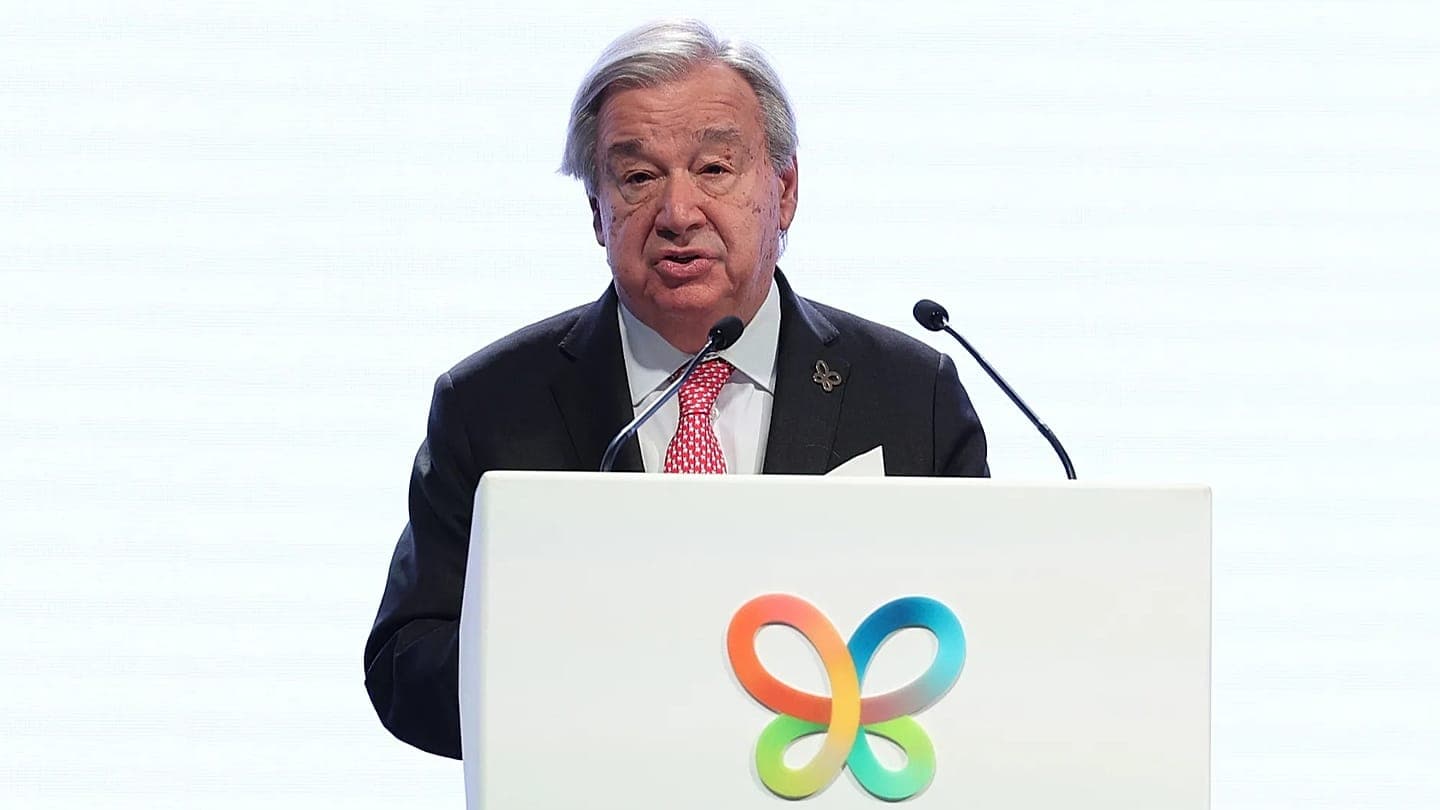
On 16 October, speaking at an event in Yerevan before leaders on the eve of the UN biodiversity summit COP17, UN Secretary-General António Guterres said that 'subsidies for fossil fuels are subsidies for suicide'. In his words, governments are still 'spending money on the wrong things', and he specifically criticised incentives for fossil fuels, which 'is heating the planet and becoming a scourge for biodiversity'. Guterres called on all governments to 'once and for all abandon these handouts' and direct the saved funds to people and protecting the planet. The COP17 summit starts in Yerevan on 19 October, with almost 200 countries taking part; the key theme will be the lack of funding for nature protection measures.
Slow progress in phasing out harmful subsidies
In 2022, countries committed to reducing harmful subsidies — for activities such as mining, fossil fuel extraction and intensive agriculture — by $500 billion (€447 billion) annually by 2030, but according to Euronews, progress is virtually absent. According to UN estimates, for every dollar invested in protecting or restoring nature, about $30 (€27) goes to activities that destroy it. This includes roughly $2.6 trillion (€2.3 trillion) a year in government subsidies that negatively affect nature and climate. 'Nature does not get by on good intentions alone,' Guterres stressed. Earlier in October, EU finance ministers called for a phase-out of fossil fuel subsidies at the COP31 climate talks, which will take place in November.
The world is falling behind the goals of the 'Paris Agreement for Nature'
On 15 October, Guterres presented a report showing that the world is seriously behind on achieving the biodiversity targets for 2030 enshrined in the pact known as the 'Paris Agreement for Nature'. The pact, signed by almost 200 countries and territories, sets 23 targets to halt and reverse nature loss by 2030, including reducing pollution, protecting threatened species and conserving 30% of land and oceans (the 30×30 target). According to the report, even with full implementation of all current pledges, only 27% of land and inland waters and just 12% of oceans will be under protection. On other targets the shortfall is even more pronounced. 'The war against nature is not over yet,' Guterres said, adding that 'there is some progress, but it is not enough' and that states must fulfil their financial commitments to developing countries.
Criticism of lobbyist influence
'Biodiversity is in crisis. Species are disappearing, ecosystems are collapsing,' said Sue Lieberman of the Wildlife Conservation Society, emphasising that investment in nature is 'not a luxury, but a key condition for our survival'. She also pointed to the 'very strong influence' of industries that have 'too much weight' in decision-making, including industrial fishing, the fossil fuel sector and logging.
COP31 hosts are expanding fossil fuel extraction
A report published this week by the environmental organisation Global Witness, based on data from the energy consultancy Rystad, shows that the COP31 host countries — Turkey and Australia — are expanding fossil fuel extraction ahead of the climate summit in November. The Turkish state company TPAO plans to nearly triple gas production; Australia's Woodside intends to double liquefied natural gas output by 2032, while Santos, according to the report, expects to increase oil production eightfold by 2035. Turkey has been criticised for its electrification target: it proposes raising the share of electricity in global energy consumption to 35% by 2035, up from the current roughly 20%, but does not specify how this electricity should be generated; critics believe this would allow expanded gas generation to be counted as progress.
Deadlock in talks on phasing out fossil fuels
Attempts to reach a global consensus on specific targets and pathways for phasing out fossil fuels have stalled, and this contentious issue is not on the official COP31 agenda. Earlier this year, about 60 countries demanding more decisive action held their own alternative conference outside the UN process. In parallel, a number of states, including Germany, France and the Netherlands, have presented voluntary roadmaps for phasing out fossil fuels; Brazil is expected to join them in November.