The key facts
- Turkey's GDP growth in 2027 is forecast at 4.2% after 3.3% in 2026; inflation should fall to 21% by the end of 2027.
- 2027 budget expenditures are 27.276 trillion liras, revenues 23.408 trillion liras ($551.2 billion), deficit 3.5% of GDP (2.8% excluding earthquake recovery spending).
- Employment will grow by 657 thousand people, unemployment will fall to 8%, and the current account deficit will drop to below 2% of GDP.
Growth and Employment Forecasts
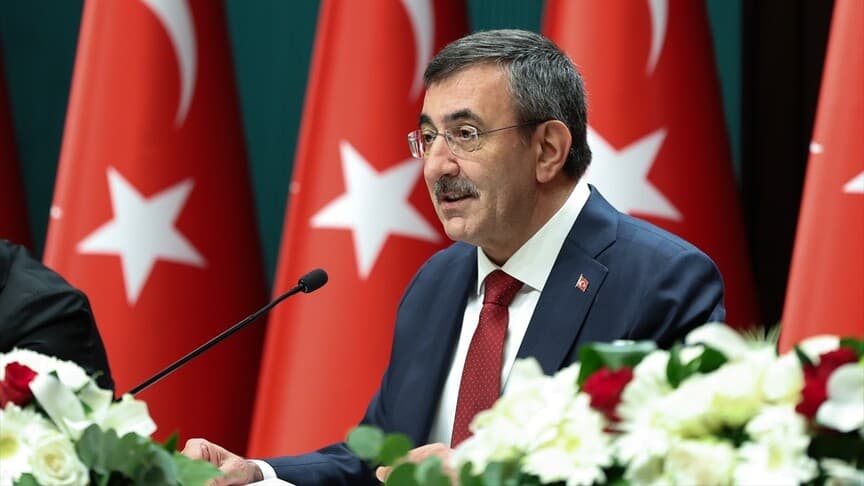
Turkish Vice President Cevdet Yilmaz presented the country's 2027 budget draft at the presidential complex in Ankara. According to him, Turkey's economy grew 3.7% in 2025, growth is forecast at 3.3% in 2026, and in 2027 it should accelerate to 4.2% against the backdrop of improving global conditions and recovering external demand. Stronger growth among Turkey's trading partners, the vice president noted, will create export opportunities and support balanced economic expansion. By the end of the medium-term program, the government expects to gradually accelerate growth to 5% through policies on productivity, technological transformation and innovation. Employment in 2027, according to the forecast, will increase by 657 thousand people, labor force participation will reach 53.4%, and unemployment will fall to 8% from the expected 8.1% in 2026. Yilmaz also noted that investments outpacing private consumption have strengthened production capacity and improved the structure of growth.
Inflation and External Indicators
Annual inflation, which dropped below 30% in September, is forecast to reach 28.4% by the end of the current year and fall to 21% by the end of 2027. “Price stability is a fundamental priority of our program,” Yilmaz said. Fiscal discipline and income policy, according to him, will continue to support monetary policy, while supply-side measures, especially in social housing and food, will strengthen disinflation. Despite fluctuations related to energy and commodity prices, the underlying inflation trend continues to improve; the government's medium-term goal is sustainably low single-digit inflation. The current account deficit in 2027 is expected to be below 2% of GDP versus a forecast 2.6% in 2026. Goods exports in January–September grew 5.2% year-on-year to $211 billion, while the rolling annual figure reached a record $283.7 billion. The share of medium-high and high-tech products in exports reached 44% versus about 28% in the early 2000s.
Budget Parameters
The 2027 budget draft provides for expenditures of 27.276 trillion Turkish liras and revenues of 23.408 trillion liras ($551.2 billion); national income is expected at $2.24 trillion. The deficit will amount to $78.1 billion, or 3.5% of GDP; excluding earthquake-related expenditures, 2.8% of GDP. Interest expenditures are planned at $80.2 billion, personnel expenditures at $143.7 billion, current transfers at $206.7 billion; a primary surplus is expected to be maintained in 2027. For 2026, the government forecasts a deficit of 3.1% of GDP — below the initial estimate of 3.5%, despite spending pressure from rising energy and commodity prices. Yilmaz said the draft will be submitted to parliament with the signature of President Recep Tayyip Erdogan, and called it a budget of “resilience, prosperity and transformation.”
Urban Transformation and Public Debt
Funding for urban transformation in 2027 will increase by 176% to $5.57 billion; disaster resilience will remain a priority alongside the expansion of social and rental housing programs. Earthquake recovery expenditures for 2023–2026 amounted to $109 billion in current prices (equivalent to $104 billion), with 455,357 independent housing units built and delivered. According to Yilmaz, general government debt under the EU definition fell to 22.3% of GDP in the second quarter from 23.1% in the first; low public debt, he noted, is an important advantage amid global uncertainty. Turkey will continue its policy of supporting exports, strengthening energy security and reducing dependence on energy imports.


