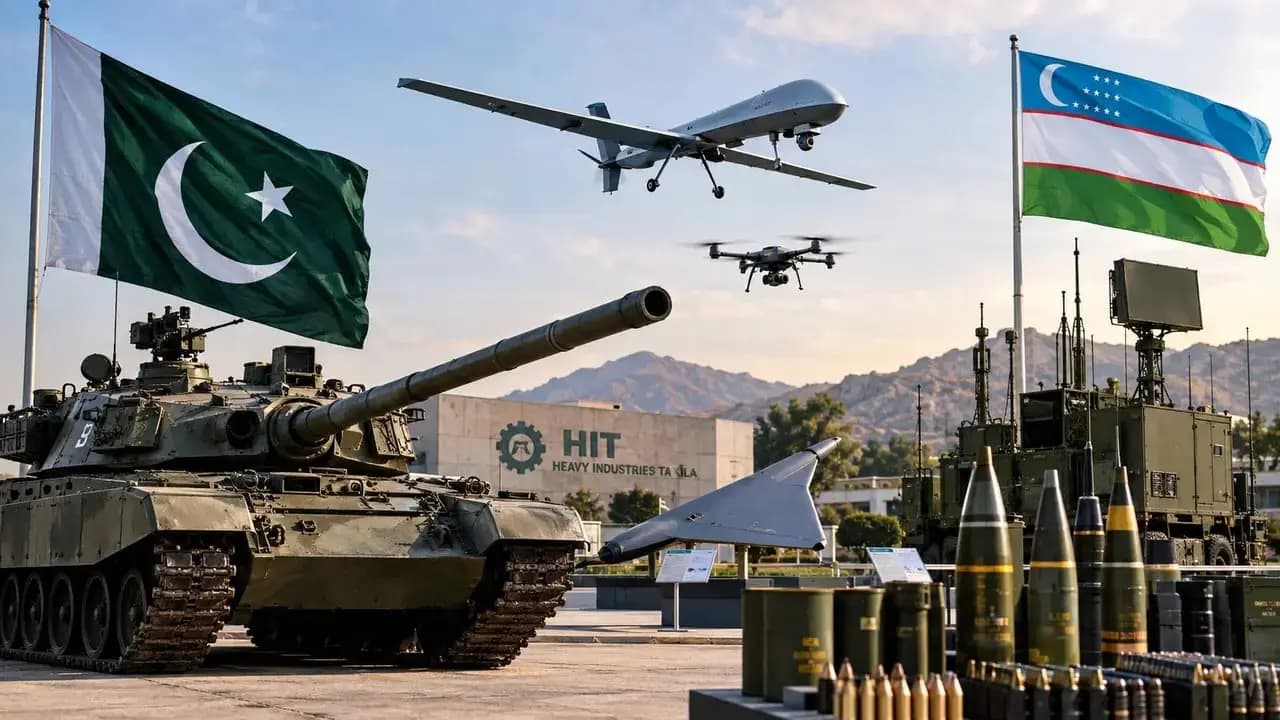
The key facts
- HIT has modernized about 500 Type 59 tanks (based on the T-55) at a cost of about $2 million per vehicle
- NRTC has developed more than 100 product lines, exports to Saudi Arabia, Africa and Persian Gulf countries, but not to India or Israel
- Minister Laziz Kudratov visited Islamabad on January 30 — February 2, 2026 and held talks with NRTC and POF; there is no information on the signing of binding agreements
Press tour of Pakistan's defense enterprises
Modern conflicts require the defense industry to solve two tasks simultaneously: maintaining the combat readiness of traditional equipment and introducing new technologies — drones, electronic warfare systems and precision weapons. As reported by Daryo.uz, this was confirmed during a week-long press tour organized with the support of the Embassy of Uzbekistan in Pakistan, in which the publication's correspondent took part. Journalists visited enterprises specializing in the production and modernization of armored vehicles, unmanned aerial vehicles, communications equipment, electronic warfare systems and ammunition.
Tank modernization at HIT
In the city of Taxila, at the Heavy Industries Taxila (HIT) enterprise, journalists were shown a modernized version of the Chinese Type 59 tank, created on the basis of the Soviet T-55. 'In Russia they are called T-55s. We took its Chinese version as the basis,' an enterprise representative explained. Pakistan adopted these tanks into service in 1980, and they have been modernized repeatedly since then. In the latest configuration, the 120-mm gun was replaced with a 125-mm one, a more powerful engine was installed, and the armor and protection system were improved. According to HIT specialists, the tank can compete with modern counterparts; however, as the publication notes, its capabilities have not been tested in real conflicts by independent parties. Under the modernization program, about 500 tanks were upgraded; the cost per vehicle varied depending on customer requirements and production volumes, averaging about $2 million. The main customer is the Pakistani army, which prefers modernization to the costly purchase of new vehicles. HIT has been operating since 1971, and since 1980 has specialized in the overhaul of T-series tanks; its lineup includes the Al-Khalid, Al-Khalid-I, Al-Zarrar and Haider tanks, the Talha armored personnel carrier, command and staff vehicles, logistics vehicles and armored recovery vehicles. The main partner is China: the Haider tank was developed jointly with NORINCO, which, according to the plant representative, demonstrates experience in joint projects and technology transfer.
Drones and countering them
HIT also demonstrated UAVs for reconnaissance, strike missions and interception of aerial targets. Maaz Rasool, a senior manager of one of HIT's divisions, stated: 'Our goal is to produce drones as cheaply as possible.' He links this approach to the requirements of 'fifth-generation warfare': success in modern combat requires the mass use of relatively inexpensive vehicles. The cost of countermeasures is also important: if a drone costs a hypothetical $100 thousand and a million-dollar missile is used to destroy it, this creates economic problems for the defending side. The proposed solution is to shoot down drones with interceptor drones — such a vehicle was shown at the plant. Journalists were also presented with a delta-wing drone with a payload of about 50–60 kg (about 30 kg for the more compact version) and a large VTOL (vertical take-off and landing) UAV that reduces the need for standard infrastructure and is suitable for rough terrain.
Electronic warfare and communications
Pakistan independently supplies its armed forces with communications equipment and electronic warfare systems. One of the largest players is the National Radio and Telecommunication Corporation (NRTC), founded in 1966, which produces military and dual-use products. 'We develop communications equipment, electronic warfare systems, artificial intelligence-based solutions, robotics, Safe City systems and other technologies,' an NRTC employee said. Counter-UAV systems first detect drones, then suppression measures are applied; configurations are customized to customer requirements. The tasks of electronic warfare are broader: detecting enemy radio channels, direction finding of signal sources and protecting one's own communications channels. According to the corporation, it has developed more than 100 product lines and implemented over a thousand projects for domestic and foreign customers, including the Pakistani police, road and railway services, and banks. Exports have been established to Saudi Arabia, African countries and the Persian Gulf; the sale of military products requires permission from the government of Pakistan. 'There are two states to which we never export our products: India and Israel,' the company representative emphasized.
Ammunition production
Another area is weapons and ammunition. This task in Pakistan is performed by the Pakistan Ordnance Factories (POF) holding, founded in 1951. It produces small arms, cartridges of various calibers, artillery and mortar shells, anti-tank systems, missiles, grenades and explosives, as well as ammunition for aircraft and anti-aircraft artillery. The main customer is the Pakistani armed forces, but excess capacity is used for exports. 'We fully meet the needs of our armed forces, and use excess capacity for export supplies,' a POF representative said.
Significance for Uzbekistan
According to the publication, Pakistan's experience may be of interest to Uzbekistan not so much through purchases of finished weapons as through the modernization of outdated equipment, technology transfer, joint production and personnel training. Contacts have already been established: Minister of Investments, Industry and Trade of Uzbekistan Laziz Kudratov visited Islamabad from January 30 to February 2, 2026 and held talks with a number of Pakistani companies, including NRTC and POF. There is no information on the signing of binding agreements or the achievement of specific arrangements. The Uzbek army also has Soviet-made armored vehicles, part of which is undergoing scheduled upgrades, so HIT's experience in deep tank modernization may be of interest. Unmanned aviation is also named as a promising area, where Pakistan pays special attention to reducing production costs. At the same time, as the publication notes, which of these opportunities will turn into practical projects remains unknown: this requires specific agreements, which are usually not announced publicly.
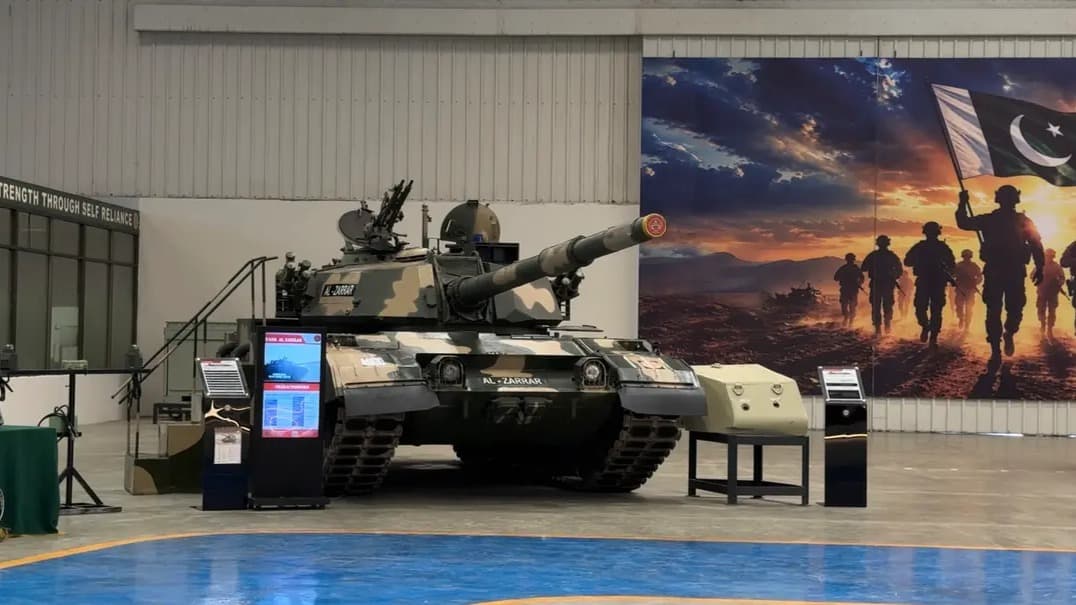
Фото: “Daryo”
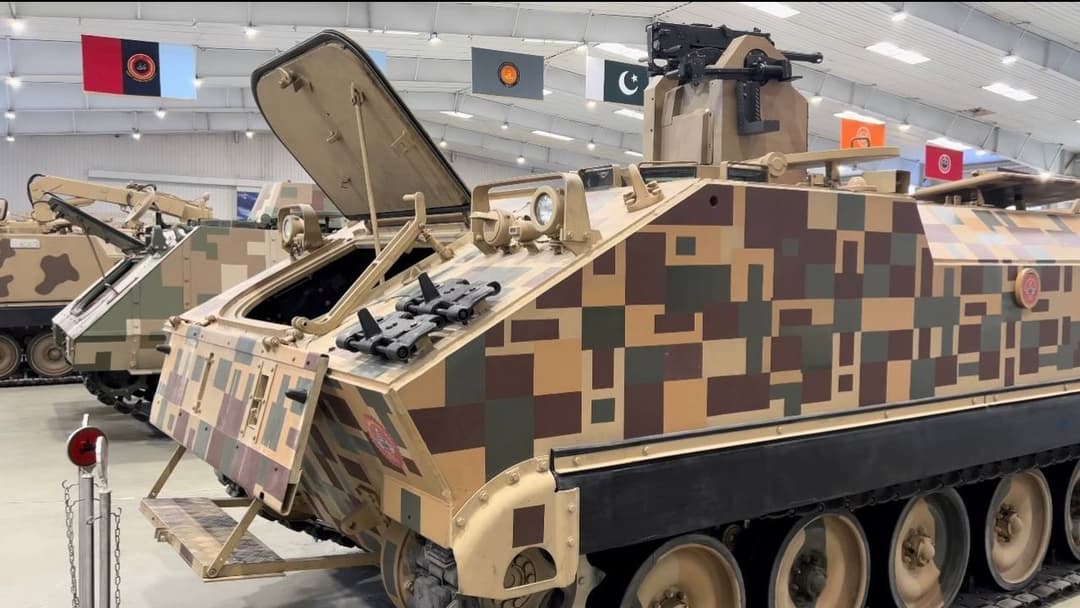
Фото: “Daryo”
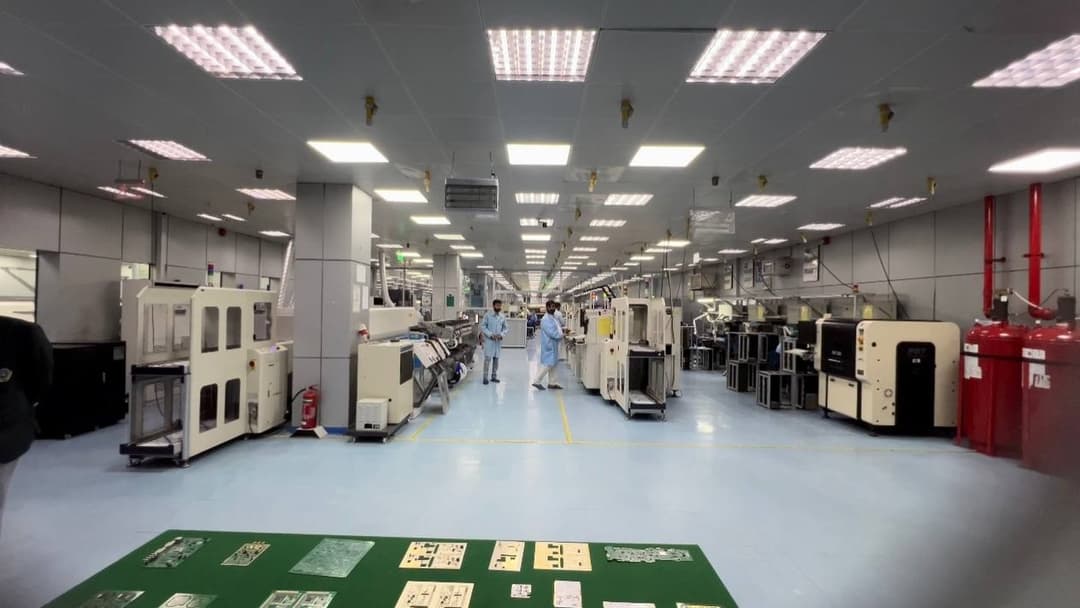
Фото: “Daryo”
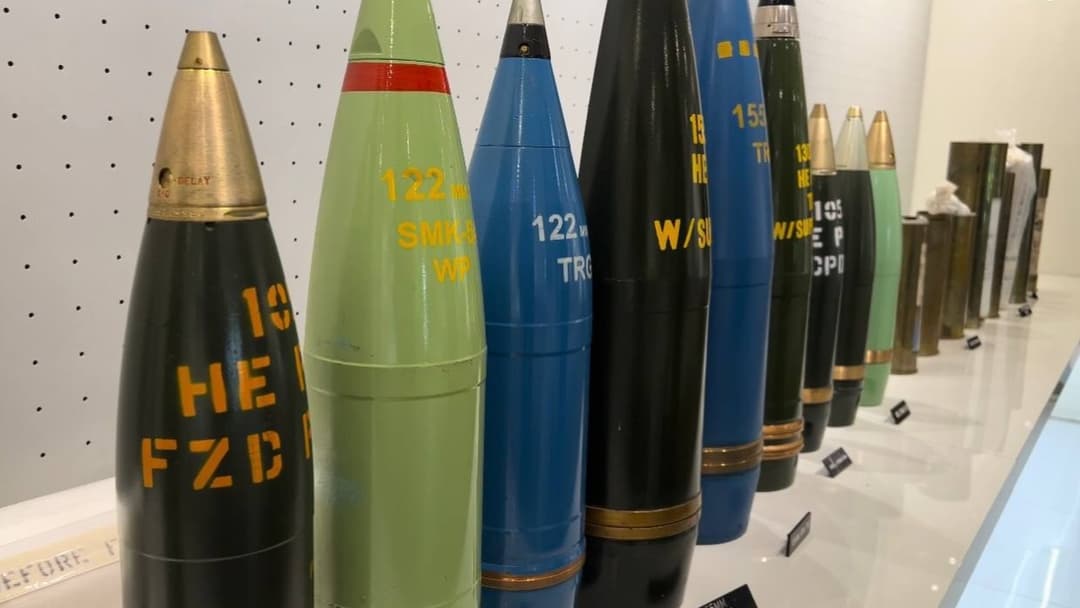
Фото: “Daryo”
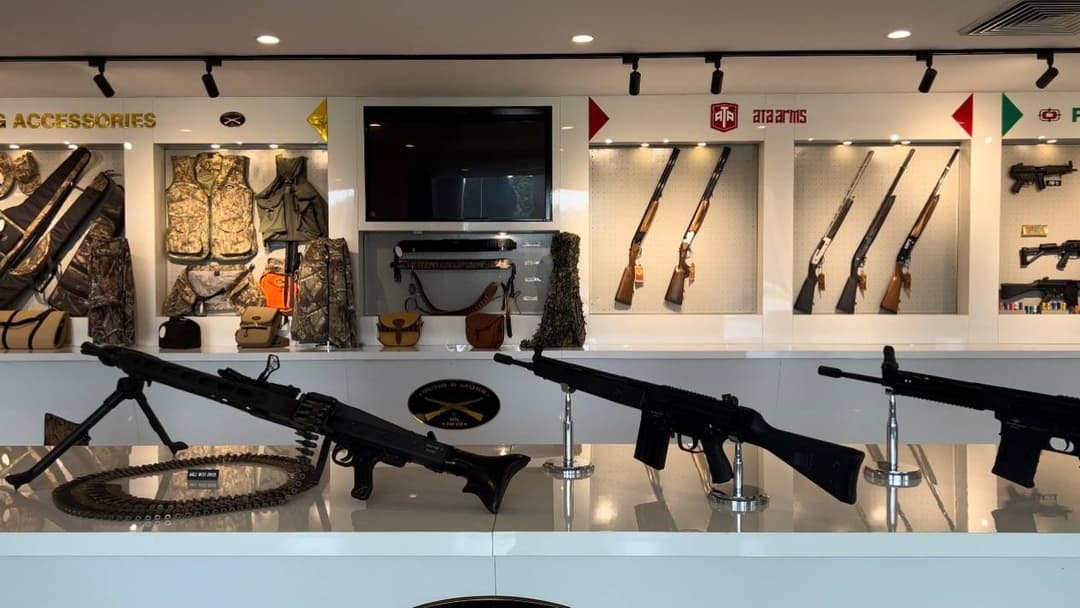
Фото: “Daryo”
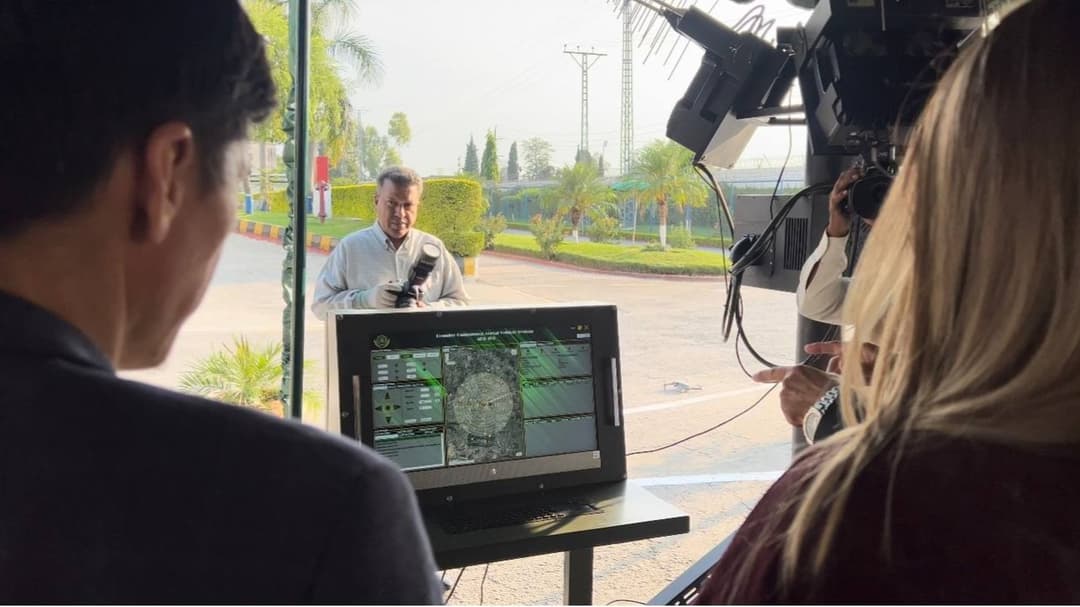
Фото: “Daryo”
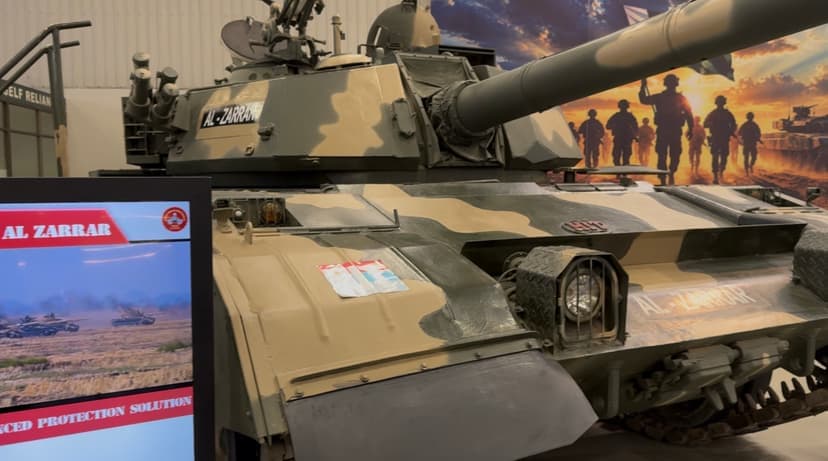
Фото: “Daryo”


